
Türkiye says waiting for Qatar sale contract for Eurofighter jets
Turkey’s pursuit of Eurofighter Typhoon jets underscores a broader strategic calculus that intertwines Ankara’s defence procurement with its diplomatic outreach across the Gulf and beyond.
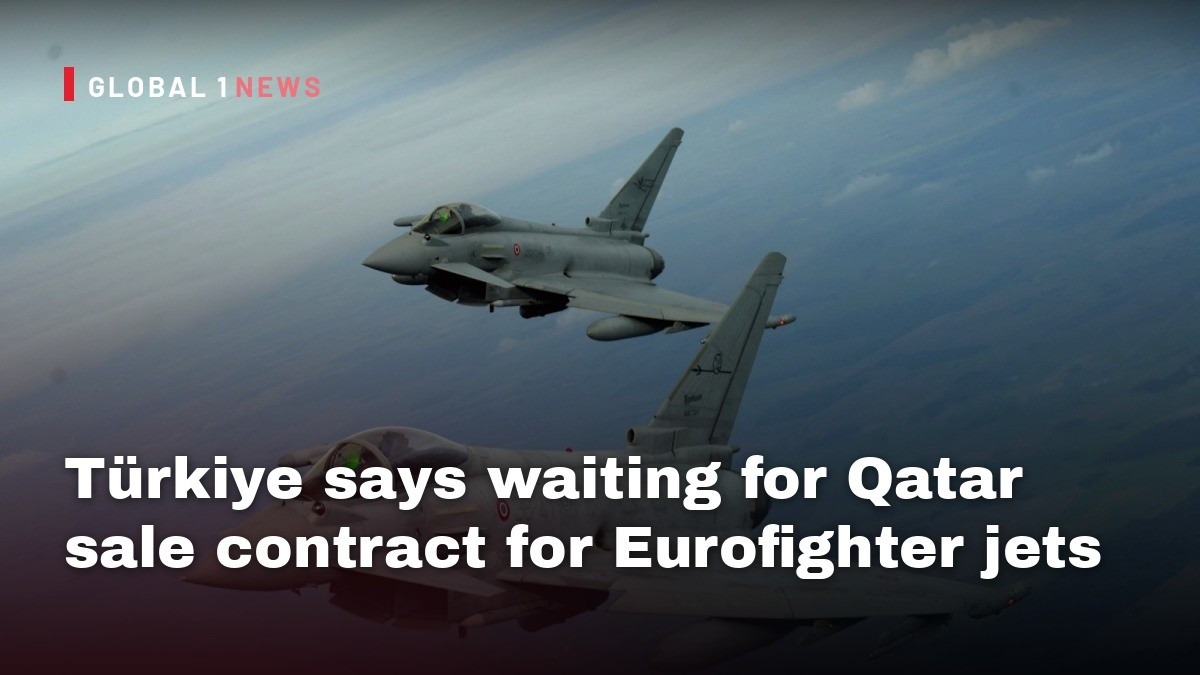
Turkey’s pursuit of Eurofighter Typhoon jets underscores a broader strategic calculus that intertwines Ankara’s defence procurement with its diplomatic outreach across the Gulf and beyond. As the Defence Ministry waits for Qatar to forward a sales contract and a draft training programme, the unfolding negotiations reveal how Turkey leverages multilateral defence ties to offset historic procurement frustrations and to deepen its air‑defence capabilities amid a shifting regional security environment.
Regional context: Turkey’s defence ambitions amid Gulf competition
Turkey’s interest in acquiring Eurofighter Typhoons must be viewed against a backdrop of intensified Sunni‑Shia competition and great‑power rivalry in the Middle East. While the United States remains the primary supplier of advanced fighter platforms to many Gulf states, Ankara’s pivot toward European equipment reflects a desire to diversify its sources and to assert a more autonomous defence posture. The move also aligns with Turkey’s broader strategy of cultivating defence cooperation with Gulf monarchies, notably Qatar and Oman, whose own procurement plans for the Typhoon could dovetail with Turkish requirements.
In recent years, Gulf states have intensified their own air‑power modernisation programmes, seeking to counterbalance Iran’s growing missile and drone capabilities. By positioning itself as a partner in joint training and maintenance, Turkey not only secures access to additional aircraft but also embeds itself within the Gulf’s emerging security architecture, thereby enhancing its leverage in regional diplomatic negotiations.
The Eurofighter deal with Britain: A milestone in Ankara‑London ties
The bilateral agreement signed last year between Turkey and Britain for twenty Eurofighter Typhoons marked a significant step in deepening the two countries’ defence relationship. The deal, described by the Turkish Defence Ministry as a means to bolster air defences, also reflects Britain’s role as a leading partner in the Eurofighter programme and its willingness to support Turkey’s modernisation efforts after prolonged negotiations.
Crucially, the agreement came after lengthy discussions aimed at overcoming a German objection to the sale, highlighting the complex diplomatic choreography required to secure multilateral European defence contracts. The first batch of jets is scheduled for delivery in 2030, providing Turkey with a clear timeline for integrating the platform into its air force while retaining an option for further purchases.
Qatar’s role: From contract to training programme
Turkey’s current waiting period for a sales contract and a draft training programme from Qatar reflects the practical steps needed to operationalise the broader procurement strategy. The Defence Ministry’s weekly briefing noted that Turkish and Qatari delegations had already discussed technical and logistical matters in August and September, covering the scope of jets, ammunition, pilot training and maintenance support.
Under the existing framework, Qatar and Oman are positioned to supply Turkey with some of their own Typhoons, provided a separate sales contract is concluded. This arrangement underscores the inter‑linked nature of Gulf defence markets, where surplus or second‑hand platforms can be transferred among allies to meet collective security needs while fostering deeper bilateral ties.
Expanding the procurement horizon: Oman and additional Turkish demand
Beyond Qatar, Turkey has signalled an interest in acquiring twenty‑four additional jets from Oman, indicating a broader regional sourcing strategy. The inclusion of Oman in the procurement equation suggests Ankara’s intent to secure multiple supply channels, thereby reducing reliance on any single partner and ensuring flexibility in fleet expansion.
The potential for Oman to provide Typhoons hinges on a separate sales contract, mirroring the Qatar‑Turkey arrangement. While the source material does not detail the status of Omani negotiations, the parallel process reflects a coordinated approach whereby Turkey seeks to align its acquisition timeline with the availability of Gulf‑based aircraft.
Domestic defence industry: Complementary projects and budgetary shifts
Turkey’s defence procurement plans are being pursued alongside a substantial increase in its defence budget for 2027, as noted by the ministry. This budgetary boost is directed toward domestic projects, including the indigenous Kaan fifth‑generation fighter programme, drone development, shipbuilding and air‑defence platforms. The Kaan project, described as a homegrown fifth‑generation warplane, aims to eventually replace the aging F‑16 fleet slated for phase‑out starting in the 2030s.
The parallel pursuit of Eurofighter Typhoons and the Kaan programme reflects a dual‑track strategy: acquiring proven, off‑the‑shelf capability while nurturing a domestic high‑technology aerospace sector. This approach seeks to balance immediate operational needs with long‑term strategic autonomy, a pattern evident in Turkey’s recent defence agreements with Qatar, Pakistan and Indonesia to boost joint development and production.
Strategic implications for Turkish air power
Integrating Eurofighter Typhoons into the Turkish Air Force will significantly enhance its multi‑role combat capability, offering advanced avionics, air‑to‑air and air‑to‑ground weaponry, and superior maneuverability. The scheduled receipt of the first batch in 2030 aligns with the anticipated phase‑out of the F‑16 fleet, ensuring a seamless transition to newer platforms.
Moreover, the training component—awaited from Qatar—will be critical for establishing a robust pilot and maintenance cadre capable of sustaining the fleet. Joint training initiatives with Gulf partners could also facilitate interoperability, a valuable asset should Turkey engage in coalition operations or regional security missions alongside its allies.
Broader geopolitical resonance: Turkey’s positioning in a contested Middle East
Turkey’s Eurofighter procurement, intertwined with Gulf cooperation, signals a nuanced recalibration of its foreign‑policy posture. By deepening ties with Qatar and Oman, Ankara positions itself as a partner in the Sunni‑aligned Gulf bloc, while simultaneously maintaining strategic autonomy through indigenous projects like the Kaan fighter. This balancing act reflects Turkey’s broader diplomatic strategy of engaging multiple great‑power actors—Europe, the United States and regional powers—to safeguard its security interests.
In the context of ongoing great‑power rivalry, where the United States, Russia and China vie for influence across the Middle East, Turkey’s diversified procurement and cooperation model may serve as a hedge against over‑reliance on any single external patron. The Eurofighter deal, therefore, is not merely an equipment purchase but a diplomatic instrument that reinforces Turkey’s role as a pivotal, if sometimes contested, actor in the region’s evolving security architecture.
This article was produced with AI-assisted research and editorial support. Reporting is based on the source material cited below. Sources: Daily Sabah Middle East; dailysabah.com; Global1.News (23 October 2026).
By Malik Hassan, Staff Writer
What's Your Reaction?
 Like
0
 Dislike
0
 Love
0
 Funny
0
 Wow
0
 Sad
0
 Angry
0
Middle East Correspondent at Global1.News. Based in Beirut, covering politics, conflict, energy, and society across the Middle East. Brings context and depth to a region often reduced to headlines.










Comments (0)