
Türkiye, Saudi Arabia sign deal to build 3,000 MW of wind power capacity
In a region where energy projects increasingly serve as diplomatic bridges, the latest agreement between Turkey and Saudi Arabia underscores a deepening strategic partnership that extends beyond traditional oil and gas ties.
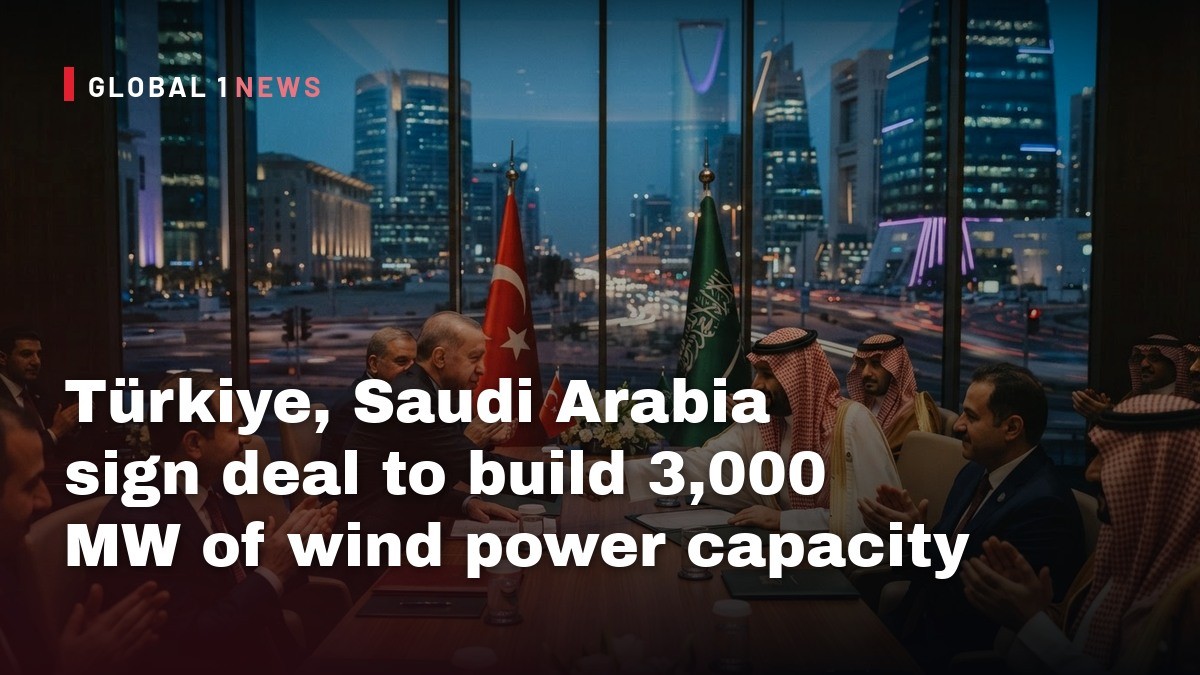
In a region where energy projects increasingly serve as diplomatic bridges, the latest agreement between Turkey and Saudi Arabia underscores a deepening strategic partnership that extends beyond traditional oil and gas ties. Signed on the sidelines of the COP31 climate summit in Antalya, the pact adds a substantial wind‑power component to a broader renewable‑energy collaboration that began earlier this year. As both nations pursue ambitious energy transition goals, the deal reflects a convergence of geopolitical interests, grid‑modernisation imperatives, and the quest for greater flexibility in an electricity system that must accommodate volatile renewable output.
From February to Antalya: the evolution of a bilateral renewable agenda
The partnership was first announced in February, when Ankara and Riyadh agreed that Saudi‑based ACWA Power would develop solar installations totalling 2,000 megawatts (MW) in Turkey’s Sivas province and the Taşeli region of Karaman. That first phase, focused on large‑scale photovoltaic farms, set the framework for a more comprehensive energy cooperation. The recent signing in Antalya marks the launch of the second phase, expanding the scope to include wind generation.
Energy and Natural Resources Minister Alparslan Bayraktar, alongside Saudi Energy Minister Abdulaziz bin Salman Al Saud, confirmed that the new wind‑power plants will add 3,000 MW of capacity. This figure represents roughly one‑fifth of Turkey’s existing installed wind capacity, signalling a material boost to the country’s renewable portfolio while cementing Saudi Arabia’s role as a key investor in the Turkish grid.
Quantifying the wind component: scale and significance
The 3,000 MW of wind power slated for construction under the second phase is a sizeable addition for Turkey, whose current wind fleet is already a notable contributor to its electricity mix. By equating the new capacity to a fifth of the existing installed wind base, the ministry highlighted the relative magnitude of the project without providing exact current figures. Nonetheless, the implication is clear: the wind component will markedly increase Turkey’s generation diversity and provide a substantial new source of clean energy.
Bayraktar stressed that the wind farms will be integrated with high‑voltage direct‑current (HVDC) transmission lines and battery energy storage systems. This technical detail points to a forward‑looking approach that seeks to overcome the intermittency challenges typical of wind generation, ensuring that the power can be efficiently moved across the grid and stored for later use.
Strategic motivations behind the Turkish‑Saudi energy tie‑up
Both Ankara and Riyadh have articulated a desire to deepen strategic energy cooperation. For Turkey, the partnership aligns with its long‑term target of installing an average of 10,000 MW of new wind and solar capacity each year, a benchmark set out in government plans. The infusion of Saudi capital and expertise is intended to accelerate progress toward that annual target, while also bolstering the resilience of the national grid.
From the Saudi perspective, the collaboration diversifies its investment portfolio beyond the Kingdom’s traditional hydrocarbon sector. By participating in large‑scale renewable projects abroad, Saudi Arabia signals its commitment to the global energy transition and leverages its sovereign wealth to gain footholds in emerging markets, thereby enhancing its geopolitical influence in the Eastern Mediterranean and Black Sea regions.
Infrastructure upgrades: HVDC and battery storage as enablers
The inclusion of HVDC transmission infrastructure in the deal is a critical element. HVDC technology allows for the efficient transfer of large power blocks over long distances with reduced losses, a capability that is especially valuable for connecting wind farms located in remote, high‑wind zones to demand centres. By pairing HVDC with battery storage, the partnership aims to create a more flexible grid that can absorb variable generation and provide ancillary services such as frequency regulation.
Bayraktar’s remarks about “strengthening grid infrastructure and boosting system flexibility” reflect a broader recognition within Turkey that renewable integration cannot rely solely on new generation capacity; it must be matched by upgrades to the transmission network and the deployment of storage solutions that can smooth out supply‑demand mismatches.
Economic and investment implications for Turkey’s energy transition
The deal, which will bring the total joint capacity of Turkish‑Saudi projects to 5,000 MW, is positioned as a catalyst for Turkey’s renewable‑energy market. By converting confidence in the country’s investment environment into concrete projects, the agreement is expected to attract further private‑sector participation, both domestic and foreign. The presence of a sovereign investor like Saudi Arabia may also lower financing costs for the projects, given the Kingdom’s deep financial resources.
Moreover, the partnership is likely to generate ancillary economic benefits, including job creation in construction, operation, and maintenance of wind farms and associated transmission lines. While the source material does not specify employment figures, the scale of the projects suggests a significant impact on local economies in the regions where the wind farms will be sited.
Regional energy dynamics and the broader geopolitical context
Turkey’s push for renewable capacity occurs against a backdrop of shifting energy geopolitics in the Middle East. As Gulf states diversify away from oil, collaborations such as this one illustrate a new axis of cooperation that blends traditional energy ties with emerging clean‑energy ambitions. The partnership also dovetails with Turkey’s broader strategy of positioning itself as an energy hub linking Europe, the Middle East, and Central Asia.
In the larger Sunni‑Shia and great‑power rivalry that frames regional politics, joint renewable projects can serve as confidence‑building measures, reducing the potential for competition over fossil‑fuel resources. By aligning with Saudi Arabia, Turkey not only secures financing but also signals a willingness to cooperate with a key Sunni power, potentially balancing its relations with other regional actors.
Outlook: what the wind phase means for Turkey’s energy future
Looking ahead, the 3,000 MW wind‑power addition is a decisive step toward meeting Turkey’s renewable‑energy targets. The integration of HVDC lines and battery storage promises to enhance grid stability, a prerequisite for accommodating the larger volumes of intermittent generation that the country plans to install annually. Successful implementation will likely encourage further expansion of the bilateral partnership, possibly opening avenues for joint research, technology transfer, and even broader regional interconnections.
In sum, the Antalya signing marks more than a contractual milestone; it embodies a strategic convergence of energy policy, economic ambition, and geopolitical calculation. As Turkey strives to diversify its energy mix and reduce reliance on imported fuels, the Saudi‑backed wind projects will play a pivotal role in shaping a more resilient, flexible, and sustainable power system for the nation and, by extension, for the wider region.
This article was produced with AI-assisted research and editorial support. Reporting is based on the source material cited below. Sources: Daily Sabah Middle East; dailysabah.com; Global1.News (11 November 2026).
By Malik Hassan, Staff Writer
What's Your Reaction?
 Like
0
 Dislike
0
 Love
0
 Funny
0
 Wow
0
 Sad
0
 Angry
0

Middle East Correspondent at Global1.News. Based in Beirut, covering politics, conflict, energy, and society across the Middle East. Brings context and depth to a region often reduced to headlines.














Comments (0)