
Police Search Trinidad's Acting Chief Magistrate's Home in Multinational Corruption Probe
Trinidad and Tobago police searched the home of acting Chief Magistrate Brian Dabideen under a judicially authorised warrant and seized electronic devices as part of a multinational corruption investigation. He has not been charged and denies wrongdoing.

Police in Trinidad went to the home of the man who runs the country's magistrates' courts, searched it under a judicially authorised warrant, and carried his electronic devices away. He has not been arrested. He has not been charged. And the office he still holds sits at the front door of the country's entire criminal justice system.
Police Search Trinidad's Acting Chief Magistrate's Home in Multinational Corruption Probe
Port of Spain, Trinidad — Officers executed a search warrant at the Gulf View, San Fernando residence of Chief Magistrate (Ag.) Brian Dabideen on Monday and seized his electronic devices, part of a wider investigation that police say involves both local and international law enforcement partners. No charges have been laid, and his lawyers say he denies any wrongdoing.
A Warrant, a Home in San Fernando, and a Bag of Devices
The Trinidad Express reported that police, armed with a search warrant, descended on the house in Gulf View and seized the devices. Attorney Prakash Ramadhar, who is representing the Chief Magistrate along with Michael Rooplal and Vishan Girwar, confirmed the search and said his client fully cooperated.
"Yes, there was in fact a warrant executed on the Chief Magistrate today (Monday) seeking to get his electronic devices which he fully cooperated in handing over and we want to thank and congratulate the professional way in which the officer has acted," Ramadhar told the Express.
Guardian Media reporters who visited the residence found the exterior lights on and the street quiet, with no sign of activity. Sources told the Guardian that the acting chief magistrate is still performing his duties. The Guardian, the Caribbean Media Corporation and the Judiciary itself spell the surname Dabideen; the Express and CCN TV6 render it Debideen.
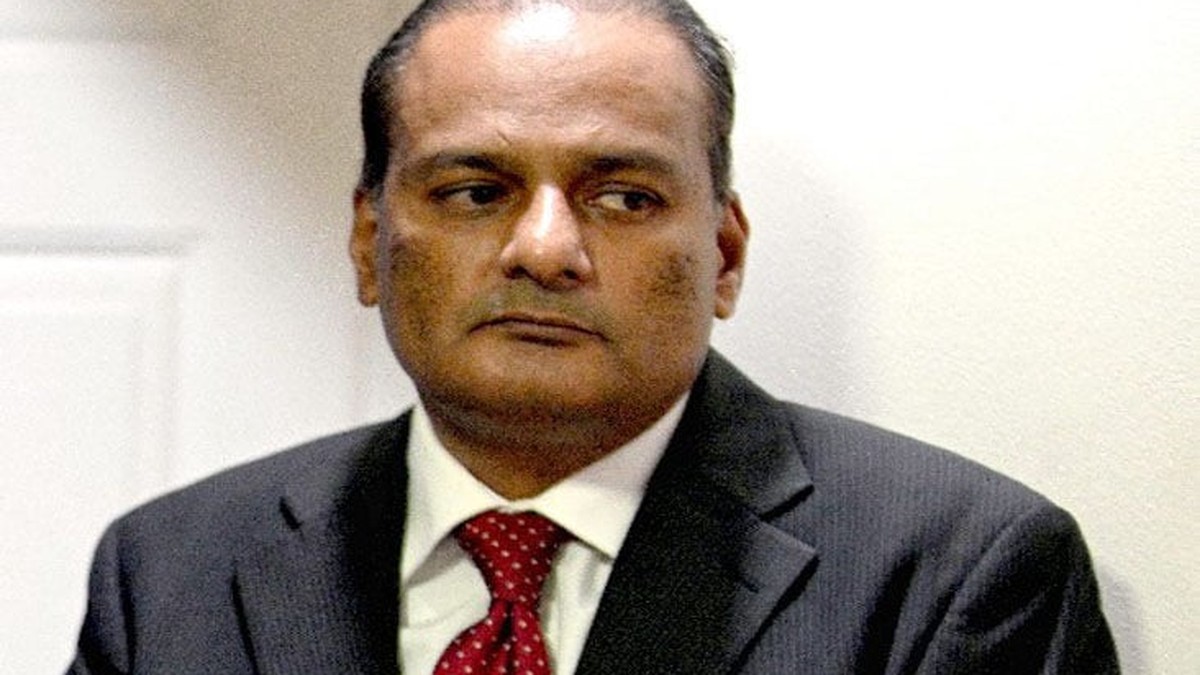
What Police Say They Are Investigating
The alleged offences under investigation, according to the Express, include money laundering, engaging in monetary transactions in property derived from specified unlawful activity, fraud, public corruption and bribery. Nobody has been charged with any of them.
Police Commissioner Allister Guevarro confirmed that a "judicially authorised search warrant was executed today at the residence of a senior member of the judiciary," without naming Dabideen in his statement. He said several items considered to have evidential value had been seized.
He declined to disclose the nature of the investigation or whether further action was being contemplated. "At this point, the investigation is at a sensitive stage, and thus, I am unable to comment on the specific operational details or any potential future investigative steps," he said. "To do so could compromise the integrity of the investigation and any subsequent judicial proceedings."
How the Story Started, in June
The public trail runs back to June, when the Express exclusively reported that the arrest of a sitting magistrate was imminent as law enforcement intensified a crackdown on white collar crime. That article did not name the magistrate.
Citing an intelligence report, it alleged that a senior judicial officer had received tens of thousands of US dollars in bribes in at least two cases in exchange for favourable rulings. The alleged instances concerned returning seized local and foreign currency to a person suspected of paying a bribe, and a ruling that firearms should be returned to an accused person.
The next day, Dabideen appeared at a news conference at Ramadhar's chambers in San Fernando, with all three lawyers beside him, to answer allegations that had not yet been attached to his name in print. The room, and the decision to walk into it, is the reason this story has a documented second side at all.
The Two Rulings His Lawyers Say Explain Everything
Rooplal told that news conference the two cases at issue were between a year and 15 months old and were matters of public record. In the first, he said, the defendant was a lawful Firearm User's Licence holder charged over excess ammunition found in his possession. The man pleaded guilty at the San Fernando Magistrates' Court; after mitigation, and with the prosecutor recommending a non-custodial sentence, he was placed on a bond.
"The law specifically provides for such a penalty to be imposed on an individual in those circumstances and the magistrate in his lawful exercise of discretion imposed a bond," Rooplal said. "There is nothing, as far as we can tell, untoward, certainly from our past practice as criminal defence lawyers, in that being done."
In the second, Rooplal said, the magistrate initially ordered cash — Trinidad and Tobago and United States currency — to stay detained under a proceeds-of-crime order. At the next hearing, after evidence and cross-examination, the prosecution conceded there were no grounds to keep holding the local currency, and the magistrate ordered its release. The US currency was held for a further three months before another magistrate ordered its return.
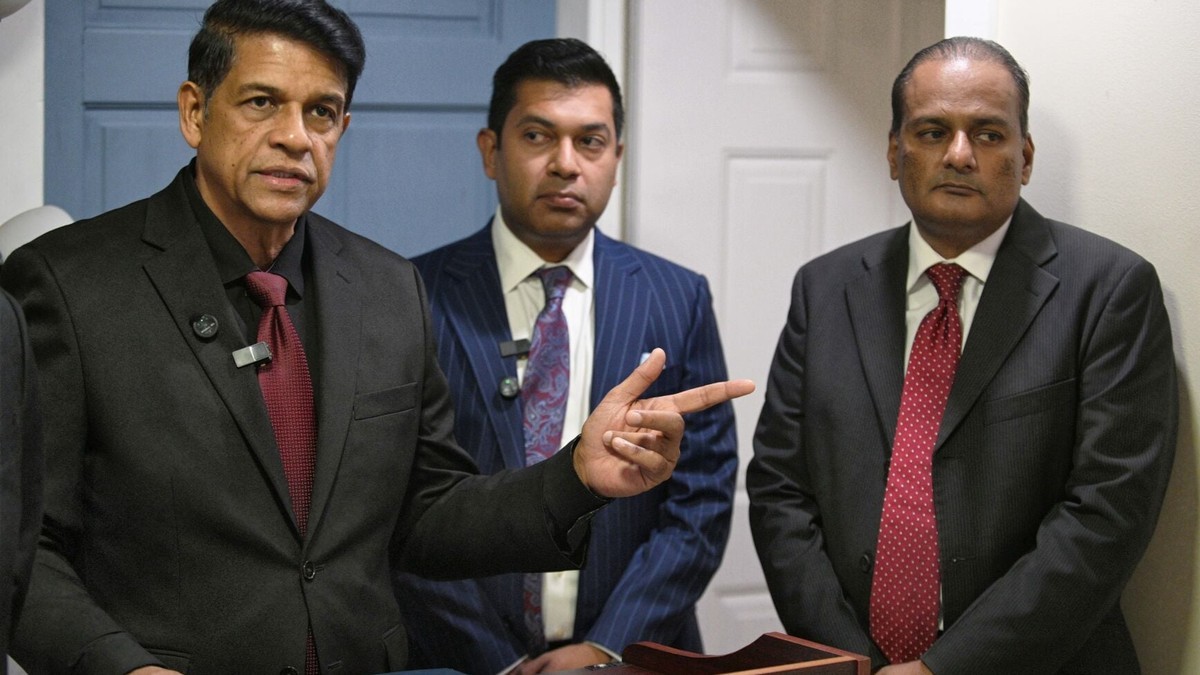
The Magistrate Says He Has Done Nothing Wrong
In a statement issued through his lawyers, Dabideen categorically denied any wrongdoing. "He remains steadfast in his commitment to the rule of law, the proper administration of justice and the principles of integrity and impartiality which underpin the judicial office he holds," the statement said.
The lawyers were precise about what a warrant is and is not. "It is important to emphasise that the execution of a search warrant is an investigative measure and does not, of itself, establish that any offence has been committed by the person whose premises are searched," they said. "No adverse inference of guilt should be drawn merely from the execution of such a warrant."
They also warned about the cost of speculation. "Unsubstantiated allegations and public speculation risk causing unwarranted prejudice, not only to our client's reputation and professional standing, but also to public confidence in the administration of justice," they said. Ramadhar said the lawyers want the investigation finished quickly to clear what he called a "lurking suspicion."
The Judiciary and the Lawyers Close Ranks Around Due Process
The Judiciary said it was aware of reports about the warrant and would make no further comment, citing the need to protect the fairness and integrity of any investigation or legal proceedings.
"The Judiciary recognises the importance of the core legal principles of due process, the presumption of innocence and that all persons are considered to be equal before the law," it said. "Given the nature of the matter, the Judiciary will refrain from further comment at this time to safeguard the fairness and integrity of any ongoing investigative or legal processes."
The Assembly of Southern Lawyers went further on substance while saying less on facts, calling the publicly available information limited and the moment premature for substantive comment. "The presumption of innocence and due process must be respected, and the relevant authorities should be allowed to discharge their responsibilities independently and fairly," it said. Written plainly: the institutions closest to the case have decided that saying nothing is the safer service to the rule of law.
Silence From the Prime Minister and the Attorney General
The political branch has taken the same route. Asked by Guardian Media about the investigation, Prime Minister Kamla Persad-Bissessar said: "I would prefer to not comment on an ongoing investigation of this critical nature." She added that the Trinidad and Tobago Police Service was handling the matter and that she was not privy to its details.
Attorney General John Jeremie was equally brief: "This is an ongoing police matter and I am not able to comment."
Jeremie's name carries history in this exact corner of Trinidadian public life. He was attorney general in 2006, when a chief magistrate's handling of a former prime minister's trial convulsed the judiciary, and the Privy Council later described the magistrate in that affair as "hopelessly compromised" partly because of help the attorney general of the day had given him over a land transaction.
The Office at the Door of Criminal Justice
The Chief Magistrate oversees the Magistracy Division, supervising magistrates and court staff. The office handles high-profile cases in Port-of-Spain, petty civil matters and inquests. The Magistracy operates across 13 magisterial districts — from St. George West, which covers Port of Spain and its environs, to Scarborough in Tobago.
Those courts also run preliminary inquiries into serious criminal matters, deciding whether a prima facie case exists before an accused can be committed for trial in the High Court. That is the machinery every serious prosecution in the country passes through on its way up.
Which is why the question of who is sitting matters beyond one man's docket. A chief magistrate under investigation keeps supervising the magistrates who sign off on the early stages of cases — including, potentially, cases connected to the same white collar crackdown that produced the warrant.
Trinidad Has Been Here Before
In 2006, then-chief magistrate Sherman McNicolls accused then-chief justice Satnarine Sharma of trying to influence how he handled former prime minister Basdeo Panday's trial over declarations required under the Integrity in Public Life Act. Sharma was discharged in 2007 after McNicolls declined to keep testifying; a constitutional tribunal later found no evidence to impeach him. McNicolls faced six disciplinary charges; the High Court quashed four, and the rest were unresolved when he retired in 2010.
The Privy Council's 2022 ruling in the Piarco I case went further, holding that McNicolls had been "hopelessly compromised" and that a $400,000 land repurchase had "no benign construction." Former chief justice Ivor Archie faced a 2017-18 controversy over a reported association with a convicted felon; the Law Association investigated and the Privy Council allowed the inquiry, though no section 137 tribunal followed. Former chief magistrate Marcia Ayers-Caesar resigned in 2017 after 53 part-heard matters had to restart — a staffing scandal, not a criminal probe.
What Happens Next
Nobody has said. Guevarro has promised updates only if disclosure would not prejudice the investigation, and has asked the public to stop speculating while his officers work. The lawyers want speed. The Judiciary will not comment. The Prime Minister and the Attorney General have both stepped back.
What is established is narrow and should be stated as narrowly as it is known: a judge-authorised search took place at the home of the country's acting chief magistrate, devices were seized, investigators say they are examining bribery, public corruption, fraud and money-laundering allegations, and no charge has been filed.
What is not established is anything about guilt. That distinction is not a technicality. It is the same distinction the Chief Magistrate applies from the bench every working day, and the same one the country's own Judiciary asked the public to hold onto this week — before the file is complete, before anyone is charged, and before a single fact has been tested in a courtroom.
By Jessica Ali, Staff Writer
This article was produced with AI-assisted research and editorial support. Sources: Trinidad Express, Trinidad Guardian, Caribbean Media Corporation (CANA), CCN TV6, and the Judiciary of Trinidad and Tobago. Photographs: Port of Spain Magistrates' Court and Acting Chief Magistrate Brian Dabideen via the Trinidad Express; June 2026 news conference photograph by Dexter Philip/Trinidad Express, carried by the Caribbean Media Corporation.
What's Your Reaction?
 Like
0
 Dislike
0
 Love
0
 Funny
0
 Wow
0
 Sad
0
 Angry
0

Editor-in-Chief at Global1.News. Atlanta-based journalist who cuts through the BS and tells it like it is. Lead anchor, host, and the voice you hear when the spin stops and the truth starts.















Comments (0)