
Siluanov Gets Russia's Purse and Its Bill: Putin's Money Man Takes the Weight of the War
Vladimir Putin promoted Anton Siluanov to deputy prime minister while keeping him at the Finance Ministry, and the State Duma confirmed him 430-0 two days before a budget whose 2026 deficit forecast has doubled to 3.2% of GDP.
Vladimir Putin handed Anton Siluanov the money and the bill. On Monday the Russian president approved a reshuffle that made his long-serving finance minister a deputy prime minister while keeping him at the Finance Ministry. Two days later the lower house of parliament confirmed him unanimously. The timing is not subtle. Russia's three-year budget goes to its first reading on 28 October, and the man who has to sell it now sits closer to the centre of power than at any point in his career.
Siluanov Gets Russia's Purse and Its Bill: Putin's Money Man Takes the Weight of the War
Moscow, Russia — Putin approved a major government reshuffle on Monday 19 October 2026, replacing nearly half of Prime Minister Mikhail Mishustin's deputy prime ministers, and elevated Anton Siluanov, finance minister since 2011, to deputy prime minister while keeping him in charge of the treasury. The State Duma confirmed Siluanov and four other nominees on Wednesday 21 October after five hours of discussion, every candidate receiving an identical 430 votes. The budget's first reading is scheduled for 28 October.
The Man Who Now Controls Russia's Money
Siluanov is not a newcomer. He has spent his entire career at the Finance Ministry, and in 2011 he replaced his mentor Alexei Kudrin, one of the architects of Putin's early economic reforms. He is seen as a conservative technocrat, and he held the dual role of deputy prime minister and finance minister before, from 2018 to 2020 under then prime minister Dmitry Medvedev. What is different now is the weight behind the title.
Kremlin spokesman Dmitry Peskov, briefing reporters, was explicit about the reason. "You understand the period our economy is going through, and the task of continuing to ensure macroeconomic stability further increases the importance of the Finance Ministry," he said. "This includes budget discipline." Government spokesman Boris Belyakov said maintaining financial stability and a balanced budget was becoming increasingly important amid growing external pressure. Sofya Donets, chief economist at T-Investments, said markets know Siluanov "for his consistent and moderately conservative approach to economic policy."
Four Hundred and Thirty Votes Out of Four Hundred and Thirty
The Duma did not agonise. All five nominees received 430 votes, the number of seats filled in the hall, making the decision unanimous. Speaker Vyacheslav Volodin said, "We are not ashamed of them." He noted that Siluanov's candidacy should have been taken first but alphabetical order was followed, then described a man "from Moscow" but without connections who made himself: "Nobody promoted him, he walked to minister on his own feet. It is important to us that we have a strong and influential finance minister."
The factions fell in line. United Russia's Vladimir Yakushev said his party supported all five unanimously. New People's Alexey Nechayev said "this renewal will be beneficial" and called the candidates "professional individuals." LDPR's Leonid Slutsky and A Just Russia's Sergey Mironov both said their factions would back all five. Even Communist leader Gennady Zyuganov, who criticised the government's financial course and cited communist China as an example, spoke in favour of unity "for the common victory" and supported every candidate.
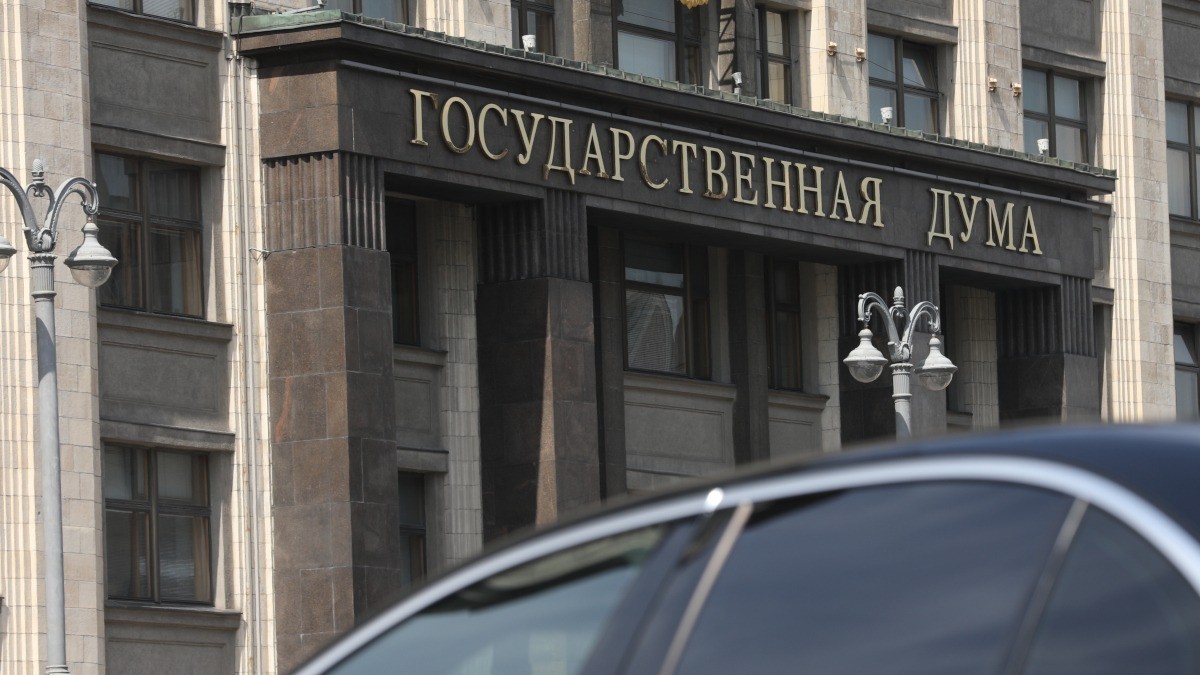
The Deficit That Doubled in One Revision
Here is what matters: the arithmetic has moved, and it has moved in one direction. The government has doubled its forecast for the 2026 budget deficit to 3.2% of GDP from 1.6%, according to Reuters. Budget spending in 2026 will increase by 13.2% to 48.6 trillion roubles, or 20.9% of GDP. At the exchange rate Reuters gives of $1 = 82.7455 roubles, that is $587 billion.
The trajectory beyond this year is no gentler. Interfax reports the 2027 shortfall is projected at 5.443 trillion roubles, or 2.2% of GDP, against the 3.186 trillion roubles, or 1.2%, currently stipulated in the fiscal budget. The draft projects 5.12 trillion roubles, or 1.9%, in 2028 against 3.514 trillion, or 1.3%, previously projected. For 2029, a new year in the forecast, the figure is 5.245 trillion roubles, or 1.9%. The federal deficit already reached 2.2% of GDP in the first nine months, and the ministry expects 3.2% for the full year, almost double the target written into the budget law.
Seventeen Trillion Roubles for Defence
Look at the defence line. The draft sent to the State Duma on 30 September plans "National defence" spending of 17.1 trillion roubles in 2027, according to SIPRI's reading of the document. That compares with 12.1 trillion planned for 2026, 16.6 trillion for 2028 and 16.3 trillion for 2029. The 2026 figure is what was planned. What Russia actually spent on defence this year is classified and will not be disclosed.
Reuters reports that the revised budget before parliament puts defence spending in 2027 around 27% higher than originally planned, taking military expenditure to its highest level since the invasion of Ukraine in 2022. That is 27% above the original plan, not above 2026. Prime Minister Mikhail Mishustin, chairing the government meeting that approved the draft on 24 September, named defence and security as one of three priorities, alongside social obligations and national goals including technological leadership.
What Is Left for Everyone Else
Mishustin put 2027 revenue at 43.3 trillion roubles, rising to almost 48.4 trillion by 2029, with spending next year planned at 48.8 trillion. He said around 19 trillion roubles is earmarked for national projects and that federal support for the regions will be maintained at this year's level. Over the three-year period the government plans to allocate more than 63 trillion roubles to implement the Social Fund's objectives. Social obligations, above all support for families with children plus healthcare and education, were listed first among the priorities.
But if defence takes 17.1 of those 48.8 trillion roubles, everything else in the Russian state shares what remains. That is the squeeze, and it is acknowledged. Reuters reports Russia is planning tax hikes and spending cuts next year to keep up with rising military spending. The cuts are not itemised. The pressure arrives daily, not annually: Irina Okladnikova, now confirmed as a deputy prime minister and chief of government staff, told deputies in August the cabinet needed "room to manoeuvre" as it pushed through a bill lifting its own spending ceiling.
Siluanov's Case: Two Percent Is a Small Number
Siluanov has a defence and he is making it. Meeting the A Just Russia faction, he pushed back on the deficit criticism directly. "You mentioned a large deficit. I would disagree. Our average deficit over the next three years should be around 2% of GDP," he said, according to Interfax. "I consider this a small deficit, given that we are concentrating resources on the major, overarching challenges facing our country." He cited G20 deficit levels averaging around 5%: "Ours is 2%, which allows us to maintain a low level of debt."
At the plenary he was just as confident. "The world has been undergoing a large-scale transformation in recent years, yet Russia has managed to maintain its financial health," he said. He said the ministry will keep strengthening the budget's resilience against oil price volatility, and that asset sales are set to exceed revenue targets by a factor of five, bringing in approximately 500 billion roubles. He also said real disposable household income has grown by more than 30% over the past five years.
The Taxes Coming Next
The Communists asked the obvious question: will the burden rise on the very rich? Siluanov replied that he is for fairness, which is why the budget package proposes extending the progressive personal income tax scale to dividends and to income on bank deposits. On a luxury tax he said it could be worked out "within the budget discussion that is now under way." On calls to tax banks further he was cautious, saying they already pay 25% profit tax like other companies, so "we should not rush."
Volodin had his own proposal, and it was not Siluanov's. The speaker suggested raising taxes on products that are not mass-market and harm health. "With the money from raising the tax on oysters we could build 30 kindergartens," he said, urging action also on palm oil and on the issuing of privileged licence plates. Siluanov did not object. That is how the revenue conversation is going: dividends, deposits, oysters, kindergartens. The defence line is not up for discussion.
Four Days Earlier, Half the Room Walked Out
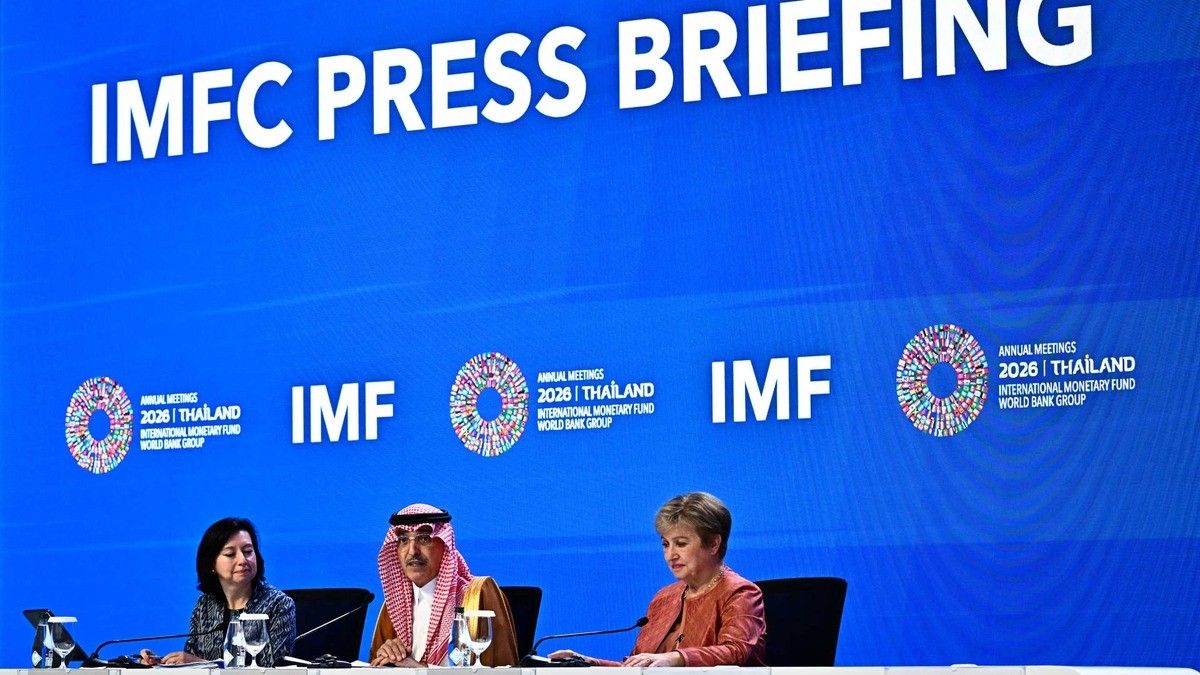
Four days before the Duma confirmation, the reception abroad was rather different. Many delegates to the IMF's International Monetary and Financial Committee walked out of a meeting in Bangkok on Saturday 17 October when Siluanov addressed the group in Russian, three sources familiar with the matter told Reuters. Bundesbank President Joachim Nagel said nearly 50% of delegates took part, sending "a clear message to Russia."
People in the meeting said those who left included delegates from Britain, Germany, France, Denmark, Sweden, Finland, Norway, Lithuania, Latvia and Estonia, among others. IMFC chair, Saudi Finance Minister Mohammed Al-Jadaan, said the important thing was that members ultimately agreed to the chair's statement. One European diplomat put it plainly to Reuters: "The Ukraine war is existential for us in Europe. We cannot normalise relations with Russia."
A Weaker Prime Minister, a Stronger Ministry
The reshuffle did more than promote Siluanov. It removed Dmitry Grigorenko as chief of government staff, a man the independent journalist Farida Rustamova described as Mishustin's "right-hand man" in one of "the most important" positions in government. Mishustin's spokesman later said Grigorenko himself had requested a transfer. Economist Sergei Aleksashenko, who held senior posts at the Finance Ministry and the central bank in the 1990s, said the changes implied a weakening of Mishustin.
Aleksashenko framed the promotion as a powers question. "The main issue today is control over spending," he said. "Even the strongest finance minister would find it difficult to tackle such a task without additional powers." Analysts quoted by bne IntelliNews called the changes "a major strengthening of the fiscal leadership," putting the Finance Ministry's people at the centre of government just as the budget comes under its heaviest strain of the war. Transport Minister Andrei Nikitin also becomes a deputy prime minister, with Rosaviatsia head Dmitry Yadrov nominated to succeed him. Foreign Minister Sergei Lavrov and Defence Minister Andrei Belousov kept their jobs.
What Happens on the Twenty-Eighth
On 28 October the Duma holds the first reading of the 2027-29 budget. That vote approves the main parameters, total revenue and spending for each year. A second reading, probably mid-November, considers amendments, and the spending totals already agreed for each year will not change. The final reading follows soon after and sends the budget to the Federation Council, which usually agrees with little discussion. It then goes to Putin, who will probably sign it into law in early December.
So the confirmations of 21 October were of people, not of the budget. The budget has not passed. What has passed is the decision about who carries it. Siluanov now holds the purse and the political cover to go with it, and he has already told parliament that a 2% average deficit is small. The first reading will test whether the Duma agrees. The war's costs do not appear on a ballot. They appear on the ledger, and the ledger is now his.
By Jessica Ali, Staff Writer
This article was produced with AI-assisted research and editorial support. Sources: Reuters, Interfax, TASS, RIA Novosti, the Government of the Russian Federation, SIPRI, The Moscow Times, bne IntelliNews, Anadolu Agency, MK.ru, Vedomosti. Photographs: RIA Novosti; Vedomosti; Lillian Suwanrumpha/AFP via Getty Images.
What's Your Reaction?
 Like
0
 Dislike
0
 Love
0
 Funny
0
 Wow
0
 Sad
0
 Angry
0

Editor-in-Chief at Global1.News. Atlanta-based journalist who cuts through the BS and tells it like it is. Lead anchor, host, and the voice you hear when the spin stops and the truth starts.











Comments (0)