
109 Students Fall Ill at Rhodes University as South Africa's Water Crisis Reaches the Campus Gate
At least 109 students across 15 residences at Rhodes University have reported gastrointestinal illness since Sunday 18 October, and no cause has been established. The university is testing residence water and supplying safe drinking water in dining halls.
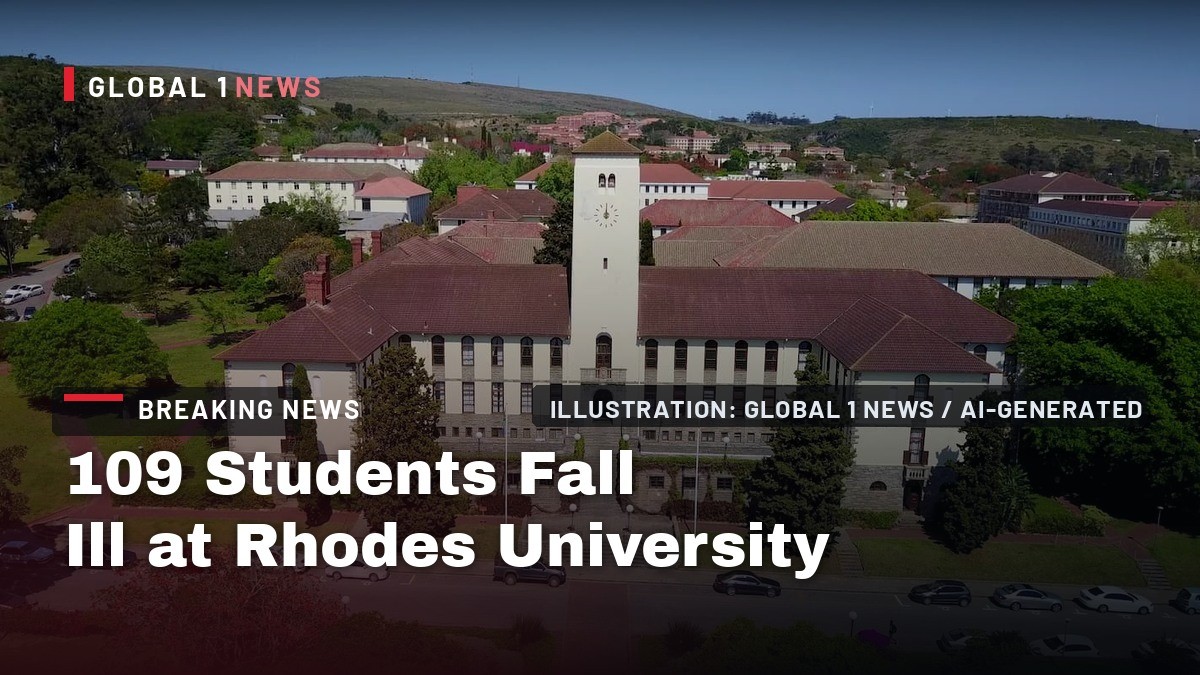
At least 109 students across 15 residences at Rhodes University have reported gastrointestinal illness since Sunday, and on Wednesday morning nobody can say what is causing it. The university has tested the water, handed out bottled water in dining halls and told students to boil everything they drink. It has also said similar cases are being reported elsewhere in Makhanda. What it has not done, because it cannot, is name a cause.
109 Students Fall Ill at Rhodes University as South Africa's Water Crisis Reaches the Campus Gate
Makhanda, South Africa — The first cases presented on Sunday 18 October. By Tuesday 20 October, when Rhodes University issued a media statement confirming a cluster of gastrointestinal illness among members of its community, the numbers were already moving. Cases had been logged across 15 campus residences. The university houses 3,500 students on campus. The institution is now running water-quality tests at residences, providing safe drinking water in dining halls and sampling residence taps at random. End-of-year examinations are approaching. Ward 12 councillor Mzobanzi Nkwentsha called the situation shocking, stressing the need for immediate precautions during what he described as a pivotal period in the academic calendar. The university's own language is careful to the point of austerity: "Further updates will be shared as verified information becomes available."
What Rhodes University Actually Said
The university's spokesperson, Olwetu Gwanya, has been consistent on one point and one point only. "The cause has not yet been confirmed," Gwanya told Jacaranda FM. "At this stage, the illness cannot be attributed to any particular food, water source or environmental factor." That sentence is the whole of the official position on causation, and it has not shifted. The university statement says it is "working urgently with local public health authorities and environmental health practitioners to establish the possible cause and scope of the illnesses." It has implemented what it calls precautionary measures: urgent water-quality testing at residences, the provision of safe drinking water in dining halls, and additional precautions in food preparation. Random sampling of residence taps is under way. The dining halls named in the advisory are Desmond Tutu, Miriam Makeba, Hugh Masekela and Kimberley. None of this constitutes a finding. It constitutes a holding position while the laboratory work proceeds.
The Number Is Not Settled
Two figures are on the record and they do not agree. News24 reported "at least 109" students affected. Gwanya, speaking to IOL, said: "In the university we have recorded just over 100 (cases) for our students." Both statements are attributable, both were made within a day of each other, and neither outlet has withdrawn its figure. The discrepancy is small in absolute terms and matters enormously in epidemiological ones, because a case count that is still being revised upward is a case count that has not peaked. Fifteen residences are affected out of a residential population of 3,500. The university has not published an age breakdown, a hospitalisation count or a breakdown by residence. No deaths have been reported. The Health Care Centre can be reached on 046 603 8523, and the after-hours RU ER24 line on 010 205 3068.
Why Anyone Is Asking About the Water
The question is being asked because the university itself raised it. Among the precautionary measures Gwanya announced was "urgent water-quality testing at residences" and the provision of safe drinking water in dining halls. Students were told to drink boiled, cooled or bottled water, to use safe water for food preparation and brushing teeth, and to avoid ice and uncooked food washed in untreated water. Those are waterborne-disease instructions. They are also, precisely, the instructions a university issues when it does not yet know the route of transmission and is covering every route at once. The university has been explicit that the illness "cannot be attributed to any particular food, water source or environmental factor" at this stage. That constraint applies to every question about the water supply in Makhanda. No cause has been established. No pathogen has been identified. The testing is a precaution, not a finding, and it would be a serious error to read it as one.
What Makana's Record Already Shows
The surrounding municipality has a documented history that predates this week. On 10 June 2026, the South African Human Rights Commission released its final investigation report into the water and sanitation crisis in Makana Local Municipality. The commission found the collapse "is the result of governance failures, infrastructure deterioration, weak accountability and institutional instability." It found the crisis was not caused by a lack of water resources; sworn testimony from the Department of Water and Sanitation confirmed adequate bulk water through the Fish River system, Glen Melville Dam and the Orange-Fish River scheme. It declared the situation a violation of constitutional rights including access to sufficient water, human dignity, a safe environment and the protection of children. It recommended that the Eastern Cape government consider dissolving the Makana municipal council under Section 139(1)(c) of the Constitution. That is a recommendation. The council has not been dissolved. More than 30 formal complaints were lodged with the commission between 2023 and 2026.
In Gauteng, the Cause Is Already Known
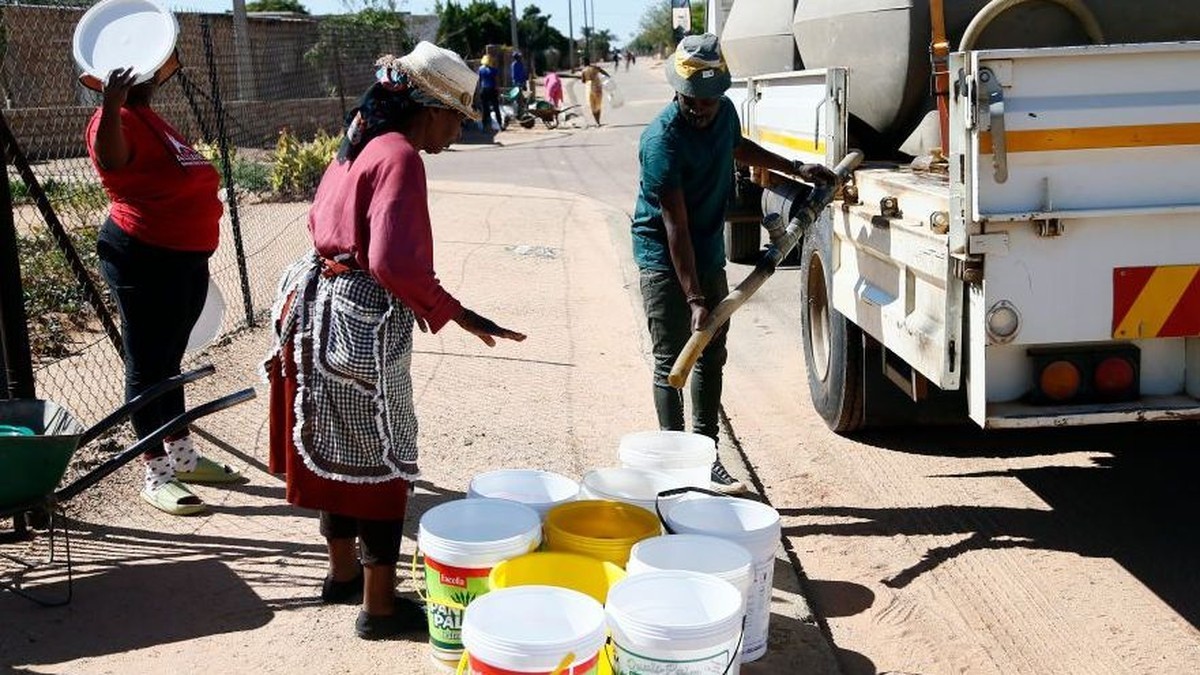
The question of cause has been answered there. Between 7 October and 18 October 2026, 408 cases of gastrointestinal illness were recorded among residents of Zithobeni, Bronkhorstspruit, Dark City, Rethabiseng and Sokhulumi, according to the Mail & Guardian. Most of those affected were under four years old. The Citizen puts the Tshwane figure at more than 430; the 408 figure is carried by IOL, the Mail & Guardian, Sowetan and Joburg ETC, and the two do not agree. Daily admissions peaked on 13 October at 72 cases, then fell to 16 new cases by Sunday 18 October. Tshwane's executive mayor, Dr Nasiphi Moya, has been direct about responsibility: "We take responsibility for the negligence." She said the chlorine supplier had increased its prices fourfold and the city could not reach agreement through negotiations. She added: "Even the officials failed to inform us, as leadership, that there was an issue of chlorine at the plant."
How Bronkhorstspruit Failed
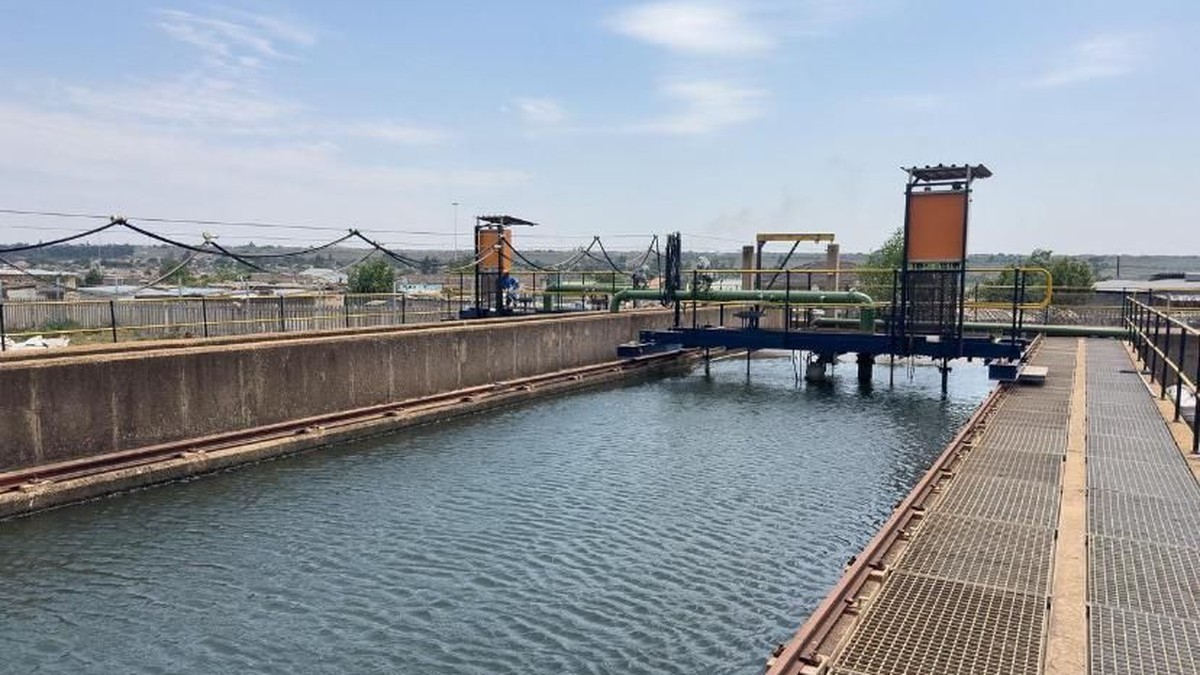
The Bronkhorstspruit Water Treatment Works supplied water that went unchlorinated between 24 September and 14 October 2026, according to a Department of Water and Sanitation investigation reported by the Mail & Guardian. The department found the city failed to warn residents the water was not chlorinated and should not be drunk or used for cooking, washing or bathing, even after boiling, as required by the 2025 Compulsory Standards for Water Services issued under the Water Services Act. The water was drawn from the Bronkhorstspruit River, heavily contaminated with sewage pollution from dysfunctional wastewater treatment works under Victor Khanye municipality and dysfunctional Tshwane sewage pump stations. The treatment works was closed on 14 October. Chlorine supply was restored the next day and the works reopened on 16 October, although residents were told the water was not yet suitable for drinking. There is no timeframe for when it will be. The plant is more than 60 years old, Moya said, and components including pumps and sand filters were not working.
What the Laboratory Found
National Institute for Communicable Diseases laboratory tests detected norovirus, Campylobacter and Shigella in three of four stool specimens analysed, alongside other pathogens associated with stomach cramps and diarrhoea. No cholera bacteria were found in the sampled stools. A joint statement by the national health and water departments, the Gauteng provincial government and the city said the combination of pathogens and the rapid spread pointed to a common water supply as the likely source. Water quality tests by the department on 14 October found extremely high levels of E. coli and total coliforms in water from the treatment works and the Ekandustria and Zithobeni reservoirs. Those pathogens belong to the Tshwane outbreak. They have not been found at Rhodes, and no laboratory result for Makhanda has been published. The two events are separate, in different provinces, and no link between them has been confirmed.
The Regulator's Own Numbers
The 2025 Green Drop report, released on 31 March 2026, assessed 848 municipal wastewater systems across 144 water services authorities for the 2023/24 municipal financial year. Systems in a critical state of performance rose from 39% in 2022 to 47% in 2025. In absolute terms, 334 systems were classified critical in 2022 and 396 in 2025. Technical site assessments of 158 physically sampled wastewater systems found 61% in critical or poor infrastructure condition. Five of the eight metropolitan municipalities — eThekwini, City of Johannesburg, City of Tshwane, Buffalo City and Nelson Mandela Bay — have systems classified in a critical state of performance. The Free State's poor or critical performance reached 98%. Of 114 Department of Public Works and Infrastructure wastewater systems, 101 were in a critical state and none scored above average. The report cites organised criminality, corruption, illegal connections and attacks on critical infrastructure as worsening the situation. These are the regulator's figures, not an advocate's.
What Would Settle It
At Rhodes, the answer will come from the laboratory and nowhere else. Water-quality testing at residences is under way, random sampling of residence taps has begun, and the university says it is working with local public health authorities and environmental health practitioners to establish the possible cause and scope. Until those results are published, the official position stands: the illness "cannot be attributed to any particular food, water source or environmental factor." In Tshwane, the Water Research Commission has begun independent water-quality testing and is investigating why contaminated water was supplied. Further results were expected from Wednesday 21 October and its investigation report is due by 28 October 2026. The NICD is collecting additional specimens to determine whether a formal outbreak declaration is required. The Democratic Alliance opened a criminal case against the City of Tshwane on Monday 19 October 2026 alleging officials failed to maintain safe drinking water standards.
The Question Makhanda Cannot Answer Yet
Rhodes University placed 11th nationally and 1,362nd globally on the latest Center for World University Rankings Global 2000 list. It sits inside a municipality whose water and sanitation collapse the Human Rights Commission has already declared unconstitutional. The university has done what it can from inside its own gate: testing, bottled water, food precautions, boil notices, a health centre number and an after-hours line. What it cannot do is answer the only question that matters to 3,500 students sitting examinations in the coming weeks. Gwanya put it plainly: "Subsequent enquiries with local medical practitioners indicate that similar cases are being reported elsewhere in Makhanda, suggesting that the situation may extend beyond the University campus." Suggesting. Not confirming. That is where the record stands on Wednesday 21 October 2026.
By Jessica Ali, Staff Writer
This article was produced with AI-assisted research and editorial support. Sources: News24, The Citizen, IOL, SABC News, SAPeople, Joburg ETC, Mail & Guardian, Sowetan, EWN, The Herald, Daily Dispatch, Grocott's Mail, BBC, Engineering News and Jacaranda FM. Photographs: Rhodes University campus via SAPeople; water tanker in Tshwane via BBC; water treatment facility via IOL.
What's Your Reaction?
 Like
0
 Dislike
0
 Love
0
 Funny
0
 Wow
0
 Sad
0
 Angry
0

Editor-in-Chief at Global1.News. Atlanta-based journalist who cuts through the BS and tells it like it is. Lead anchor, host, and the voice you hear when the spin stops and the truth starts.











Comments (0)