
Reach new heights of laziness by burning tokens to let an AI tap your smartphone screen for you
As a founder who runs a real hosting infrastructure, I’ve seen countless “AI‑powered” services promise miracles and then crumble under the weight of latency, cost and security risk.
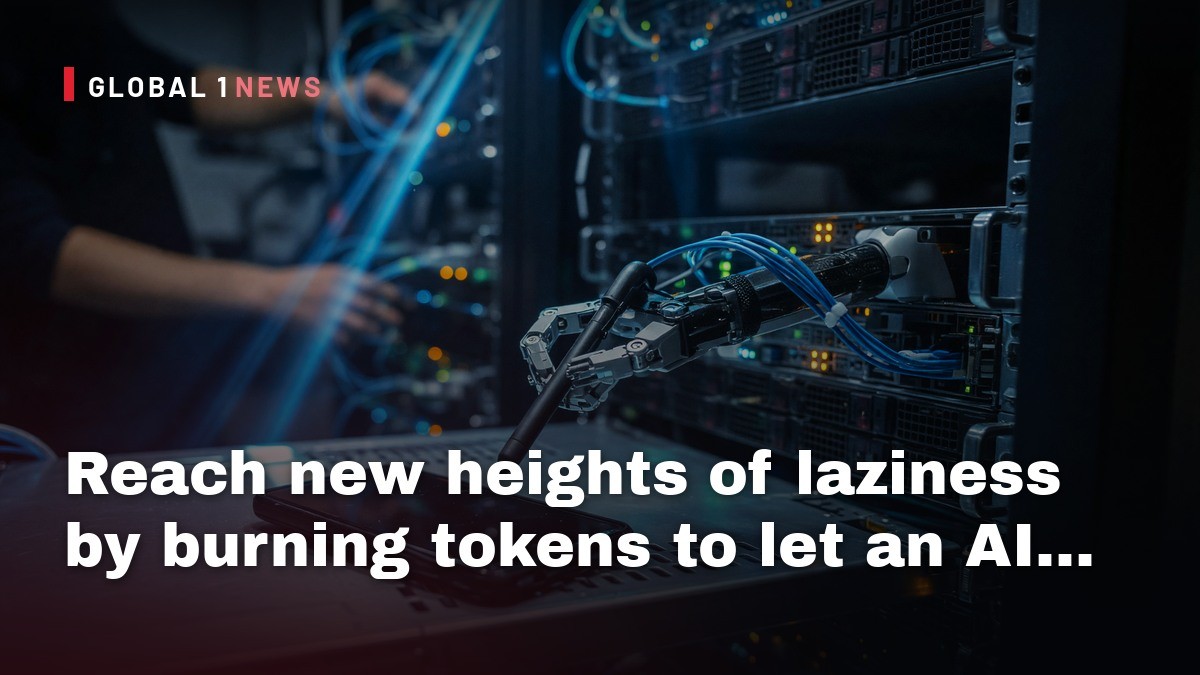
Opposable is the latest gimmick that tries to convince you to hand over the reins of your smartphone to an AI “virtual thumb.” The idea sounds slick—an app that taps, swipes and types for you while you lounge at your desk—but the reality is a slow, token‑burning nightmare that raises more red flags than it solves. As a founder who runs a real hosting infrastructure, I’ve seen countless “AI‑powered” services promise miracles and then crumble under the weight of latency, cost and security risk. Opposable is no different, and it should make any independent provider pause before endorsing or integrating such a solution.
What Opposable Claims to Do
The company markets the tool as a way to “give your AI thumbs,” letting an agent open apps, read the screen, tap, and type on Android phones and, via a companion computer, on iPhones. It works by using Android’s accessibility services to inspect the UI and screenshots as visual input for a vision‑language model. The model, identified as GUI‑Owl 1.5 2B, runs through llama.cpp. Tasks can be driven either by a desktop AI agent or an on‑device agent that works without a paired computer—though the latter is Android‑only, with iPhone support requiring a separate Mac or Windows/Linux companion.
Even with this setup, the service admits that around 40 common actions—setting an alarm, sending a text, toggling Wi‑Fi—are handled by fixed code rather than the AI model. In other words, the AI is only brought in for the “fancy” stuff, while the mundane chores are still hard‑coded.
Performance: Slow and Costly
The demos posted on Opposable’s website illustrate the sluggishness. Changing the system theme to dark mode and setting a five‑minute timer took 50 seconds and required 17 tool calls. Looking up the Apollo 11 launch date and crew took just under two minutes, with a run cost of $0.44. Opening the clock app and switching to the stopwatch tab on a virtual Android device took about 96 seconds. None of these timings are impressive; a human can tap the same buttons in a few seconds, and built‑in assistants like Siri or Gemini can answer the Apollo question instantly and for free.
Beyond speed, the cost model is a concern. Each request burns tokens, and at $0.44 per query, the price adds up quickly if you’re using the service for anything beyond occasional novelty. For a business that already pays for compute, bandwidth and storage, adding a per‑task charge for a tool that is slower than a human hand is hard to justify.
Reliability: Misses More Than It Hits
Opposable’s own blog post admits that the AI’s success rate is far from perfect. In tests on eight unseen tasks, run twice each on an emulator, the model completed the whole task only 4 and 3 times respectively. Even when the process was broken into sub‑goals and each step was verified against the accessibility tree, success rose to six out of eight in both rounds—still only a three‑quarter hit rate.
In practice, this means you can’t trust the AI to reliably set an alarm, send a message, or toggle a setting without supervision. The need to “babysit” each sub‑goal defeats the whole purpose of handing off the chore in the first place.
Security Risks: Treat the Token Like a Password
Opposable warns users that whoever holds the token can operate the phone, urging treatment of the token as a password. Yet the very act of sideloading an APK and granting accessibility permissions opens a broad attack surface. Accessibility services have full control over the UI, and a compromised token could let an attacker read sensitive information or trigger malicious actions.
For enterprises or even privacy‑concerned individuals, this is a non‑starter. The risk of a token leak—whether through logs, backups, or a compromised companion AI—means you’re effectively handing over your phone’s master key to an unproven service.
Use Cases: Accessibility, Not Laziness
The only plausible justification for Opposable is as an accessibility aid for users who genuinely cannot operate a smartphone. The blog and marketing materials, however, never mention this scenario. Instead, the product is pitched as a way to “hand off the phone chores” for lazy users. That framing ignores the very real need for assistive technology while simultaneously exposing vulnerable users to a potentially insecure solution.
If you’re looking for genuine accessibility tools, there are open‑source options that use standard Android accessibility APIs without the token‑based remote control layer. Those solutions have been vetted by the community and don’t require you to trust a third‑party token.
Business Implications for Independent Providers
From a hosting and infrastructure perspective, Opposable is another example of a VC‑fueled hype cycle that promises a shiny new layer of AI abstraction but delivers marginal value at higher cost and risk. Independent hosting providers and SaaS founders should be wary of integrating such services into their stacks. The added latency, token‑based billing, and security liabilities can erode customer trust and inflate operational expenses.
Moreover, the reliance on a proprietary vision‑language model (GUI‑Owl 1.5 2B) means you’re dependent on a black‑box component you can’t audit or optimize. If the model’s performance degrades or the provider changes pricing, you’re left scrambling to replace a core part of your workflow.
Actionable Takeaways
First, evaluate whether the problem you’re trying to solve truly needs an AI “virtual thumb.” In most cases, a simple script, API call, or native mobile automation (e.g., Android’s UI Automator) will be faster, cheaper and more reliable. Second, if you must use an AI‑driven UI automation, sandbox it: run it on isolated hardware, rotate tokens frequently, and monitor for anomalous activity. Third, consider open‑source alternatives that expose the underlying automation logic, giving you control over security and cost.
Finally, keep a healthy skepticism for any product that promises to replace human interaction with a token‑burning AI that is slower than a human hand. The hype around “AI‑powered” convenience often masks fundamental engineering trade‑offs that hurt both users and businesses.
— Allan Ali, Founder
This article was produced with AI-assisted research and editorial support. Reporting is based on the source material cited below. Sources: The Register; theregister.com; Global1.News (22 October 2026).
By Allan Ali, Global1.News
What's Your Reaction?
 Like
0
 Dislike
0
 Love
0
 Funny
0
 Wow
0
 Sad
0
 Angry
0

Publisher of Global1.News. Automation architect, systems builder, and the guy making sure the truth gets published.












Comments (0)