
Nestlé Sends Home 46 in Trinidad as Its Valsayn Factory Waits for a Buyer
Nestlé Trinidad and Tobago has confirmed 46 jobs affected across its sales and warehousing teams, 30 voluntary separations and 16 retrenchments, as local distribution passes to Massy in January and the Valsayn factory sale remains unresolved.
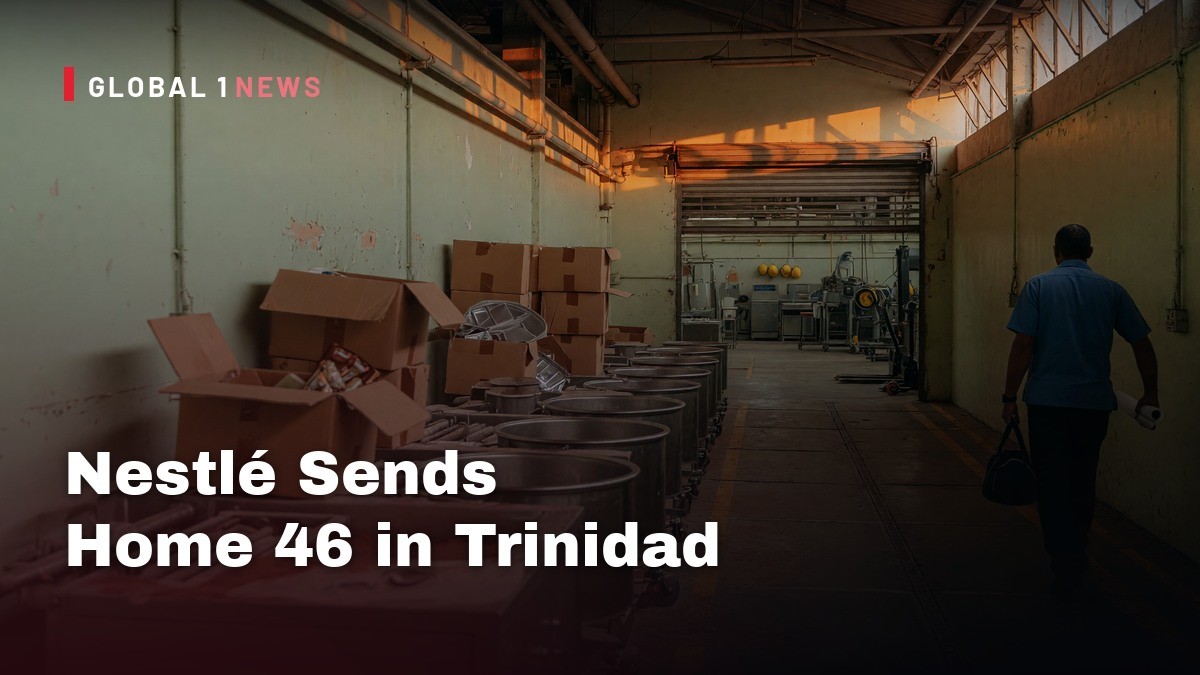
Forty-six people are leaving Nestlé Trinidad and Tobago. Thirty of them opted for voluntary separation packages. Sixteen were retrenched. The letters are the visible part. Behind them sits a question nobody in Valsayn, Carlsen Field or Caroni can answer yet: who buys the factory, and who buys the milk.
Nestlé Sends Home 46 in Trinidad as Its Valsayn Factory Waits for a Buyer
Port of Spain, Trinidad — Nestlé Trinidad and Tobago confirmed on 20 October 2026 that 46 employees across its sales and warehousing teams have been affected by a restructuring exercise, with 30 opting for voluntary separation packages and 16 retrenched. The changes take effect between November and December. The cuts accompany the handover of the company's local distribution to Massy Integrated Retail Ltd from January 2027, while a separate sale process for the Valsayn dairy and juices factory, where more than 200 people work, remains unresolved.
Forty-Six Jobs, and Thirty of Them Voluntary
Nestlé set out the arithmetic itself. "In total 46 employees across our sales and warehousing teams have been affected. Of these employees, 30 (65 per cent) have opted for voluntary separation packages, while 16 have been retrenched," the company said in a statement. Separation notices followed consultations with the Oilfields Workers' Trade Union, Nestlé's Recognised Majority Union, and with non-unionised staff.
The company insisted the terms are not improvised. "Separation benefits are aligned with the company's robust policies and collective agreements," Nestlé stated, adding that employee assistance was available throughout the consultation and that "outplacement support and extended benefits are available to all affected employees."
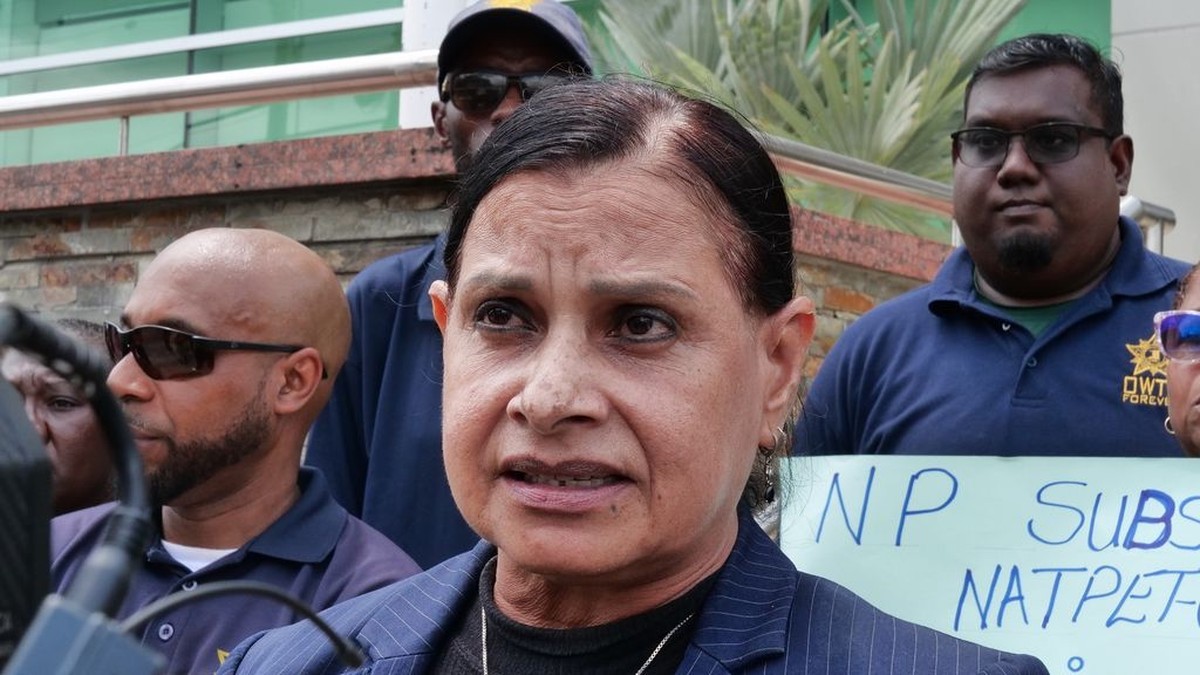
OWTU first vice-president Sati Gajadhar-Inniss said talks are continuing and the union is still hunting for alternatives for workers facing displacement. Asked about the mood on the floor, she did not pretend the news landed as a shock: "The workers were expecting it because we have been speaking to them about it." She said she remains hopeful the negotiations can cut the number of compulsory separations further.
What Massy Takes Over in January
On 1 October 2026, Nestlé announced that Massy Integrated Retail Ltd, through its Massy Distribution Division, would become the main distributor of Nestlé products in Trinidad and Tobago from January 2027. The company billed the switch as a route-to-market play. "The transition forms part of Nestle's ongoing efforts to enhance efficiency, strengthen market coverage, and ensure the continued availability of its trusted brands to consumers nationwide," it stated, describing the incoming partner as a local distributor with "extensive market reach and a strong track record of operational excellence."
Miguel Falcon, Nestlé Caribbean's cluster manager, framed it in one line: "The new distribution model allows us to leverage the strengths of a highly capable partner while continuing to deliver the quality products and service our customers expect."
Massy is not a small landing spot. For the nine months ended 30 June 2026 it reported third-party revenue from continuing operations of TT$12.65 billion, up 7 per cent, and profit before tax from continuing operations of TT$783 million, down 3 per cent. Its Integrated Retail Portfolio turned over TT$7.86 billion. The group has opened an automated distribution facility at Orange Grove in Trinidad.
The Factory Is a Separate Question
Nestlé's head of communications, Siti Jones-Gordon, told Guardian Media the distribution change and the factory sale are not the same transaction, and that the sale has "nothing to do" with the new distribution arrangement. She confirmed Nestlé's primary distributors will keep operating and that the company will continue distributing a significant portion of its portfolio across Trinidad and Tobago.
She was equally clear that the change carries a human cost. "There are implications, but the company has been talking with the union and continues to engage to mitigate any impact to jobs," Jones-Gordon said.
The review that put the plant in play was announced on 2 July 2026, when Nestlé said it was exploring several options for its dairy and juices business, including a possible sale, as part of a wider global restructuring. Employees heard it at a meeting led by head of Central America Pablo Wiechers, who travelled from Panama. No timeline was given for any decision or transaction, and none has been given since. Jones-Gordon's summary of where things stand: "Everything we are doing is still at an early stage."
Two Names, and Still No Buyer
Gajadhar-Inniss said the sale process is expected to run between six and nine months, with an international company in Switzerland handling the transaction and any preferred or potential buyer having to pass through them. She said management has indicated its preferred outcome is a buyer who keeps the existing workforce.
"They just informed us they were going to close the factory. However, their preference is to have somebody purchase the factory and keep the employees. That is their first preference and to be able to continue producing their products," she said. She is not assuming the next owner behaves like the last one: "Companies could buy it and not have the same model as Nestlé." Her emphasis is blunt — "We have to look at the interests of the workers. The re-employment."
Two regional manufacturers have said they would talk if the door opens: Richard Pandohie, chief executive of the Jamaican conglomerate Seprod, which is parent company of Trinidad and Tobago's AS Bryden & Sons Holdings, and Hadco Limited group co-chief executive John Hadad. No buyer has been named, no price disclosed, no closure date set. One local manufacturer, who asked not to be identified, told Business Guardian: "Nestlé is supposed to treat the farmer with more love and dignity."
The Farmers Who Have Nowhere Else to Sell
For more than 60 years, Nestlé has been the primary lifeline and sole major buyer of fresh milk for Trinidad and Tobago's remaining dairy farmers. The shrinkage happened long before this year. In 2014 the sector had 150 farmers selling 3.94 million litres a year. By 2024 there were 60 farmers, and Nestlé was taking 1.73 million litres of what they produced.
Nestlé has promised to keep purchasing milk until "year end," but management has not given a definitive cutoff date, saying the transition is "under review" for the next two months. Shiraz Khan, president of the Trinbago Farmers Union, said some 200 farmers, including up to 70 dairy farmers and their families, would be hit by any loss of that business. His central worry is simple: "Our biggest concern is that if milk collection stops, farmers will have nowhere to sell their milk." He added: "You cannot tell people who have invested their lives, their families and generations into dairy farming that in a few months there will be no market."
One Plant, and No Replacement for It
Dr Donny Rogers, an agricultural analyst and dairy farmer, said the country has no other ultra-high temperature processing plant standing behind the farmers. "In my opinion, it is highly disrespectful and dangerous to the longevity of the sector after they exit," he said. "In the absence of a UHT processing plant, it could lead to a serious decline or closure of the industry. There are no two ways about that."
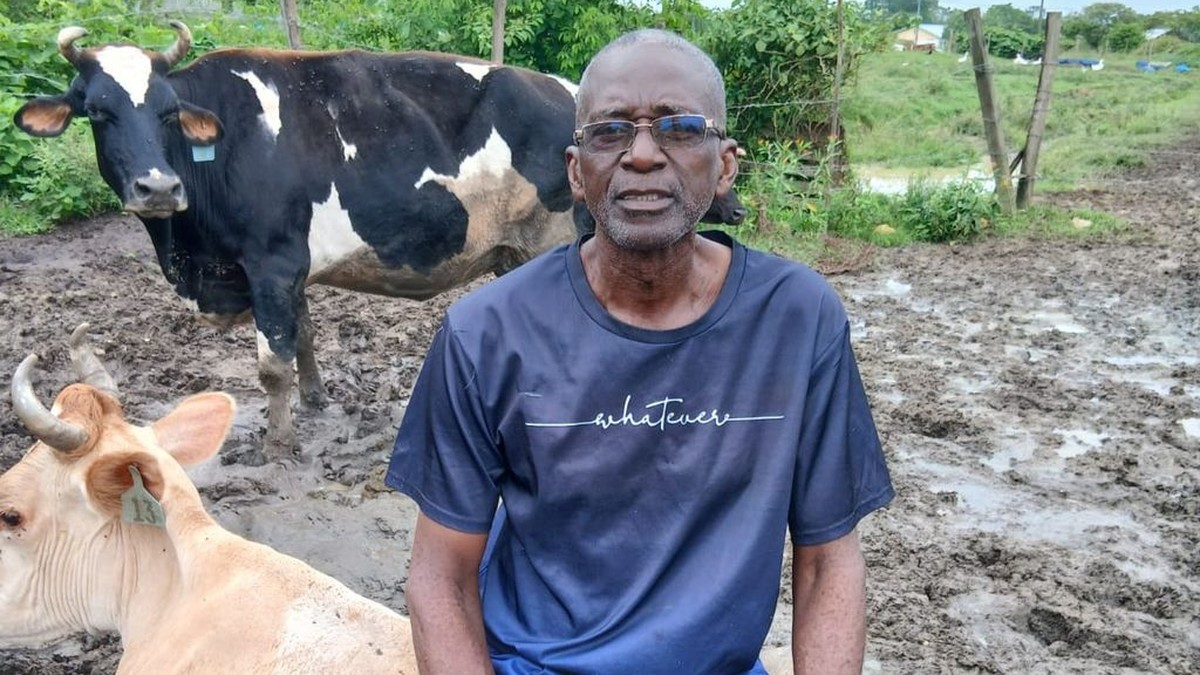
The biology does not wait for a buyer. Satish Heera, a third-generation dairy farmer from Carlsen Field, put it plainly: "Unlike the poultry industry, you cannot pause dairy production. Cows must be milked twice a day. If Nestle stops buying, we cannot store it, and we cannot leave it in the animals. Within days, the cows get infected and die."
Rogers said farmers would have to force their animals through a "drying off" process, and that the animals would eventually be butchered at $10,000 to $15,000 a cow. He said 200 labourers on the farms would be sent home and State-owned National Flour Mills would lose sales on its dairy feeds. State agricultural leases also require farmers to keep active livestock on their acreage, so selling the herd can put the land itself at risk.
Three Dollars Eighty-Six, and a Subsidy
The money is thin enough that the threat lands hard. Farmers receive $3.86 per litre of raw cow's milk from Nestlé, topped up by a $1.50 per litre government subsidy, for $5.36 in total, according to Khan and dairy farmer Satish Heera. Heera said the cheapest 100-pound bag of feed runs $186 and the dearest $212.
Rogers said the $5.36 was never enough. "It was a price that just allowed the farmers to exist. I think a fair price should have been between $6.00 and $6.50 a litre. So over ten years, in my opinion, it was a systematic destruction of the sector." He also said Nestlé withdrew support that once included free veterinary care, artificial insemination and seeds to maintain pastures.
Reshma Kaladeen, a dairy farmer for more than 40 years, calculates losing the Nestlé market would cost her $1,500 a day, and larger farms with hired labour up to $5,000 a day. Prof Mark Wuddivira, Dean of the Faculty of Food and Agriculture at the University of the West Indies, said a single buyer "makes us very vulnerable. That is the vulnerability that we're seeing." He said UWI itself received a letter from Nestlé earlier this year saying it could no longer accept cows' milk from its Valsayn field station.
The Law Is Being Rewritten as the Letters Go Out
The retrenchments are landing while the statute that governs them is under revision. The Retrenchment and Severance Benefits (Amendment) Bill, 2026 — Senate Bill 6 of 2026 — was introduced in the Senate on 14 April 2026 and published in the Trinidad and Tobago Gazette on 28 April 2026. Piloted by Labour Minister Sen. Leroy Baptiste, it passed its third reading on 24 April with 27 votes for, 2 against and 1 abstention, and had its first reading in the House of Representatives on 1 May 2026. It has not been proclaimed.
Its explanatory note says it exists to modernise the framework for termination on account of redundancy: strengthening consultation and notice, providing for wages in lieu of notice, revising severance benefit rates and replacing retrenchment terminology with redundancy terminology. It also amends the Industrial Relations Act, the Companies Act, the Central Bank Act and the Bankruptcy and Insolvency Act to protect severance entitlements in insolvency.
The National Trade Union Centre welcomed it as a break from "an outdated retrenchment regime" and rejected business warnings that stronger severance obligations would chill investment: "Workers are not disposable commodities." Ministry of Labour figures released under the Freedom of Information Act record 426 private-sector retrenchments in 2025, including 14 at Nestlé T&T Ltd.
What the Government Has Said
Prime Minister Kamla Persad-Bissessar has directed two ministers to meet Nestlé's representatives to work on the matter. Agriculture, Land and Fisheries Minister Ravi Ratiram, speaking after a meeting with a senior delegation from the company, said the Government remains committed to working closely with dairy farmers and other stakeholders to ensure there are no disruptions to the dairy supply chain during the restructuring.
The Trinbago Farmers Union is not waiting on that process alone. It has sought an urgent meeting with the Prime Minister and the Ministries of Agriculture, Trade, Labour and Education, alongside Nestlé representatives. Some farmers held an emergency meeting in Wallerfield on a Friday night to plan their next move, and a media conference was being organised.
One government minister, asked about the wider fallout, offered the free-market answer: "Companies make decisions. It's not the first country. Nestlé is restructuring its business and focusing on other areas, but it's not closing on anything. They are selling it, and I'm hoping that our local entrepreneurs and business people will step up and fill that gap."
What Happens Between Now and January
The 46 separations run through November and December, ahead of Massy taking the main distribution role in January 2027. The Valsayn sale grinds on through its six-to-nine-month window with no buyer in sight.
Nestlé's global frame explains the pressure. In October 2025 it said it would cut 16,000 jobs over two years under chief executive Philipp Navratil — 12,000 white-collar roles and 4,000 in manufacturing, logistics and supply chain — targeting about 1 billion Swiss francs in annual savings and 3 billion in total savings by the end of 2027. It said the Trinidad review forms part of a strategy narrowing its focus to nutrition, food, coffee, pet care and confectionery.
Prof Wayne Ganpat, a former dean of UWI's Faculty of Food and Agriculture, expects the market to absorb the shock that the farmers cannot: "If they exit the sector, farmers will suffer, but the market will not suffer because people will just import packaged milk from other countries." That is precisely the outcome Khan and his members are fighting. For the farms in Carlsen Field, Caroni and Wallerfield, the next two months decide whether the milk they produce twice a day has a buyer at all.
By Jessica Ali, Staff Writer
This article was produced with AI-assisted research and editorial support. Sources: Guardian Media (CNC3 and the Trinidad and Tobago Guardian), Trinidad Express, TV6 News, the Parliament of the Republic of Trinidad and Tobago, Massy Holdings Ltd, BBC and Euronews. Photographs: Guardian Media.
What's Your Reaction?
 Like
0
 Dislike
0
 Love
0
 Funny
0
 Wow
0
 Sad
0
 Angry
0

Editor-in-Chief at Global1.News. Atlanta-based journalist who cuts through the BS and tells it like it is. Lead anchor, host, and the voice you hear when the spin stops and the truth starts.













Comments (0)