
Quebec Superior Court hears arguments to suspend Montreal bylaw banning insults
The Quebec Superior Court is hearing a pivotal case that could shape the balance between municipal authority and fundamental freedoms in Canada. In addition to the constitutional concerns, Ataogul highlighted the potential public interest implications of the bylaw.
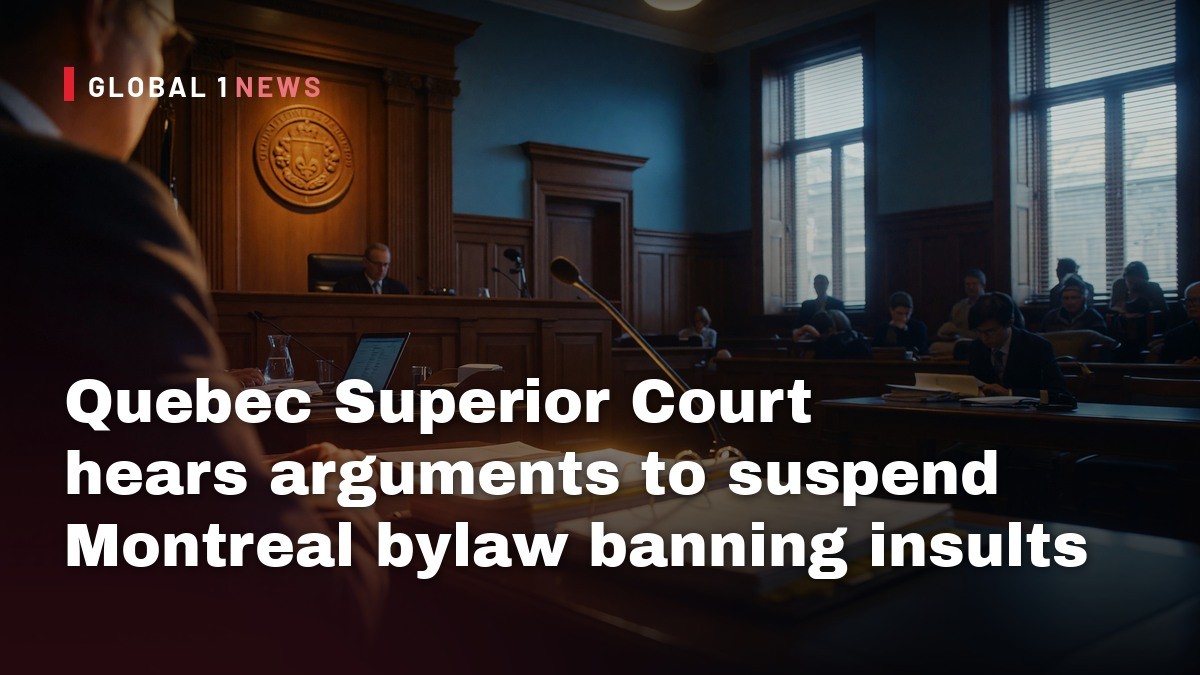
The Quebec Superior Court is hearing a pivotal case that could shape the balance between municipal authority and fundamental freedoms in Canada. Lawyers representing a progressive jurists association and the St‑Michel legal clinic have asked the court to suspend a newly adopted Montreal bylaw that bans insults directed at city employees, including police officers. The hearing, presided over by Justice Eleni Yiannakis, underscores a growing tension across the country between efforts to curb hostile behaviour in public spaces and the protection of freedom of expression guaranteed under the Charter of Rights and Freedoms.
Background to the Montreal bylaw
The contested bylaw was introduced by the City of Montreal with the stated aim of curbing insults, harassment, threats, abuse, intimidation and any form of offensive or aggressive behaviour directed at municipal employees. Its scope explicitly includes police officers, reflecting a broader municipal concern about the safety and dignity of front‑line staff who often encounter volatile interactions in the course of their duties.
While the bylaw’s language is concise, it is deliberately expansive, covering a range of conduct from verbal insults to more subtle forms of intimidation. The city’s rationale, as inferred from the legislation’s wording, is to create a more respectful environment for public servants and to deter conduct that could undermine public order. However, the breadth of the provisions has raised questions about how they will be applied in practice and whether they might inadvertently capture legitimate, even if contentious, public discourse.
Legal arguments against the bylaw
Lawyer Sibel Ataogul, speaking for the association of progressive jurists, argued that the bylaw is overly broad and infringes on fundamental freedoms, particularly the freedom of expression protected by the Charter. She contended that the language of the bylaw does not sufficiently distinguish between genuine threats or harassment and robust, albeit harsh, criticism of public officials—a distinction that courts have traditionally required to avoid over‑reaching restrictions on speech.
In addition to the constitutional concerns, Ataogul highlighted the potential public interest implications of the bylaw. She suggested that limiting speech, even in the context of protecting municipal employees, could stifle public debate on matters of governance and accountability, thereby weakening democratic participation. Her argument rests on the principle that any limitation on expression must be demonstrably justified in a free and democratic society, a test that she believes the bylaw fails.
Potential impact on marginalized communities
Lawyer Dardia Garcelle Joseph, representing the St‑Michel legal clinic, focused on the bylaw’s likely disproportionate effect on already marginalised groups. He warned that the bylaw’s primary application to interactions with police could exacerbate existing tensions between law enforcement and communities that experience heightened scrutiny and discrimination.
Joseph argued that the bylaw could be used to silence complaints about police conduct, thereby reducing avenues for accountability. By framing the regulation as a tool to protect officers from "insults," the bylaw may inadvertently shield misconduct from public scrutiny, a concern that resonates with ongoing national conversations about police reform and the rights of Indigenous and racialised communities.
The court’s limited remit
Justice Eleni Yiannakis clarified that her role in today’s hearing is confined to ruling on the request for an injunction to suspend the bylaw, not to adjudicate its constitutionality. This procedural limitation means that the court will first consider whether the bylaw should be temporarily halted while a full constitutional challenge is potentially pursued.
The decision on an injunction hinges on whether the applicants can demonstrate a serious question to be tried, a risk of irreparable harm if the bylaw remains in force, and whether the balance of convenience favours suspension. While the court’s ultimate view on the Charter implications will come later, the injunction hearing itself signals the seriousness with which the legal community regards the bylaw’s potential overreach.
Municipal defence of the bylaw
Lawyers for the City of Montreal are slated to present their arguments in the afternoon session. While the source material does not detail the city’s defence, it is reasonable to anticipate that municipal counsel will argue the bylaw is a legitimate exercise of local authority to ensure a safe working environment for its employees.
Municipalities across Canada have increasingly turned to bylaw tools to address harassment and intimidation in public spaces, often citing rising concerns about the mental health of frontline workers. The city is likely to argue that the bylaw targets conduct that crosses the line from protected speech into conduct that threatens personal safety and public order, a distinction that courts have historically upheld when the conduct poses a clear and present danger.
Implications for other jurisdictions
Should the Superior Court grant an injunction, the decision could reverberate beyond Montreal. Other Canadian cities contemplating similar measures may look to this case as a benchmark for the limits of municipal powers to regulate speech. Conversely, a refusal to suspend the bylaw could embolden municipalities to adopt broader language, potentially prompting a wave of similar legislation across provinces.
The case also arrives at a moment when provincial and federal governments are reviewing policies related to harassment, hate speech and public safety. A judicial finding that the bylaw unduly restricts freedom of expression could influence legislative reforms at higher levels, reinforcing the need for clear, narrowly tailored statutes that respect Charter rights while addressing genuine threats.
Public reaction and the broader debate
Public sentiment on the bylaw is likely divided. On one hand, many citizens support measures that protect municipal employees from verbal abuse, especially in a climate where frontline workers report increasing hostility. On the other hand, civil liberties advocates warn that vague language can be weaponised to silence dissent and marginalise critical voices, particularly in interactions with police.
As the court deliberates, the broader Canadian conversation about the balance between safety and freedom continues. The outcome will not only affect Montreal’s streets but will also contribute to the evolving jurisprudence on how Canadian law reconciles the right to be free from harassment with the equally fundamental right to speak freely, even when that speech is uncomfortable or confrontational.
This article was produced with AI-assisted research and editorial support. Reporting is based on the source material cited below. Sources: Global News Canada; globalnews.ca; Global1.News (22 October 2026).
By Alex Thompson, Staff Writer
What's Your Reaction?
 Like
0
 Dislike
0
 Love
0
 Funny
0
 Wow
0
 Sad
0
 Angry
0
Canada Correspondent at Global1.News. Based in Toronto, covering Canadian politics, energy, trade, and US-Canada relations. Provides the Canadian perspective on North American and global affairs.











Comments (0)