
Peter Obi needs serious counselling, help - Presidency
Onanuga’s comment, which highlighted a “pattern of gaffes, inconsistencies and incoherence,” has ignited a fresh round of debate about the role of diaspora remittances, the tone of political discourse, and the broader contest for Nigeria’s 2027 election.
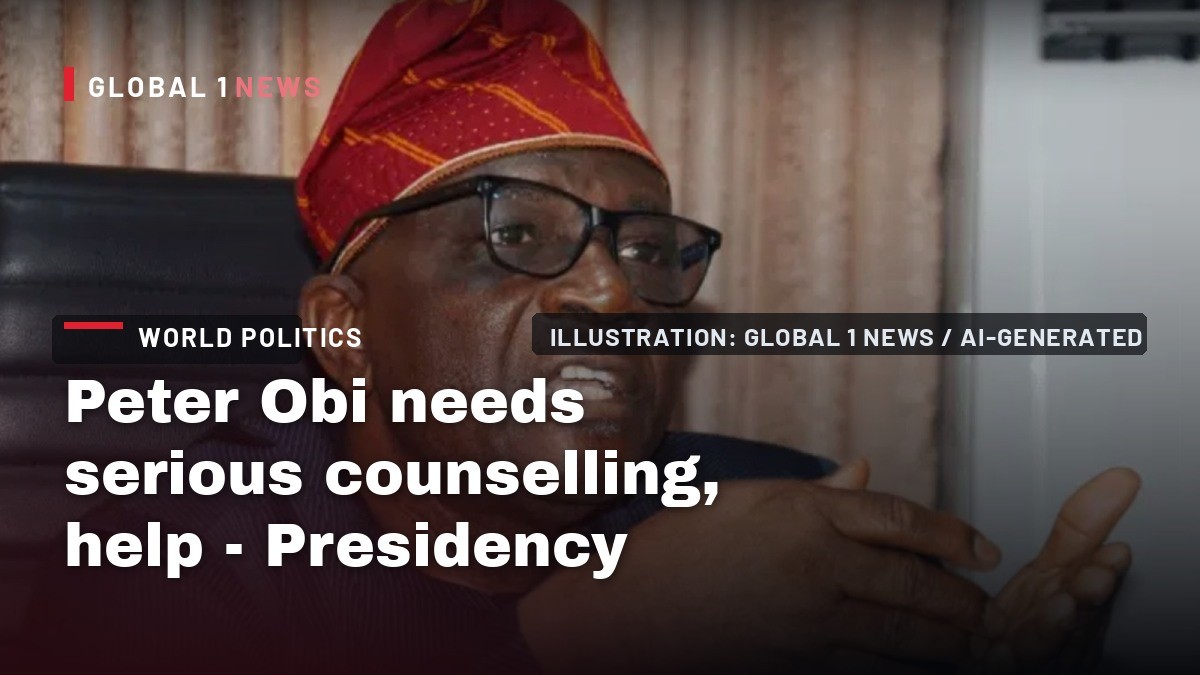
President Bola Tinubu’s administration has entered a new arena of political sparring as Bayo Onanuga, the president’s spokesperson, publicly suggested that opposition leader Peter Obi requires “serious counselling.” The remark, posted on the spokesperson’s X account on Wednesday, was prompted by reports that Obi, the Nigeria Democratic Congress (NDC) presidential candidate, urged Nigerians living abroad to refrain from sending money home. Onanuga’s comment, which highlighted a “pattern of gaffes, inconsistencies and incoherence,” has ignited a fresh round of debate about the role of diaspora remittances, the tone of political discourse, and the broader contest for Nigeria’s 2027 election.
Spokesperson’s Statement and Its Immediate Context
In his X post, Onanuga wrote, “Peter Obi needs some counselling, not ordinary counselling. All those gaffes, inconsistencies, and incoherence are forming a worrisome pattern. I seriously think that he needs help.” The language of the statement signals a deliberate escalation, moving beyond standard political critique to a personal assessment of Obi’s mental fitness for public office. By framing the issue as a matter of counselling, the spokesperson implicitly questions Obi’s capacity to lead, a tactic that could resonate with voters who value stability and coherence in leadership.
The timing of the comment is noteworthy. It follows reports that Obi had advised the Nigerian diaspora to halt remittances to relatives back home. While the full context of Obi’s remarks was not immediately available, the suggestion that Nigerians abroad should suspend financial support struck a chord, given that diaspora remittances are a well‑recognised lifeline for many households across the country. Onanuga seized the moment to cast doubt on Obi’s consistency, linking the diaspora comment to a broader pattern of perceived missteps.
Peter Obi’s Position on Diaspora Remittances
Obi’s call for Nigerians in the diaspora to pause money transfers was reported by Daily Post Nigeria, though the precise wording and rationale behind the suggestion remain unclear. The diaspora community, which contributes a significant flow of funds to families in Nigeria, has long been a pillar of economic resilience, especially in regions where formal employment opportunities are limited. By urging a pause, Obi may have been attempting to highlight broader economic reforms, yet without the full context, the message was vulnerable to misinterpretation.
Daily Post Nigeria notes that diaspora remittances constitute a source of financial support for many Nigerian households. This acknowledgement underscores the sensitivity of any political commentary that touches on the flow of money from abroad. Any perceived threat to that lifeline can quickly become a flashpoint, especially when framed as an inconsistency in a candidate’s platform.
Political Stakes Ahead of the 2027 General Election
Obi, who contested the 2023 presidential election, has remained a prominent opposition figure as the 2027 general election approaches. His continued visibility makes him a central target for the incumbent administration’s messaging. By casting Obi’s statements as part of a “worrisome pattern,” the Tinubu administration aims to erode confidence in the opposition’s coherence and readiness to govern.
The use of personal health language—counselling, help—mirrors tactics seen in other political contests where opponents seek to portray rivals as mentally unfit. While such rhetoric can be powerful, it also risks backfiring if perceived as an ad hominem attack, especially among voters who value democratic decorum and substantive policy debate.
Public Reaction and Media Framing
The public’s response to Onanuga’s post has been mixed. Some supporters of the Tinubu administration have echoed the spokesperson’s concerns, interpreting Obi’s diaspora comment as a sign of disconnect from ordinary Nigerians. Conversely, many of Obi’s supporters view the counselling remark as an overreach, accusing the government of weaponising mental‑health language to silence dissent.
Media outlets, including Daily Post Nigeria, have focused on the factual element that diaspora remittances are a crucial support system for households, while noting the lack of full context for Obi’s remarks. This balanced reporting allows readers to form their own judgments about whether the criticism is warranted or merely a political ploy.
Implications for Diaspora Engagement
The controversy highlights the delicate relationship between Nigerian politicians and the diaspora community. The diaspora not only sends remittances but also participates in civic life through voting in elections and advocacy. A narrative that suggests they should withhold financial support can strain this bond, potentially alienating a group that has historically been a source of both economic and political capital.
By framing the diaspora’s financial contributions as a point of contention, the Tinubu administration may be signalling a broader strategy to mobilise nationalist sentiment, positioning any call for reduced remittances as unpatriotic. This could have lasting effects on how diaspora issues are debated in future electoral cycles.
Strategic Use of Personal Critique in Nigerian Politics
Onanuga’s choice to label Obi’s alleged missteps as a “worrisome pattern” and to call for counselling reflects a strategic shift toward personal critique. Historically, Nigerian political battles have often centred on policy, corruption allegations, and ethnic or regional affiliations. Introducing mental‑health language adds a new dimension, one that can be both compelling and controversial.
Such tactics must be weighed against the broader democratic context. While political opponents are entitled to challenge each other’s records, the line between legitimate critique and character assassination can be thin. The reaction from civil society and political analysts will likely shape whether this approach becomes a recurring feature in Nigeria’s political playbook.
Looking Ahead: What This Means for the 2027 Campaign
As the 2027 election draws nearer, the exchange between the Tinubu administration and the NDC will intensify. The counselling comment serves as an early indicator of the tone that may dominate the campaign: a blend of policy debate and personal scrutiny. For Obi, navigating this narrative will require clarifying his stance on diaspora remittances and reinforcing his policy credibility.
For the Tinubu administration, the challenge lies in balancing aggressive political messaging with the risk of appearing to undermine democratic discourse. The public’s appetite for substantive debate versus sensationalist attacks will shape the effectiveness of such tactics. Ultimately, the electorate will decide whether the pattern of “gaffes, inconsistencies and incoherence” cited by Onanuga is a genuine concern or a strategic distraction in the run‑up to Nigeria’s next pivotal election.
This article was produced with AI-assisted research and editorial support. Reporting is based on the source material cited below. Sources: Daily Post Nigeria; dailypost.ng; Global1.News (21 October 2026).
By Sarah Okafor, Staff Writer
What's Your Reaction?
 Like
0
 Dislike
0
 Love
0
 Funny
0
 Wow
0
 Sad
0
 Angry
0

Africa Correspondent at Global1.News. Based in Lagos, covering politics, business, technology, and culture across the continent. Focused on telling African stories beyond the headlines — the innovation, entrepreneurs, and communities shaping the region's future.













Comments (0)