
No bots: Japan drafts rules for social media platforms ahead of local elections
Japan’s Ministry of Internal Affairs and Communications unveiled a draft set of guidelines on Friday that aim to tighten the oversight of social media platforms ahead of the country’s upcoming unified local elections.
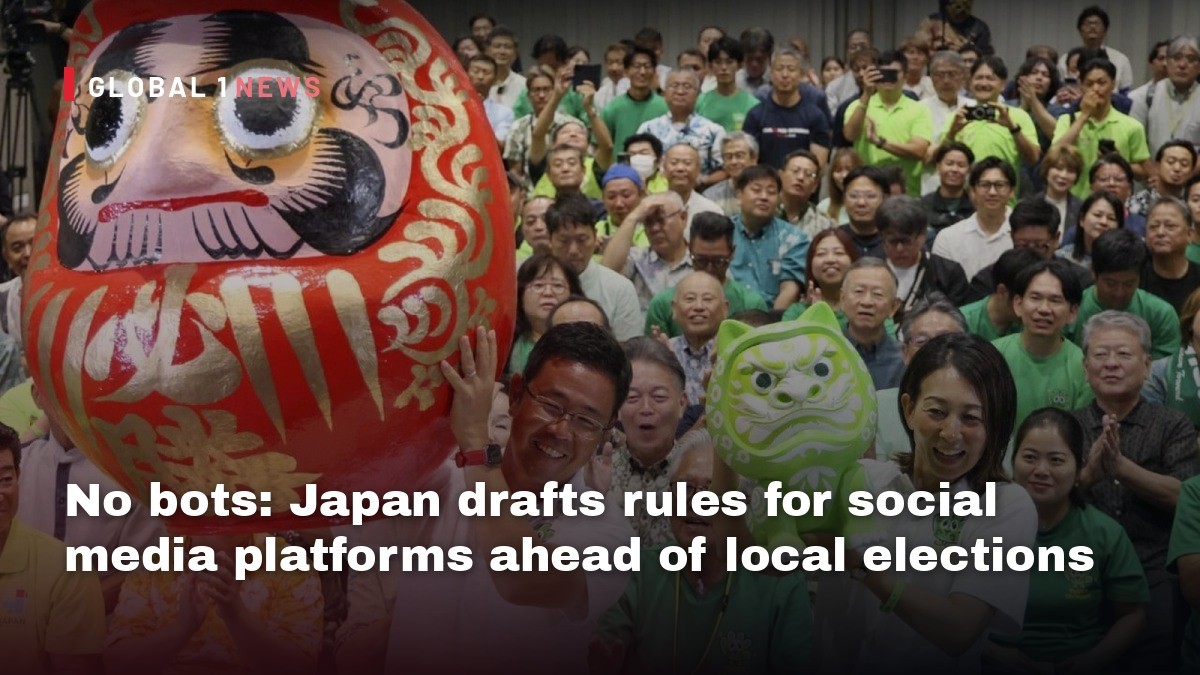
Japan’s Ministry of Internal Affairs and Communications unveiled a draft set of guidelines on Friday that aim to tighten the oversight of social media platforms ahead of the country’s upcoming unified local elections. The draft, targeting thirteen major operators, seeks to curb the spread of misinformation and disinformation that could jeopardise the fairness of the electoral process. By mandating stricter screening of users who access monetisation tools, imposing temporary suspensions of those tools when harmful content appears, and requiring warning labels on AI‑generated images and videos, the ministry signals a decisive move toward greater regulatory control of the digital public sphere.
Scope of the draft guidelines
The draft guidelines focus on the “monetisation features” offered by large social media platforms – tools that enable users to earn revenue from posts, livestreams, or other forms of content. Operators will be required to establish clear eligibility criteria for users who wish to activate these features, and to implement “strict screening procedures” to verify that users meet those standards. The intention is to prevent individuals or organisations with malicious intent from exploiting monetisation mechanisms to amplify false or misleading narratives during the election period.
In addition to the screening requirement, the draft stipulates that platforms must be prepared to suspend monetisation capabilities when content is identified as harmful to the fairness of elections. The suspension is to be applied “if content that harms the fairness of elections is posted,” indicating a direct link between the nature of the content and the activation of punitive measures. The guidelines also call for the addition of warning labels on harmful images and videos that are generated by artificial intelligence, reflecting growing concerns about deep‑fakes and synthetic media in political discourse.
Legal backdrop and timeline
The new draft arrives on the heels of a legislative amendment passed by the Japanese parliament in July. That amendment to the law governing information distribution platforms obliges operators to mitigate harmful impacts on public discourse and assigns the ministry the responsibility of issuing detailed implementation guidelines. The revised law is set to take effect on 1 March 2027, positioning the guidelines as a preparatory step for the “unified local elections in the spring,” which are expected to be the next major political event on Japan’s calendar.
By releasing the draft ahead of the formal adoption, the ministry signals its intent to engage with stakeholders and the public before the guidelines become binding. The ministry will open a public comment period starting on Saturday, inviting feedback from industry players, civil society, and individual users. This consultation phase is designed to refine the measures and ensure that they are practicable for the thirteen platforms identified for compliance.
Implications for platform operators
For the thirteen major social media operators targeted by the draft, the new obligations will likely require adjustments to internal policies and technical systems. Establishing eligibility requirements means that platforms must develop criteria—potentially including identity verification, age checks, and compliance with local regulations—to determine who may access monetisation tools. The “strict screening procedures” will demand robust verification processes, possibly integrating automated checks with human review to meet the ministry’s standards.
Moreover, the requirement to suspend monetisation when harmful election‑related content is posted introduces a conditional enforcement mechanism. Platforms will need to monitor content in real time, identify posts that could undermine electoral fairness, and act swiftly to disable revenue‑generating features for the offending accounts. This could increase operational costs and raise questions about the thresholds for determining what constitutes “harmful” content, a point that is likely to surface during the public comment period.
AI‑generated media and warning labels
The draft’s focus on AI‑generated images and videos reflects a broader global concern about synthetic media’s capacity to distort political realities. By mandating warning labels on “harmful images and videos generated by artificial intelligence,” the ministry aims to give users a clear visual cue that the content may be fabricated or manipulated. This approach aligns with emerging best practices in other jurisdictions that seek to preserve the integrity of information ecosystems without outright banning AI tools.
Implementing such labeling will require platforms to develop detection capabilities that can flag AI‑generated media with a reasonable degree of accuracy. The guidelines do not specify the technical standards for these warnings, leaving room for platforms to propose methodologies during the consultation phase. Nevertheless, the expectation is that any identified AI‑generated content deemed harmful to election fairness will carry a visible disclaimer, thereby reducing the risk of unwittingly spreading false narratives.
Public consultation and stakeholder response
The ministry’s decision to solicit public comments starting on Saturday opens a window for a range of stakeholders to influence the final shape of the guidelines. Industry groups representing the targeted platforms are likely to raise concerns about the feasibility of the screening and suspension mechanisms, as well as the potential impact on user engagement and revenue streams. Civil‑society organisations, particularly those focused on election integrity and digital rights, may advocate for stringent enforcement to curb misinformation while cautioning against over‑broad restrictions that could infringe on freedom of expression.
Given the timing—just months before the unified local elections—the consultation process is expected to be intensive. Stakeholders will need to balance the urgency of safeguarding electoral fairness with the practicalities of implementing new compliance frameworks. The ministry’s openness to feedback suggests a willingness to adjust the guidelines, but the core objectives of screening monetisation users and labeling AI‑generated harmful content appear non‑negotiable.
Potential impact on the election environment
If the guidelines are adopted as drafted, the immediate effect will be a heightened level of scrutiny over political content disseminated through major social media channels. By restricting monetisation for accounts that post election‑related misinformation, the ministry aims to diminish the financial incentives that can drive the rapid spread of false narratives. The warning labels on AI‑generated media will serve as a deterrent, signaling to users that synthetic content is subject to verification and may be less credible.
These measures could contribute to a more level playing field for candidates and parties, reducing the ability of malicious actors to weaponise algorithmic amplification. However, the effectiveness of the guidelines will depend on the platforms’ capacity to enforce them consistently and transparently. Any perceived inconsistencies or delays in suspending monetisation could undermine public confidence in the regulatory approach.
Looking ahead: the broader regulatory trajectory
The draft guidelines represent a concrete step in Japan’s evolving approach to digital governance, particularly in the context of democratic processes. By linking platform responsibilities directly to election fairness, the ministry is setting a precedent that could extend to other domains, such as public health communications or national security. The upcoming implementation of the revised law on 1 March 2027 will formalise these expectations, making compliance a legal requirement for the identified platforms.
Future iterations of the guidelines may refine the definitions of “harmful content” and expand the scope of monitoring beyond monetisation features. As AI technologies advance and the sophistication of misinformation campaigns grows, Japan’s regulatory framework will likely need to adapt continuously. The current draft, therefore, should be viewed as an initial calibration point in a broader, ongoing effort to align the digital public sphere with the principles of transparency, fairness, and democratic integrity.
This article was produced with AI-assisted research and editorial support. Reporting is based on the source material cited below. Sources: South China Morning Post; scmp.com; Global1.News (23 October 2026).
By Kenji Tanaka, Staff Writer
What's Your Reaction?
 Like
0
 Dislike
0
 Love
0
 Funny
0
 Wow
0
 Sad
0
 Angry
0

Japan Correspondent at Global1.News. Tokyo-based voice covering Japanese politics, technology, economy, and culture. Tracks the intersection of tradition and innovation in one of the world's most dynamic societies.












Comments (0)