
Nigeria confirms Ebola case linked to East Africa
Nigeria has confirmed its first Ebola case linked to the ongoing outbreak in East Africa, a development that has reignited concerns across the continent about the virus’s capacity to cross borders.
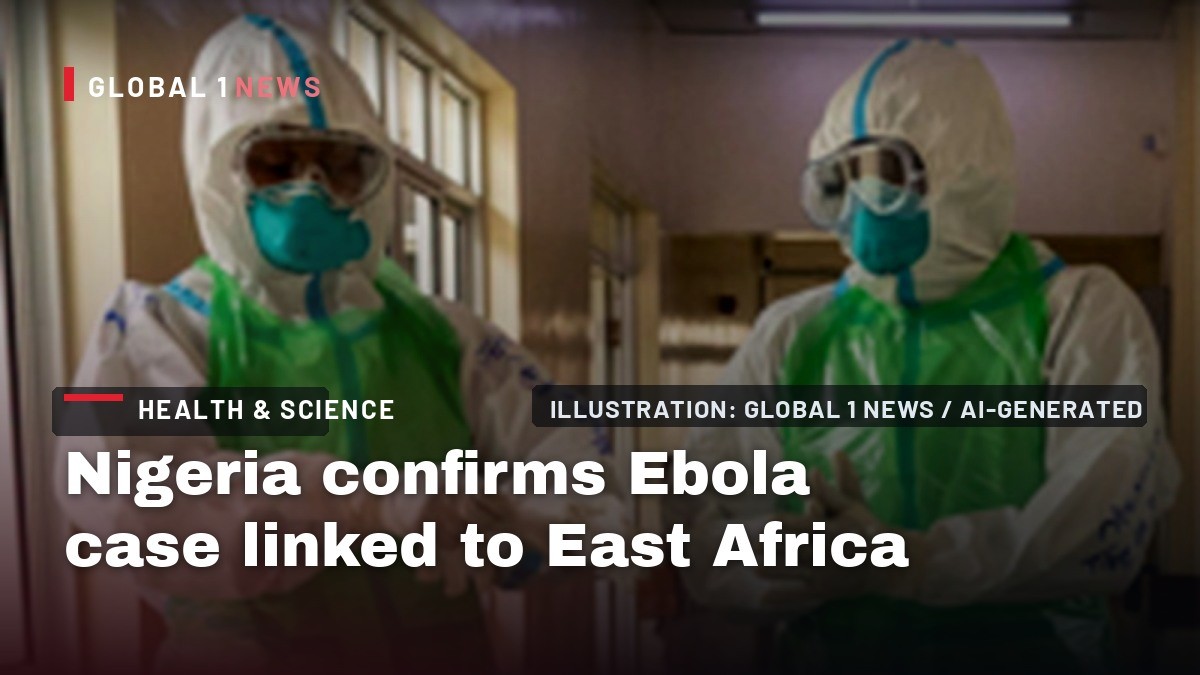
Nigeria has confirmed its first Ebola case linked to the ongoing outbreak in East Africa, a development that has reignited concerns across the continent about the virus’s capacity to cross borders. The patient, a female diplomat’s wife who arrived in Abuja from Uganda, was placed in isolation after developing symptoms four days after her arrival. Health Minister Muhammad Ali Pate confirmed that laboratory tests validated the diagnosis, and authorities have swiftly begun contact‑tracing to contain any further spread.
How the case was identified
The woman began showing symptoms on 7 October, according to the World Health Organization, prompting her admission to a hospital in Nigeria’s capital. Health officials say she was asymptomatic when she entered the country, a detail that aligns with the known incubation period of Ebola, which can range from two to 21 days. This latency means that travelers may appear healthy while carrying the virus, complicating early detection.
Following her admission, the Nigerian Centre for Disease Control (NCDC) activated its emergency protocols. Contact‑tracing teams have identified 44 close contacts, who are now being monitored and, where necessary, placed under observation. The government has urged the public to cooperate with health officials, emphasizing that swift isolation of contacts is essential to preventing community transmission.
Travel route and investigation
Uganda’s Director General of Health Services, Charles Olaro, provided a brief outline of the woman’s movements. He said she travelled to eastern Democratic Republic of the Congo for business before transiting through Uganda in early October. Her symptoms only manifested after she reached Nigeria, leading officials to suspect that exposure occurred in Uganda, though the exact location remains under investigation.
The woman’s travel documents are now being examined to reconstruct her itinerary in detail. Olaro highlighted that the lack of a clear travel history hampers contact‑tracing efforts, as authorities need to pinpoint where the virus may have been contracted. Nigeria’s health minister echoed this uncertainty, noting that while the patient had no symptoms on arrival, she had not confirmed travel to the DRC, leaving a gap in the chain of transmission.
Regional context of the outbreak
The current East African Ebola crisis began in the Democratic Republic of the Congo in May and has already claimed at least 4,600 lives, with more than 9,500 recorded cases, according to the European Centre for Disease Prevention and Control. The outbreak spread to Uganda, where at least two deaths were reported before the country declared itself free of the disease in August after the last patient was discharged.
Kenya has also reported a cluster of infections, with at least nine confirmed cases. The United States recently raised its travel advisory for Kenya, urging citizens to reconsider travel due to health risks. These developments underscore how the virus continues to move across borders, testing the resilience of national health systems.
Nigeria’s preparedness and past experience
Nigeria’s response to the 2014 Ebola outbreak is often cited as a success story. At that time, the country managed to halt the spread after a single imported case, limiting fatalities to eight deaths. The experience has informed current preparedness measures, including heightened disease surveillance and the issuance of health declaration forms for travelers arriving from affected regions.
Since the current outbreak began, the NCDC has been proactive, advising travelers to remain vigilant and seek immediate medical attention if symptoms appear. The agency also stresses the importance of regular handwashing and sanitising, echoing Uganda’s public health message that urges calm and vigilance.
Public health messaging and community response
Both Nigerian and Ugandan health ministries have appealed to the public to stay calm while adhering to preventive measures. Uganda’s Ministry of Health reminded citizens to practice regular handwashing and sanitising, a simple yet vital step in limiting transmission. In Nigeria, Minister Pate’s statements on national television reinforced the need for cooperation with contact‑tracing efforts and highlighted the government’s commitment to transparency.
Community leaders and media outlets are playing a crucial role in disseminating accurate information, countering misinformation that can fuel panic. By keeping the public informed about the incubation period, symptoms, and routes of transmission, health authorities aim to encourage early reporting of suspected cases.
Challenges of containment in a mobile world
The case in Nigeria illustrates the difficulty of containing Ebola in an era of rapid cross‑border movement. The patient’s journey spanned three nations—DR Congo, Uganda, and Nigeria—without detection, revealing gaps in surveillance at points of entry. While Nigeria has instituted health declaration forms for travelers from high‑risk countries, those arriving from other regions remain exempt, a policy that may need reassessment as the outbreak evolves.
Moreover, the virus’s ability to remain asymptomatic for up to three weeks complicates screening procedures that rely on visible symptoms. This underscores the importance of robust contact‑tracing networks and the need for regional cooperation to share travel data and health records promptly.
Looking ahead: regional cooperation and vaccine prospects
Experts note that the Bundibugyo species of Ebola, which is responsible for the current outbreak, currently has no approved vaccine or treatment, though clinical trials are underway. The absence of a definitive cure heightens the urgency for coordinated public health responses across Africa.
Regional bodies such as the Africa Centres for Disease Control and Prevention (Africa CDC) are expected to play a pivotal role in harmonising strategies, from standardising travel screening protocols to facilitating the distribution of experimental therapeutics once they become available. As Nigeria navigates this latest challenge, the lessons of 2014 will likely guide its actions, but the scale of the current outbreak may demand even greater collaboration across the continent.
This article was produced with AI-assisted research and editorial support. Reporting is based on the source material cited below. Sources: BBC News Africa; bbc.co.uk; Global1.News (21 October 2026).
By Amara Diop, Staff Writer
What's Your Reaction?
 Like
0
 Dislike
0
 Love
0
 Funny
0
 Wow
0
 Sad
0
 Angry
0

West Africa/Sahel Correspondent at Global1.News. Dakar-based journalist covering politics, security, climate, and development across Francophone and Anglophone West Africa. Tells the stories of a region undergoing profound transformation.














Comments (0)