
NBI: P3.5 billion shabu from Laos points to Philippines network
Manila – The recent seizure of more than half a metric ton of suspected shabu at Luang Prabang International Airport in Laos has laid bare the scale of the Philippines’ illicit drug market and the sophisticated logistics that traffickers employ to move bulk shipments by air.
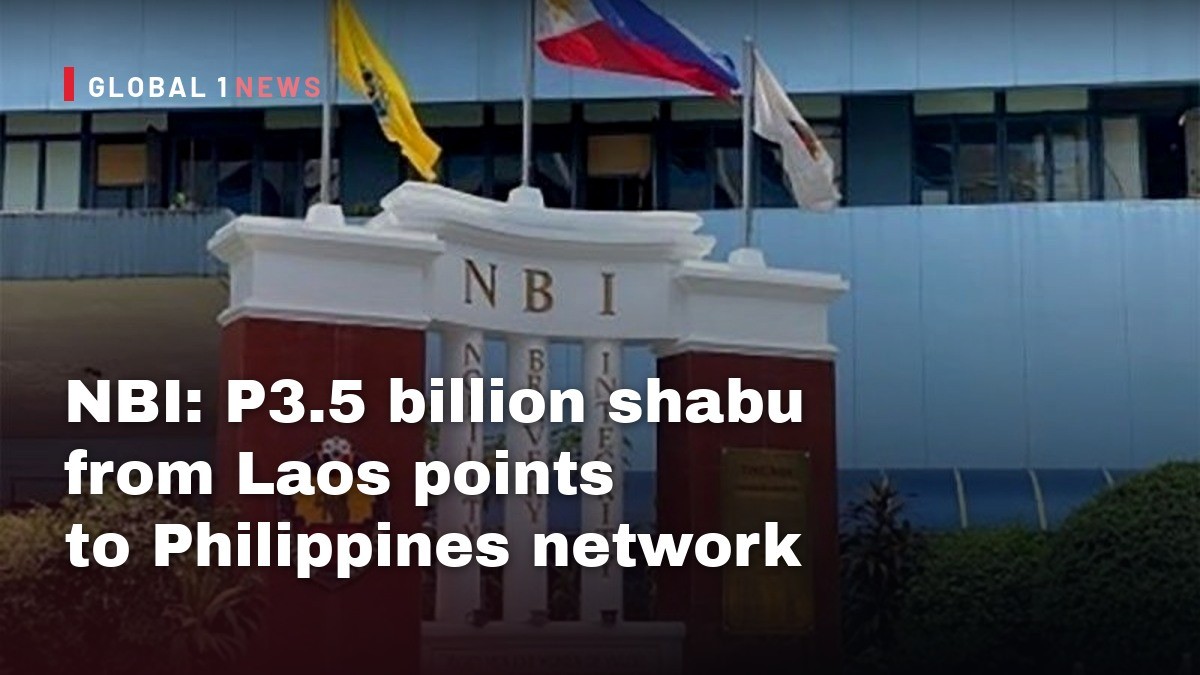
Manila – The recent seizure of more than half a metric ton of suspected shabu at Luang Prabang International Airport in Laos has laid bare the scale of the Philippines’ illicit drug market and the sophisticated logistics that traffickers employ to move bulk shipments by air. The operation, valued at roughly three‑and‑a‑half billion pesos, is the latest reminder that drug syndicates are willing to marshal significant financial resources and cross‑border networks to supply the streets of Manila, provincial barangays and even overseas Filipino communities.
Scope of the intercepted shipment
The National Bureau of Investigation’s Dangerous Drugs Division, led by Ross Jonathan Galicia, disclosed that the seized cargo weighed 521 kilograms. While the exact purity of the substance was not detailed, the sheer volume signals a market that can absorb shipments of this magnitude. Galicia emphasized that “there is a local crime group that is operating within the country,” underscoring that the operation was not a one‑off smuggling attempt but part of a broader supply chain feeding the domestic demand for methamphetamine.
Officials highlighted that the shipment’s value—estimated at three‑and‑a‑half billion pesos—reflects the lucrative nature of the drug trade in the Philippines. Such figures, though not broken down further, illustrate why criminal organizations are prepared to charter aircraft and coordinate complex logistics to move the product quickly and discreetly.
Investigative leads point to a domestic network
During a hearing before the House Committee on Dangerous Drugs, Galicia urged lawmakers to look beyond the point of interception and focus on the domestic actors who would receive and distribute the drugs. “Destination is the Philippines. We have established that,” he asserted, adding that the traffickers possessed the financial muscle to charter a plane for the operation.
The Philippine Drug Enforcement Agency (PDEA) and the Philippine National Police (PNP) are jointly building a case against individuals alleged to have financed, arranged, and received the shipment. PDEA Director‑General Isagani Nerez confirmed that investigators are gathering transaction documents related to the aircraft charter and are seeking official records from their Lao counterparts.
Customs and aviation agencies still seeking proof
The Bureau of Customs, represented by Deputy Commissioner for intelligence Emmanuel Luis Licup, reported that it has yet to identify a verified Philippine consignee. “No verified Philippine consignee identified,” Licup said, noting that the agency is awaiting additional documentation from Lao authorities to validate the alleged destination.
Similarly, the Civil Aviation Authority of the Philippines confirmed that an entry and exit permit had been requested for the aircraft, but the flight was never activated and the plane never entered Philippine airspace. This gap in the paper trail complicates efforts to pinpoint exactly how the shipment would have entered the country, underscoring the need for coordinated intelligence sharing among agencies.
Key suspects under police pursuit
Police have intensified their search for former Bangsamoro parliament member Edrieza Hadji Nasser Rimbang, whom the PNP chief Gen. Jose Melencio Nartatez Jr. has tagged as the financier of the operation. Alongside Rimbang, four other individuals—Abdulah Karim Macalatas, Abdullah Rimbang Macarimbang and Aldren Samante—have been subpoenaed but have not yet appeared before investigators.
The Criminal Investigation and Detection Group (CIDG) is wrapping up its probe and plans to submit a report to Gen. Nartatez as early as today. “The evidence gathered reflects a thorough, evidence‑based approach aimed at establishing the truth and ensuring accountability,” the CIDG chief said, emphasizing the agency’s commitment to a meticulous case‑building process.
Evidence collection and subpoena strategy
According to the CIDG, more than forty subpoenas have been issued to individuals and companies linked to the smuggling attempt. Investigators have reviewed CCTV footage and examined documents tied to the chartered aircraft, seeking to map out the financial and logistical pathways used by the traffickers.
This methodical approach reflects a broader shift in Philippine law‑enforcement tactics, moving from reactive seizures to proactive dismantling of supply chains. By targeting the financiers and logisticians behind the shipment, authorities hope to disrupt the flow of shabu before it reaches the streets.
Implications for local communities
For ordinary Filipinos, the interception of a shipment of this size carries tangible consequences. The availability of large quantities of methamphetamine fuels addiction, strains families, and fuels crime in barangays across the archipelago. Communities already grappling with the social costs of drug abuse—such as loss of livelihood, broken homes, and the tragic loss of young lives—stand to benefit from a successful crackdown on the supply side.
Moreover, the case underscores the importance of inter‑agency cooperation. When customs, aviation, police, and drug enforcement bodies align their efforts, the chances of intercepting future shipments improve, offering a glimmer of hope for neighborhoods yearning for peace and safety.
Looking ahead: challenges and next steps
While the current investigation has uncovered a sophisticated operation, the lack of a confirmed Philippine consignee and the absence of an aircraft entry record highlight lingering gaps. Continued dialogue with Lao authorities will be essential to obtain the missing aviation and customs documents that could solidify the legal case against the alleged financiers.
As the CIDG finalizes its report and the PNP and PDEA prepare to file charges, the broader fight against shabu will hinge on sustained vigilance, robust intelligence sharing, and community‑based prevention programs. The hope is that by shining a light on the networks that enable drug trafficking, the government can protect vulnerable families and uphold the democratic values that bind the Filipino people together.
This article was produced with AI-assisted research and editorial support. Reporting is based on the source material cited below. Sources: Philstar.com; Global1.News (23 October 2026).
By Bella Reyes, Staff Writer
What's Your Reaction?
 Like
0
 Dislike
0
 Love
0
 Funny
0
 Wow
0
 Sad
0
 Angry
0

Philippines/Southeast Asia Correspondent at Global1.News. Manila-based journalist covering Philippine politics, environment, maritime security, and social issues. Passionate about marine conservation and the communities protecting the Philippines' natural heritage.













Comments (0)