
Merging SpaceX and Tesla would be a "good idea," Musk says
Elon Musk used SpaceX’s third‑quarter earnings call on Tuesday to float a notion that has been simmering behind closed doors for months: a formal merger of his two flagship enterprises, SpaceX and Tesla.
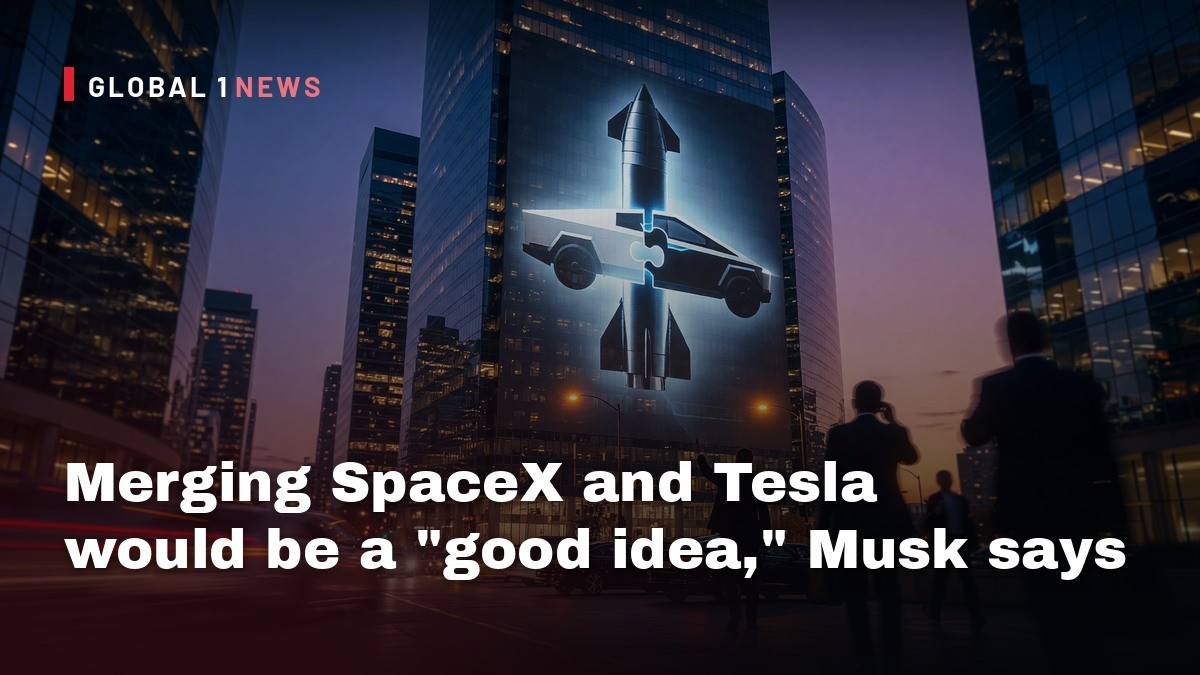
Elon Musk used SpaceX’s third‑quarter earnings call on Tuesday to float a notion that has been simmering behind closed doors for months: a formal merger of his two flagship enterprises, SpaceX and Tesla. “Do I think it would be a good idea? Yes,” he said, adding that the ultimate decision rests with shareholders. The statement, while brief, set off a cascade of questions about the strategic logic, regulatory hurdles, and the power dynamics of a Musk‑centric mega‑corporation.
Why Musk Wants Them Together
At its core, Musk’s pitch hinges on the convergence of two once‑distinct business models around artificial intelligence. He told investors that both firms are “pretty much in the superintelligence singularity,” and that a combined entity could pool resources for AI software, chip design, and the “Terafab” manufacturing platform. The synergy, he argues, extends to robotics, orbital data centers, and the “Starmind constellation” that would boost connectivity for Tesla hardware.
In Musk’s view, the merger would not be a mere financial maneuver but a strategic alignment of two companies that are already pivoting toward AI‑driven futures. SpaceX’s public filings indicate that future revenue will largely stem from orbital data centers powering Earth‑based AI workloads, while Tesla’s roadmap emphasizes self‑driving cars, humanoid robots, and industrial hardware—all of which demand advanced chips and energy solutions that SpaceX can help supply.
The Shareholder Mechanics
Both companies have responded to shareholder pressure by forming “special committees of independent directors” to explore the merger, a move Musk emphasized to underscore his conflicted position. He made clear that he cannot sit on those committees, leaving the committees to negotiate terms without his direct hand.
Crucially, Musk noted that “50 percent of all Tesla shareholders, not just those with voting shares, would have to approve of the merger.” That threshold reflects the broader concern that a merger could reshape voting power across the combined entity, especially given the disparate ownership structures of the two firms.
Control and Voting Power
One of the most tangible incentives for Musk is the prospect of greater control. SpaceX’s IPO documents show Musk holds more than 82 percent of voting power, whereas his stake at Tesla translates to roughly 20 percent voting power. By merging the two, Musk could potentially command a majority of voting shares in the new conglomerate, even though he currently wields less direct influence at Tesla.
The math, however, is contingent on how the companies are valued at the time of a deal. At the moment of Musk’s announcement, SpaceX and Tesla carried market valuations of about $2 trillion and $1.5 trillion, respectively. Any merger would require reconciling those figures, a process that could shift the balance of voting rights depending on the agreed‑upon exchange ratio.
Regulatory and Political Headwinds
The merger would inevitably attract scrutiny from U.S. regulators. Combining a dominant space launch provider with a leading electric‑vehicle and AI hardware maker raises antitrust flags, especially given Musk’s already outsized influence in multiple high‑growth sectors. The article notes that “some political leaders… may also object to a single Musk mega‑corporation,” reflecting broader anxieties about concentration of power.
Morningstar’s earlier analysis warned that valuation disagreements could be “significant,” particularly among Tesla shareholders who may view the deal as diluting their influence. Those concerns could translate into a tougher approval process, both in the boardrooms of the special committees and in the broader shareholder vote.
Strategic Implications for SpaceX’s Core Mission
SpaceX’s original raison d’être—colonizing Mars—could be reshaped by a merger focused on AI and data infrastructure. While the company’s orbital data centers promise a lucrative revenue stream, the shift toward silicon‑centric projects may deprioritize deep‑space ambitions. The source material suggests that a combined Musk‑universe would “focus on artificial intelligence and the computing power needed to back those ambitions,” potentially sidelining the long‑term vision of establishing a self‑sustaining presence on the Red Planet.
That isn’t to say the Mars goal would be abandoned, but the strategic emphasis would likely tilt toward projects that directly support AI workloads—high‑throughput satellite constellations, advanced chip fabrication, and integrated robotics—rather than the heavy‑lift launch services that have defined SpaceX’s public image.
What This Means for Tesla’s Roadmap
For Tesla, the merger could accelerate its push into autonomous driving, robotics, and industrial hardware by leveraging SpaceX’s launch capabilities and orbital connectivity. The prospect of “mass to orbit with the Starmind constellation” hints at a future where Tesla’s vehicles and robots are tethered to a low‑latency, space‑based network, potentially unlocking new levels of real‑time AI processing.
However, the shift also raises questions about capital allocation. Tesla’s current trajectory focuses on scaling production of electric vehicles and expanding its Full Self‑Driving (FSD) suite. Diverting resources to space‑based infrastructure could strain the company’s ability to meet near‑term delivery targets, especially if shareholder approval becomes a contentious hurdle.
Bottom Line: A High‑Stakes Gamble
Elon Musk’s endorsement of a SpaceX‑Tesla merger is more than a headline‑grabbing sound bite; it reflects a calculated bet that the future of both companies lies in a unified AI‑centric platform. The potential upside—combined R&D, shared chip and data infrastructure, and amplified voting control—must be weighed against regulatory scrutiny, shareholder approval thresholds, and the risk of diluting each firm’s core missions.
As the special committees deliberate, investors, regulators, and the public will be watching closely. If the merger materializes, it could reshape the competitive landscape of AI, automotive, and space industries, cementing Musk’s influence over a swath of technologies that define the next decade. If it stalls, the companies will continue to chase parallel AI ambitions, each navigating its own set of challenges while the Musk empire remains fragmented but still formidable.
This article was produced with AI-assisted research and editorial support. Reporting is based on the source material cited below. Sources: Ars Technica; arstechnica.com; Global1.News (21 October 2026).
By Jessica Ali, Staff Writer
What's Your Reaction?
 Like
0
 Dislike
0
 Love
0
 Funny
0
 Wow
0
 Sad
0
 Angry
0

Editor-in-Chief at Global1.News. Atlanta-based journalist who cuts through the BS and tells it like it is. Lead anchor, host, and the voice you hear when the spin stops and the truth starts.











Comments (0)