
Greece, Egypt in talks to extend maritime zone further east
In the wake of eastern Libya’s parliament ratifying a contentious maritime accord with Turkey, Greece and Egypt have moved swiftly to discuss extending their own Exclusive Economic Zone (EEZ) eastwards toward Cyprus.
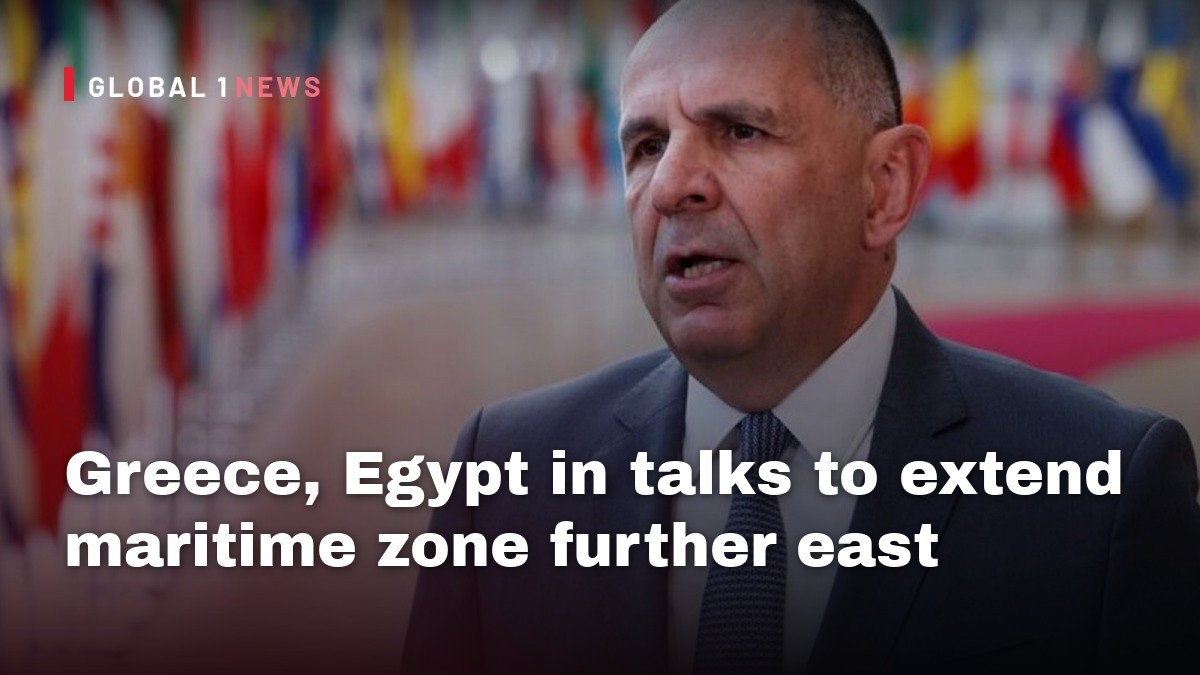
In the wake of eastern Libya’s parliament ratifying a contentious maritime accord with Turkey, Greece and Egypt have moved swiftly to discuss extending their own Exclusive Economic Zone (EEZ) eastwards toward Cyprus. The talks, disclosed by Greek Foreign Minister George Gerapetritis, come amid a broader regional contest over offshore boundaries that has drawn in multiple Mediterranean states, including Israel, whose own maritime interests intersect with the evolving dynamics.
Background to the maritime dispute
The eastern Mediterranean has long been a flashpoint for competing claims over offshore resources, particularly natural gas reserves that have attracted the attention of energy firms and national governments alike. In 2020, Greece and Egypt signed a bilateral agreement delineating an EEZ that runs along their shared maritime border, establishing a framework for cooperation and resource exploitation. This pact was intended to solidify a legal baseline in accordance with the United Nations Convention on the Law of the Sea (UNCLOS).
However, the 2019 maritime memorandum between Turkey and Libya, which was ratified by eastern Libya’s parliament earlier this week, has been condemned by Greece, Egypt and Cyprus as a breach of international law. The agreement redefines maritime boundaries in a way that overlaps with the EEZs claimed by the three countries, prompting renewed diplomatic activity to counterbalance Turkey’s expanding maritime claims.
Greek and Egyptian diplomatic stance
Foreign Minister George Gerapetritis emphasized that any extension of the Greece‑Egypt EEZ would remain fully compliant with UNCLOS, underscoring the legal foundation of their position. Speaking on the social platform X, he reiterated that the proposed expansion aligns with established international norms, positioning Greece and Egypt as defenders of the rule‑based order in the Mediterranean.
Egyptian Foreign Minister Badr Abdelatty echoed this sentiment, reaffirming Egypt’s opposition to the Libya‑Turkey memorandum and its commitment to international law. Both ministers highlighted that their joint effort to extend the EEZ is not merely a bilateral matter but part of a broader coalition of states seeking to uphold UNCLOS principles against unilateral maritime redefinitions.
Strategic implications for Cyprus
Cyprus, which has historically aligned with Greece and Egypt on maritime issues, stands to be directly affected by any eastward extension of the Greece‑Egypt EEZ. While the source material does not detail Cyprus’s formal response, the country’s longstanding opposition to the Turkey‑Libya accord suggests that an expanded Greek‑Egyptan zone could provide a counterweight to Turkish claims that encroach upon Cypriot waters.
For Cyprus, a strengthened partnership with Greece and Egypt could translate into greater leverage in negotiations over offshore gas fields, many of which lie in contested areas. The potential alignment also reinforces Cyprus’s diplomatic outreach to other regional actors, including Israel, which shares similar concerns about maritime delimitation and resource access.
Israel’s perspective on the shifting maritime map
Israel, while not directly mentioned in the source, is a key stakeholder in the eastern Mediterranean’s energy landscape. Israeli offshore gas fields, such as Leviathan and Tamar, are situated in proximity to the maritime zones under discussion. Any alteration to the EEZ boundaries could impact Israel’s access routes, export plans, and security calculations.
Given Israel’s close ties with both Greece and Cyprus—particularly in defense and energy cooperation—the country is likely to monitor these developments closely. Israel’s own adherence to UNCLOS principles and its strategic partnerships in the region suggest that it would view the Greece‑Egypt extension as a stabilizing factor that counters Turkey’s assertive maritime posture.
Potential economic outcomes
The extension of the Greece‑Egypt EEZ could open new areas for exploration and exploitation of hydrocarbon resources. While the source material does not provide specific estimates of reserves or investment figures, the legal clarification of maritime boundaries typically encourages energy companies to commit capital to offshore projects, knowing that the risk of jurisdictional disputes is reduced.
Moreover, a clearer EEZ framework can facilitate the development of infrastructure such as pipelines and LNG terminals, fostering regional energy interdependence. For Greece and Egypt, the economic upside includes increased royalties, job creation, and the potential to become energy exporters to European markets seeking alternatives to Russian gas.
Regional diplomatic ripple effects
The Greece‑Egypt initiative underscores a broader coalition of Mediterranean states rallying around the rule of law. By reaffirming their opposition to the Turkey‑Libya memorandum, both nations signal to other regional actors—such as Italy, France, and the European Union—that unilateral maritime redefinitions will be met with coordinated diplomatic pushback.
This diplomatic posture also aligns with ongoing security collaborations in the region. Joint naval exercises, intelligence sharing, and coordinated patrols have become common among Greece, Egypt, Cyprus, and Israel, reinforcing a security architecture that supports their maritime claims. The extension talks thus serve both legal and security objectives, strengthening a collective front against perceived maritime aggression.
Looking ahead: what to watch
As the talks progress, several developments will be critical to monitor. First, the formal terms of any EEZ extension agreement between Greece and Egypt will need to be disclosed, clarifying the exact geographic scope and the mechanisms for joint resource management. Second, the reaction of Turkey and Libya to this counter‑initiative will shape the diplomatic tenor of the region; any escalation could prompt further international mediation.
Finally, the role of external actors—particularly the European Union, which has vested interests in Mediterranean energy security—will be pivotal. The EU’s support for UNCLOS‑based solutions could bolster the Greece‑Egypt stance, while also providing a platform for broader multilateral dialogue. For Israel, staying engaged with its allies and maintaining a robust diplomatic presence will be essential to safeguard its own maritime interests amid the shifting map.
This article was produced with AI-assisted research and editorial support. Reporting is based on the source material cited below. Sources: Al-Monitor; al-monitor.com; Global1.News (23 October 2026).
By Hannah Berg, Staff Writer
What's Your Reaction?
 Like
0
 Dislike
0
 Love
0
 Funny
0
 Wow
0
 Sad
0
 Angry
0
Israel Correspondent at Global1.News. Based in Tel Aviv, covering Israeli politics, security, technology, and society. Provides balanced, deeply-sourced reporting on one of the most closely-watched regions in the world.










Comments (0)