
Florida DMV hacked after police dept insecurely stored login info
Florida’s Department of Highway Safety and Motor Vehicles finally broke its silence on a breach that exposed driver’s license records, vehicle data and even scanned document images.
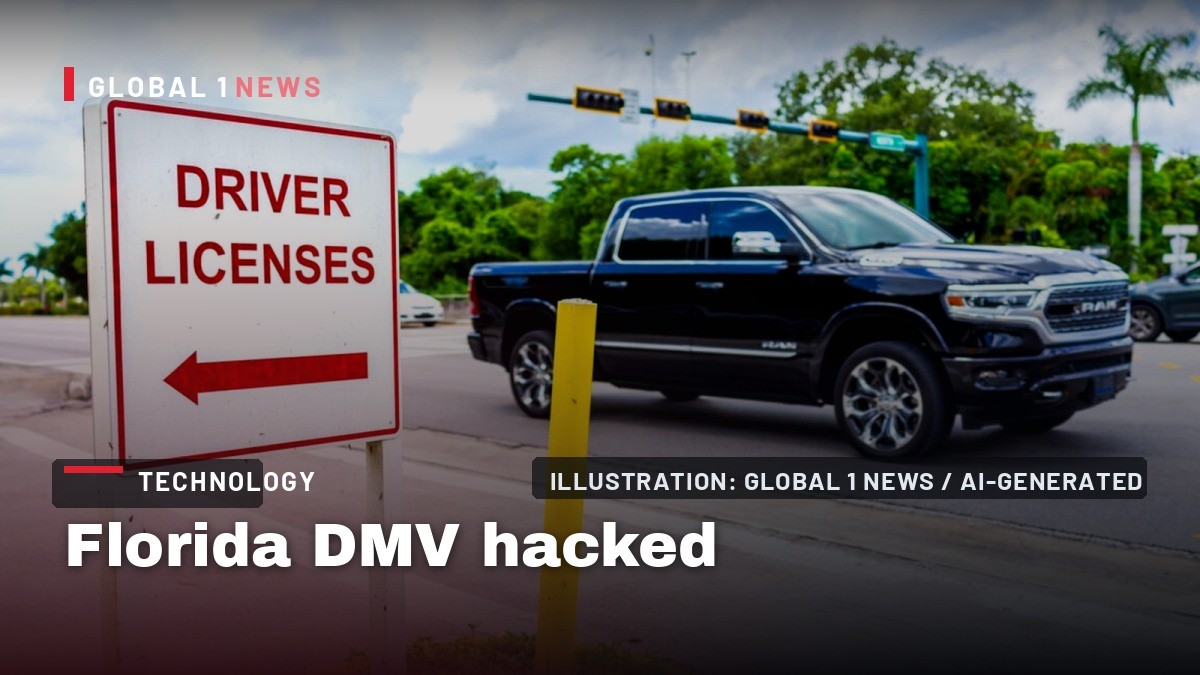
Florida’s Department of Highway Safety and Motor Vehicles finally broke its silence on a breach that exposed driver’s license records, vehicle data and even scanned document images. The agency says a “malicious actor” slipped in on September 4, 2026 using compromised credentials stolen from a local law‑enforcement employee who stored the login on an electronic device. The fallout is a textbook case of how sloppy credential handling can give a cyber‑criminal a foothold into a massive trove of personal data, and why independent hosting providers need to lock down every secret key they hand to a third‑party.
What actually happened?
The FLHSMV’s own notice admits that an “international cybercriminal organization” accessed “certain department records” on September 4, 2026. The breach was discovered sometime after, prompting the agency to take “immediate steps” – blocking the unauthorized access, resetting credentials, and bringing in cybersecurity professionals. No evidence of data misuse has surfaced yet, but the agency is honest enough to say the stolen material includes driver’s license data, vehicle registration info, document images and other personal details.
Victims are being mailed letters offering a year of credit monitoring from Sontiq, Inc., but the department concedes it may not have up‑to‑date contact info for former residents whose records remain in the system. Those who think they might be affected are told to email a generic inbox ([email protected]) to confirm. Meanwhile, the Florida subreddit is buzzing with users who have already placed fraud alerts or security freezes with the credit bureaus, following the agency’s own recommendation to monitor financial accounts and credit reports.
Who’s behind the attack?
The public-facing FAQ points to a “criminal actor” who got hold of credentials from a law‑enforcement employee. Independent reporting from NBC Miami links the breach to a group calling itself ShinyHunters – the same outfit that recently claimed credit for hacking the FBI. ShinyHunters posted a photo of a driver’s license belonging to Jeffrey Epstein, a former Florida resident, as proof of the breach, then later scrubbed references to Florida, suggesting a possible negotiation to stop a data dump.
Ian Gray, vice‑president of intelligence at Flashpoint, told NBC Miami that the removal of Florida mentions likely indicates the state was in talks with ShinyHunters to prevent a leak. The agency, however, never named the group in its official statement and declined to comment on the dark‑web post, leaving a cloud of uncertainty over the true scope of the compromise.
Why this matters to hosting providers
From a founder’s seat, the lesson is blunt: if a single employee stores a password on an insecure device, the whole organization is exposed. In my own decade of running production servers, I’ve seen credential sprawl cause outages that cost clients millions in downtime. The FLHSMV’s breach shows that even a government agency with “additional safeguards” can be undone by a single human error.
Most independent hosting outfits already wrestle with “best practice” fatigue – endless checklists from hyperscalers that look good on paper but crumble under real‑world load. What matters is a zero‑trust mindset: never trust a password once it leaves the vault, enforce MFA everywhere, and audit device security for every staff member who touches credentials. The cost of a breach like this dwarfs the expense of a proper password manager and MFA rollout.
The hyperscaler hype vs. real‑world risk
Big cloud providers love to sell “managed identity” services, promising that they’ll keep your keys safe. In practice, those services are only as secure as the policies you enforce. The FLHSMV incident underscores that relying on a vendor’s “additional safeguards” does not absolve you of responsibility. If you outsource your authentication but still let a lone employee write a password on a sticky note, the breach vector remains.
VC‑funded startups often chase the flashier side of AI‑driven security, touting automated vulnerability scans that sound impressive but can’t catch a user‑level credential slip. The Florida case shows that the “human factor” still trumps any fancy scanner. Independent providers must balance cutting‑edge tools with solid operational discipline – lock down the human element before you invest in the next AI‑powered firewall.
Legal and reputational fallout
Florida’s response – letters, credit monitoring, a public FAQ – is the bare minimum required under state breach notification laws. But the agency admits it may not have current contact data for many former residents, meaning a sizable chunk of affected individuals might never hear the news. That gap is a reputational landmine for any organization that can’t prove it has accurate contact records.
From a business‑risk perspective, the breach could trigger class‑action lawsuits, especially if data is later found on dark‑web markets. Even without evidence of misuse, the mere fact that driver’s license images were exfiltrated is enough to spark regulatory scrutiny and potential fines. Independent hosting firms should therefore treat any breach as a possible catalyst for legal action and have a response plan that includes clear communication, not just a generic “we’re looking into it.”
Actionable steps for providers
First, audit every credential store. If any employee is still using a plain‑text file, a sticky note, or an unsecured device, move them to a vetted password manager with MFA enforcement. Second, enforce least‑privilege access – no one should have blanket read/write rights to sensitive data unless absolutely necessary. Third, implement continuous monitoring for anomalous logins, especially from external IP ranges, and set up alerts for impossible travel or credential reuse.
Fourth, run regular phishing simulations and credential‑handling training. My own team once fell for a fake login portal that harvested admin passwords; the cost of resetting every key and re‑issuing certificates was a full day of downtime. Finally, keep a ready‑to‑deploy breach notification template that includes clear steps for customers to protect themselves – credit monitoring offers are nice, but transparent communication builds trust.
Bottom line
The Florida DMV breach is a stark reminder that even massive government databases are only as strong as the weakest password on a desk. For independent hosting providers, the risk calculus is simple: tighten credential hygiene, adopt zero‑trust principles, and don’t rely on vendor hype to cover human error. The cost of a breach – legal fees, lost customers, and the bruised brand – far outweighs the investment in solid security practices.
In a world where AI can scan for vulnerabilities faster than a human can type a password, the old adage still holds: lock the door before you invite the guests in. Stay sharp, keep your secrets secret, and never let a single slip become a headline.
— Allan Ali, Founder
This article was produced with AI-assisted research and editorial support. Reporting is based on the source material cited below. Sources: Ars Technica; arstechnica.com; Global1.News (20 October 2026).
By Allan Ali, Global1.News
What's Your Reaction?
 Like
0
 Dislike
0
 Love
0
 Funny
0
 Wow
0
 Sad
0
 Angry
0

Publisher of Global1.News. Automation architect, systems builder, and the guy making sure the truth gets published.












Comments (0)