
FAA Clears Boeing's 737 MAX 10, and the Hard Questions Ride Along
The FAA certified Boeing's 737 MAX 10 on 20 October 2026, clearing the largest MAX for production after years of delays. A software fix is still unfinished, and no airline has confirmed a delivery date.
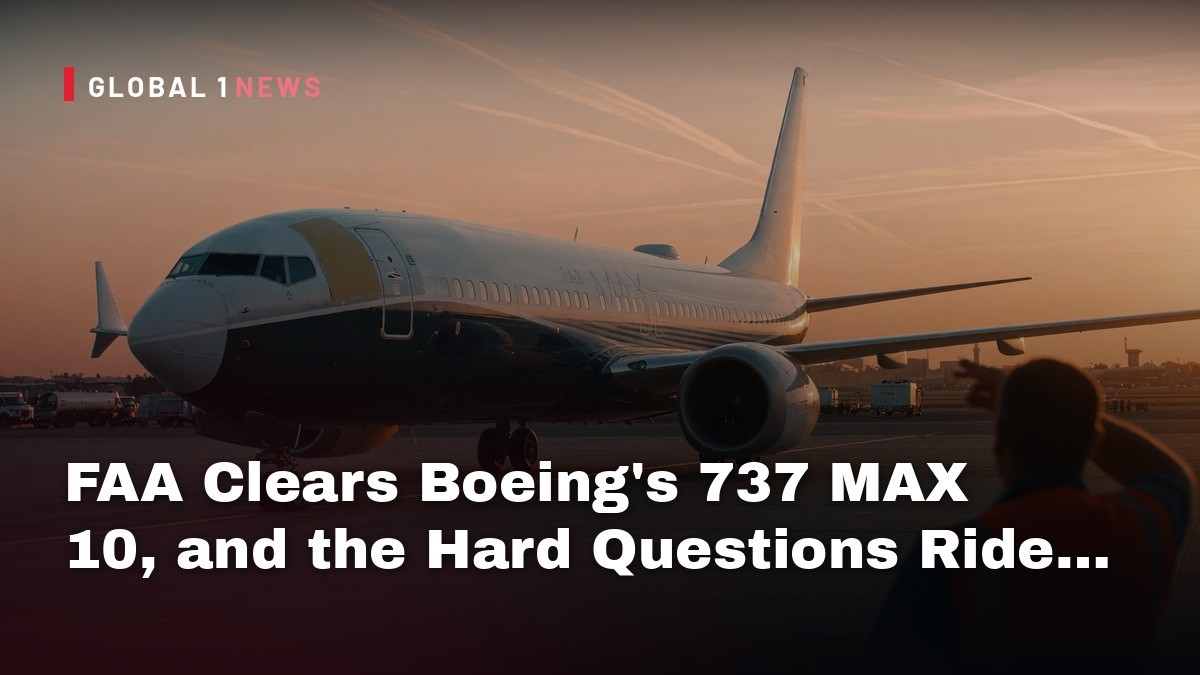
The Federal Aviation Administration certified Boeing's 737 MAX 10 on Tuesday, 20 October 2026, at the company's factory in Everett, Washington, issuing the amended type certificate and an updated Production Limitation Record that together clear the largest MAX to be built and sold. Boeing says it is the first commercial airplane certified to the full extent of the 2020 Aircraft Certification, Safety, and Accountability Act, the law Congress wrote after 346 people died in the two MAX 8 crashes. Delivery was originally meant to start in 2020. What the certificate does not settle is the rest of it: a flight-management software fault that paused certification on 28 September is still being fixed, and two of the largest U.S. airlines have told the trade press they will not take aircraft carrying the affected software.
FAA Clears Boeing's 737 MAX 10, and the Hard Questions Ride Along
EVERETT, Washington — Transportation Secretary Sean Duffy handed the certification documents to Boeing's 737 program leaders during a small ceremony at the Everett plant on Tuesday, with FAA Administrator Bryan Bedford looking on and a MAX 10 parked nearby. Boeing says deliveries will begin "in the coming months." The FAA says the aircraft meets all applicable design and safety requirements. Both statements are true. Neither closes the software file, the delivery schedule, or the competitive gap that made this certificate necessary in the first place.
The Certificate, and the Ten Years Behind It
Boeing launched the MAX 10 at the Paris Air Show in June 2017 to help it compete with rival Airbus. The first aircraft rolled out at Renton in November 2019. It flew for the first time on 18 June 2021, with chief test pilot Jennifer Henderson and co-pilot Jim Webb at the controls for two hours and thirty-seven minutes. The original plan, before the delays, was to start delivering in 2020. Duffy put the gap plainly at the Everett ceremony, according to the Associated Press: "To think that it took us almost 10 years to get here. We all probably had a little less gray hair 10 years ago." Between the launch and the certificate sit two fatal crashes, a 619-day grounding that ended on 18 November 2020, a door plug that blew out of an Alaska Airlines MAX 9 on 5 January 2024, and a certification law that rewrote how the FAA oversees Boeing. The MAX 10 is the last of the four MAX models to clear, after the MAX 7 in August.
What the FAA Actually Signed
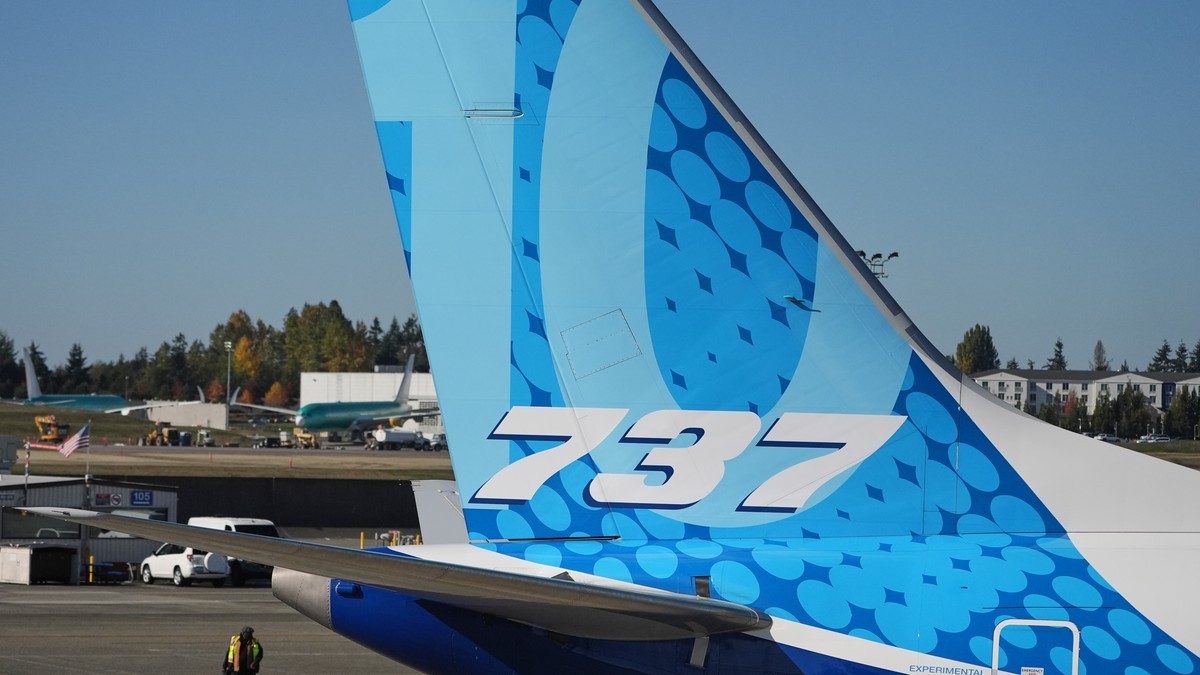
The agency issued two documents, and the distinction matters. The amended type certificate confirms the design complies with all applicable design and safety requirements. The updated Production Limitation Record authorizes production. The FAA says it required the MAX 10 to incorporate key improvements tied to the Aircraft Certification, Safety, and Accountability Act and to National Transportation Safety Board recommendations, including updates to the flight-control system with an enhanced angle of attack sensor. Boeing says the 737-10 is the first commercial airplane certified to the full extent of that law, which mandated enhanced documentation of safety assessments and human factors evaluations. The certification program ran nearly 1,000 test flights, more than 2,000 flight hours and 1,000 ground test hours, according to Boeing, plus tens of thousands of pages of documentation. Bedford said: "The FAA's decision follows a thorough review of the aircraft's design and safety requirements." He added that the agency "will continue to hold Boeing to the highest safety standards as the company begins production of the 737 MAX-10."
The Software Fault That Nearly Stopped It
Boeing disclosed a flight-management software fault on 26 September 2026. The FAA paused MAX 10 certification on 28 September. The glitch sits in the vertical navigation function, which manages the aircraft's altitude against pre-programmed levels at set positions and substantially reduces pilot workload. The FAA convened a corrective action review board and determined the fault did not represent a safety risk "because pilots retain full control of the aircraft and the indications to the flight crew are clear and unambiguous," according to a statement by the agency. Bedford, on the day he paused the certificate, had not reached that conclusion: "We haven't concluded whether this is a safety-of-flight issue or not, but we will be delaying the 10 ... until we're satisfied that we don't have an issue here." He said the concern was crew workload. Boeing and GE Aerospace are still working on a software update that removes the problem. The certificate is issued. The fix is not written.
Airlines Said No to the Software, Not the Plane
The clearest signal of how the industry reads the software file comes from the carriers already flying the MAX 8 and MAX 9. U.S. airlines have avoided upgrading to the newer U14 and U14.1 flight-management software, and United told The Air Current it "does not currently have any 737s operating with this new FMC software, and we are not taking deliveries of new [Max 8 and 9] aircraft with the new FMC software." United chose to downgrade aircraft rather than accept the newer version. Southwest, which requires all 12,000 of its pilots to fly every version of the 737, told The Air Current it "remains in close contact with the Federal Aviation Administration and Boeing." Aviation Week reported that United and Southwest said they would not accept aircraft with the affected software. None of this says the MAX 10 is unsafe. It says two operators with the most to lose have looked at the workload question and declined, for now, to take the software.
The Regulator's Boss Wants the Regulator to Move Faster
Duffy used the certification to argue the process should be quicker. "It takes Boeing, to certify an aircraft in Europe, about half the time, less than half the time that it does in the U.S.," he told CNBC's Phil LeBeau. "You have China now playing to take over in aviation." He added: "We have to certify aircraft more quickly if we're going to compete as Americans." The remarks are the secretary's stated view, not a change in FAA policy, and they sit against a hard record: the MAX 10 arrived almost a decade after launch, and the September pause came from a software fault the agency itself stopped to examine. Duffy also said safety is paramount. The FAA's own release frames the certificate as the product of "years of extensive review" and "thousands of hours of test flights." How the agency squares faster certification with the documentation burden of the 2020 law is a question the next program will answer, not this one.
What Airlines Are Buying: 230 Seats and a Fuel Bill
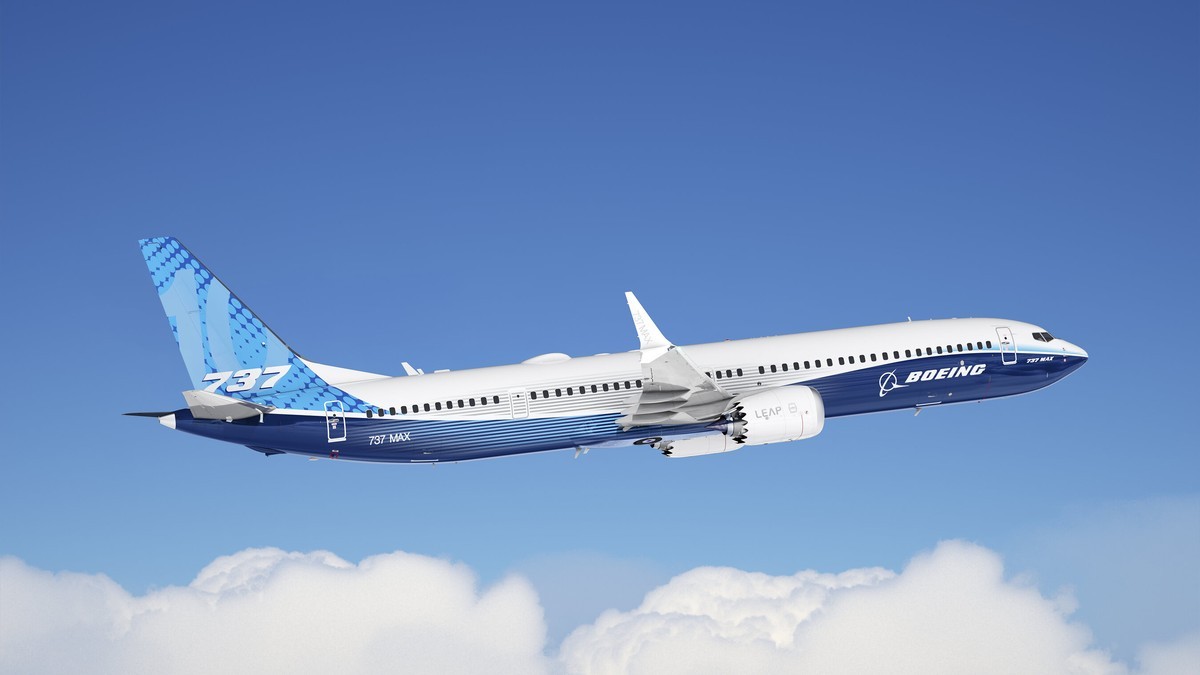
The MAX 10 carries 230 passengers in maximum seating configuration, according to Boeing, and typically seats 185 to 210, per the Associated Press, against 175 to 195 on the MAX 9 and 160 to 180 on the MAX 8. Boeing claims the lowest per-seat costs of any single-aisle airplane in service and 365 nautical miles more range than competitors without auxiliary fuel tanks. For airlines, the pitch is straightforward: more seats on a single flight, lower cost per seat, and a smaller fuel bill at a moment when the Associated Press reports jet fuel prices pressing hard on margins amid the U.S. war with Iran. Stephanie Pope, president and CEO of Boeing Commercial Airplanes, said the aircraft "will set a new standard in commercial aviation" and offers "greater capacity, longer range and the best seat economics in its class." More than 30 customers have ordered 1,555 MAX 10s, Boeing says, more than 30 percent of the MAX program's current order book.
The A321neo Problem Boeing Has Not Solved
The MAX 10 is aimed squarely at the Airbus A321neo family, which entered service in 2017. The largest A321neo can carry more passengers and fly farther without refueling than the MAX 10, according to the Associated Press, and that gap is the commercial core of Boeing's problem. A certificate does not close it. Boeing's answer is capacity and cost: 230 seats at maximum configuration and what the company calls the best seat economics in its class, on a jet that will typically seat 185 to 210. Those numbers matter most on dense routes, where the difference between a full A321neo and a full MAX 10 decides what an airline earns per departure. The MAX 10 also arrives late to a market where Airbus has had years to place the A321neo with the same carriers now taking delivery of the Boeing jet. Certification makes the competition real. It does not make it even.
Who Flies It First
Boeing will not say. The company's release says only that certification clears the way "to begin delivering the airplane in the coming months." Trade press has pointed to WestJet, taking aircraft through lessor Aviation Capital Group with a first-quarter 2027 entry into service, and to Ryanair, with 16 aircraft expected in early 2027. None of that is confirmed by Boeing or the airlines. What is confirmed is the customer list: United, Delta, American and Ryanair are major buyers, and Alaska Airlines joined in January with an order for 105 MAX 10s and options for 35 more. United CEO Scott Kirby told CNBC in August that the airline had waited so long for the jet that the lie-flat seats it expected no longer made sense and are sitting in a warehouse. Alaska said last month it plans lie-flat seats on some of its MAX 10s.
The Scrutiny Did Not End in Everett
A type certificate is a design approval. It is not a production guarantee. Boeing must still show it can consistently build the aircraft to the approved design, and each plane must be cleared before it can fly passengers, as the Associated Press noted. The same outlet reports that over the past 18 months the FAA has gradually eased restrictions imposed after the crashes, raising the cap on how many planes Boeing can produce and, in July, allowing the company to issue airworthiness certificates for its 737 MAX and 787 planes at the end of production again. Boeing opened a fourth 737 production line at Everett in July to lift output, CNBC reported. The MAX 10 completed its final certification flight on 28 July 2026, and trade press reported that the type certification board meeting concluded successfully on 16 October. Oversight of the factory floor, not the design file, is where the next test sits.
What to Watch Now
Three things. First, the software update: Boeing and GE Aerospace are still writing it, and until it is finished and accepted, the question stays open across the MAX family. Second, the delivery schedule: watch for a confirmed operator and date from Boeing or an airline, not from trade press. Third, production: the FAA's Production Limitation Record authorizes building, and the Everett fourth line is running, but the rate Boeing can sustain under the 2020 law's documentation requirements will shape how quickly 1,555 ordered aircraft turn into revenue. Mike Sinnett, Boeing's senior vice president of product strategy and development programs, said the certification "provides a roadmap for future certification efforts in this modern era" and that what Boeing learned "is already serving us well on the 777-9." The roadmap is now the thing to test. The ribbon is cut. The work is not.
By Jessica Ali, Staff Writer
This article was produced with AI-assisted research and editorial support. Sources: Federal Aviation Administration, Boeing, Associated Press, CNBC, Reuters, The Air Current, Aviation Week. Photographs: Lindsey Wasson/AP (737 MAX 10 handover and aircraft at Everett); Boeing (737 MAX family in flight).
What's Your Reaction?
 Like
0
 Dislike
0
 Love
0
 Funny
0
 Wow
0
 Sad
0
 Angry
0

Editor-in-Chief at Global1.News. Atlanta-based journalist who cuts through the BS and tells it like it is. Lead anchor, host, and the voice you hear when the spin stops and the truth starts.















Comments (0)