
CAIR, which blamed Israel for Oct. 7, ‘authentically interested’ in helping students, Philadelphia superintendent tells House panel
Watlington’s remarks, made on Sept. 18, have sparked a broader debate about CAIR’s role in K‑12 education, its political messaging after the Oct. 7 attacks, and the challenges faced by large urban districts seeking to balance safety, inclusivity and academic improvement.
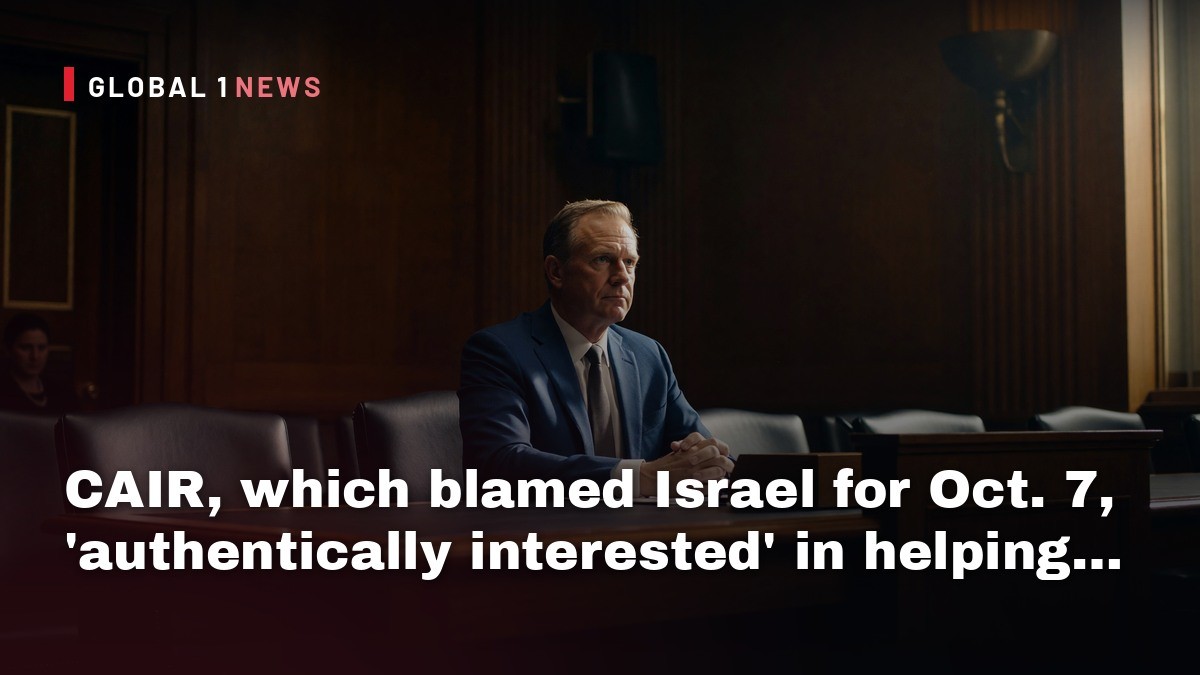
In a recent hearing before the House Education and the Workforce Committee, Philadelphia School District Superintendent Tony Watlington described the Council on American‑Islamic Relations (CAIR) as “authentically interested” in the welfare of the district’s roughly 200,000 students across 330 schools. Watlington’s remarks, made on Sept. 18, have sparked a broader debate about CAIR’s role in K‑12 education, its political messaging after the Oct. 7 attacks, and the challenges faced by large urban districts seeking to balance safety, inclusivity and academic improvement.
Superintendent Watlington’s testimony and the CAIR connection
During the committee interview, Watlington said he was unaware of any Jewish leaders on his transition team, even though the former executive director of CAIR’s Philadelphia office had participated in that team’s work. He also admitted he did not know about CAIR’s reputation for alleged Jew‑hatred. Nonetheless, he praised the individuals representing CAIR as “authentically interested in the well‑being and support of our students” and expressed hope that the organization could help the district become “the fastest‑improving large urban school district in the country.”
Watlington indicated that he needed more context before judging a workshop offered by a CAIR leader titled “American Jews and political power: myth or reality?” The question of whether the workshop was “concerning” was left open, reflecting the superintendent’s uncertainty about the group’s broader agenda.
District’s response and anti‑hate measures
Monique Braxton, a spokeswoman for the School District of Philadelphia, pushed back against the committee’s report, calling it a distortion of the district’s record. She highlighted a series of anti‑hate initiatives the district has undertaken, including a new record‑management system, revised policies, mandatory annual staff training and disciplinary actions where appropriate. Braxton emphasized the district’s commitment to a “safe and welcoming environment for our students and staff.”
These steps are part of a wider effort by urban districts across the United States to combat all forms of hate, a priority that has intensified after the Oct. 7 attacks and the subsequent rise in anti‑Jewish incidents on campuses nationwide.
CAIR’s controversial post‑Oct. 7 activities
A report released by the George Washington University Program on Extremism described CAIR as “in many ways, a highly problematic organization” and warned that it is “troubling to think CAIR has any sway on shaping school curricula.” The report noted that CAIR was an unindicted co‑conspirator in the Holy Land Foundation terror‑financing trial and that the Biden administration had removed the council from its national strategy on Jew‑hatred.
Shortly after Oct. 7, CAIR’s Philadelphia chapter circulated letters to parents urging them to challenge school statements that expressed support for Israel. The letters, originally drafted by CAIR California, accused Israel of being an “apartheid state” and of committing “war crimes,” while describing Gaza as an “open‑air prison.” The correspondence highlighted the suffering of Palestinians over “more than seven decades” but omitted any reference to Hamas’s attacks on Israeli civilians, the report said.
CAIR’s broader educational outreach
The extremism report documented CAIR’s attempts to influence K‑12 education beyond Pennsylvania. In Washington state, CAIR Washington pushed back against the Office of Superintendent of Public Instruction’s 2024‑25 guidance on Jew‑hatred, objecting to references such as “from the river to the sea” and the reliance on the Anti‑Defamation League. After a series of “back‑and‑forth revisions,” the state rewrote the guidance, which was released in June 2025 and now serves as the official document for Washington schools, though it does not credit CAIR for its input.
In New Jersey, CAIR partnered with the group Teaching While Muslim to develop a curriculum on the Sept. 11 attacks in September 2022. The curriculum framed 9/11 as “directly influenced by U.S. foreign policy” and included a copy of Osama bin Laden’s “Letter to America,” which CAIR’s national office later said should not have been part of the material. While CAIR claimed the curriculum was sent to nearly 30 districts, the report found no public record confirming adoption by any school system.
Parent groups and the “Zionism is racism” narrative
CAIR’s Philadelphia chapter co‑sponsored an event with Philadelphia Parents for Palestine, featuring a panel titled “Zionism is racism.” The parent organization seeks to remove what it calls “Zionist teachings and agenda” from school curricula and to add Palestinian, Arab and Muslim perspectives. According to the extremism report, CAIR is supporting an “education network” that has shifted its focus from Israeli policy to a broader critique of Zionism itself.
This alignment with parent groups reflects a growing trend in several states where community activists are lobbying school boards to reshape curricula around contentious geopolitical issues. The report described Washington’s experience as the “strongest evidence” of CAIR’s ability to influence official guidance, while noting that outcomes in other states have been “uneven.”
Implications for Philadelphia and the wider education landscape
For the Philadelphia School District, the controversy underscores the delicate balance between engaging community partners and safeguarding an inclusive, fact‑based curriculum. While Watlington’s testimony suggests a willingness to work with organizations that appear supportive of student welfare, the district must also navigate the political sensitivities surrounding the Israeli‑Palestinian conflict, especially after the heightened emotions following Oct. 7.
Education officials across the country are watching the CAIR episode closely. As David Collins, a retired FBI agent and co‑author of the extremism report, warned on LinkedIn, “CAIR has spent years building access to the people and institutions that shape American public education.” The question, he added, is how many policymakers are paying attention. The Philadelphia case may serve as a bellwether for how urban districts respond to pressure from advocacy groups that blend civil‑rights messaging with contentious geopolitical narratives.
Looking ahead: policy, safety and community trust
Moving forward, the Philadelphia district is likely to double down on its anti‑hate initiatives, while also scrutinizing any external partnerships that could introduce polarizing content into classrooms. The district’s record‑management upgrades and mandatory staff training are steps toward greater transparency and accountability, but they must be complemented by clear guidelines on the vetting of external speakers and curriculum materials.
At the national level, the removal of CAIR from the Biden administration’s Jew‑hatred strategy signals a shift in how the federal government approaches community‑based organizations with controversial histories. As more states grapple with similar challenges, the balance between protecting free expression and preventing the spread of extremist or one‑sided narratives will remain a central tension in American public education.
This article was produced with AI-assisted research and editorial support. Reporting is based on the source material cited below. Sources: JNS (Jewish News Syndicate); jns.org; Global1.News (24 October 2026).
By Hannah Berg, Staff Writer
What's Your Reaction?
 Like
0
 Dislike
0
 Love
0
 Funny
0
 Wow
0
 Sad
0
 Angry
0

Israel Correspondent at Global1.News. Based in Tel Aviv, covering Israeli politics, security, technology, and society. Provides balanced, deeply-sourced reporting on one of the most closely-watched regions in the world.













Comments (0)