
Australia’s antisemitism crisis
The Australian government’s handling of public funding for community organisations has come under intense scrutiny in the wake of the Bondi Beach terrorist attack, which left the nation’s Jewish community demanding stronger safeguards against antisemitic incitement.
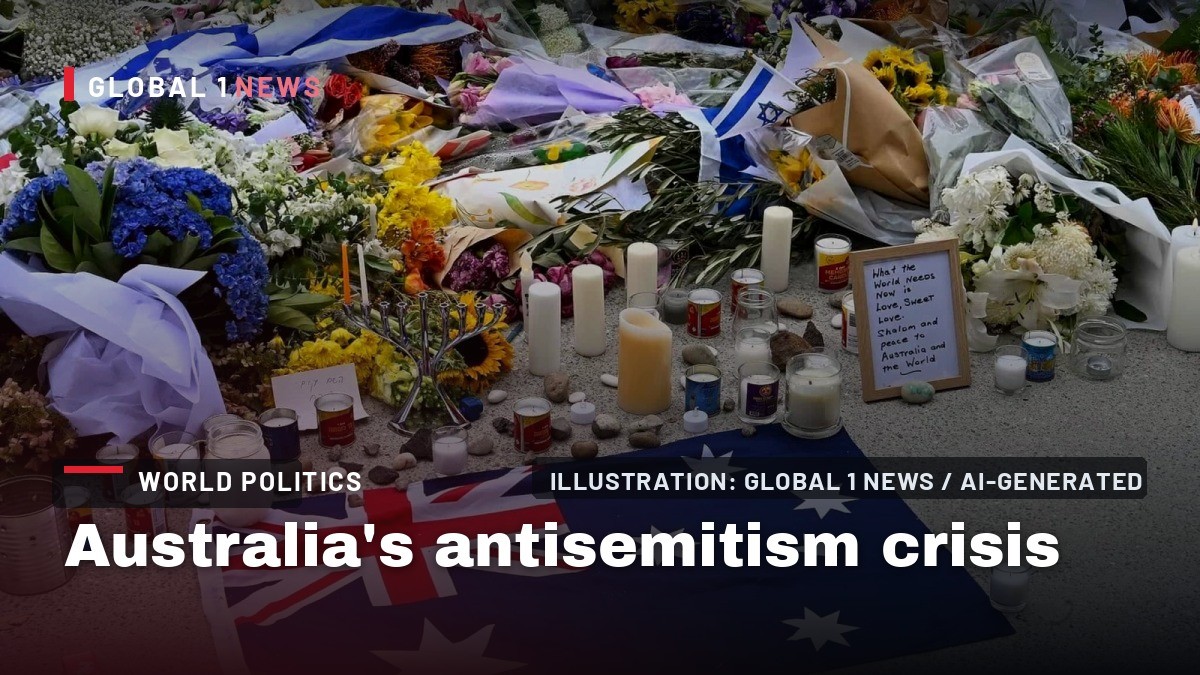
The Australian government’s handling of public funding for community organisations has come under intense scrutiny in the wake of the Bondi Beach terrorist attack, which left the nation’s Jewish community demanding stronger safeguards against antisemitic incitement. Prime Minister Anthony Albanese’s administration now faces a series of questions about how taxpayer money is allocated, how extremist rhetoric is monitored, and what concrete steps are being taken to protect citizens from hate‑driven violence.
Public grants and the OnePath controversy
On 14 October 2026 the Albanese government announced that it was terminating a grant of AU$308,000 to OnePath, an Islamic media outlet based in western Sydney. The decision followed concerns that the organisation had produced material deemed antisemitic. The move sparked immediate debate about the original approval process: how did a grant of this size pass scrutiny in the first place?
Robert Gregory, president of the Australian Jewish Association, seized on the episode to criticize the government’s broader approach. He argued that the Labor administration appeared more focused on electoral considerations than on confronting extremism, insisting that Australians have a right to understand the pathways through which organisations that spread antisemitic and radical content receive public funds. Gregory’s remarks underscore a growing perception that revoking a grant after public outcry does not, in itself, demonstrate a functioning oversight system.
Auditor‑General investigation of multicultural funding
The OnePath case coincides with a wider audit by Australia’s auditor‑general into the Supporting Multicultural Communities program. The audit has been prompted by allegations of political favouritism and non‑competitive grant allocations. While the audit’s findings are still pending, the investigation highlights systemic concerns about transparency and accountability in the distribution of multicultural funding.
These concerns are not limited to OnePath. The auditor‑general’s review may set precedents for how future grants are evaluated, especially when they involve organisations that could be linked to extremist narratives. The outcome could reshape the criteria used by federal and state bodies when assessing applications for public money, potentially tightening safeguards against funding groups that have not demonstrated robust internal controls.
MyCentre and the Melbourne hijacking investigation
In Melbourne, the Islamic charity MyCentre has become the focus of a separate, high‑profile investigation. Authorities in the United Arab Emirates have linked the alleged co‑pilot of a September 30 attempted hijacking of a flydubai aircraft bound for Israel to MyCentre. According to the suspect, his radicalisation occurred while studying at RMIT University in 2017, after contacts with individuals associated with the charity.
MyCentre founder Samir Mohtadi, also known as Sheikh Abu Hamza, denies any involvement in the alleged radicalisation. Nevertheless, Australian Federal Police investigations have raised serious questions about the charity’s receipt of public funds. MyCentre has obtained grants from both federal and Victorian state governments, yet its financial statements contain qualified audit opinions concerning cash donations, missing documentation for a Victorian grant of nearly AU$240,000, and significant transactions with related entities. One disclosure listed AU$1.15 million under the name “Mohtadi M.S.”, later reduced to zero, further complicating the picture of the charity’s financial governance.
Financial controls and transparency gaps
The financial irregularities reported in MyCentre’s accounts do not, on their own, prove wrongdoing, but they do raise pressing questions about the robustness of financial controls and transparency before public funds are allocated. Were officials aware of the qualified audit opinions? Were related‑party transactions examined during the grant‑approval process? These gaps point to a broader need for stronger safeguards that can detect and address governance concerns before funds are disbursed.
Such safeguards are essential not only for preventing the misuse of public money but also for maintaining public confidence that taxpayer dollars are not inadvertently supporting organisations that may harbour extremist elements or lack rigorous financial oversight. The MyCentre case illustrates how lapses in pre‑grant due diligence can have far‑reaching implications for national security and community cohesion.
Australia’s Middle‑East policy and its domestic repercussions
Australia’s approach to the Israeli‑Palestinian conflict adds another layer of complexity to the debate over public funding and accountability. The Albanese government has continued to support Palestinian institutions while advocating for democratic elections, financial transparency, education reform, and changes to controversial “pay‑for‑slay” payments. However, Australia’s recognition of a prospective Palestinian state drew expressions of approval from Hamas, a designated terrorist organisation.
While such approval does not imply that Canberra endorses Hamas, it raises questions about how the government assesses whether its diplomatic decisions advance peace and security or risk being exploited for political legitimacy by extremist groups. The interplay between foreign policy and domestic funding decisions becomes especially salient when public money is directed toward organisations operating in a highly charged geopolitical environment.
Domestic legislative response and enforcement challenges
In the aftermath of the Bondi Beach attack, Australia introduced tougher hate‑and‑extremism legislation in January 2026, increasing penalties for religious leaders who advocate or threaten violence. Yet, as Gregory points out, legislation alone cannot guarantee effective enforcement. The key issues remain: how many credible allegations of antisemitic incitement have been investigated, how many prosecutions have followed, and what mechanisms are in place to review public funding for organisations linked to extremist rhetoric.
Gregory stresses the distinction between freedom of expression and public financial support, arguing that while offensive speech should not be criminalised per se, taxpayers should not be compelled to fund it. He calls for transparent accountability, insisting that Australians deserve to know which organisations have had funding suspended, what safeguards are being implemented, and what concrete actions are being taken to prevent future tragedies.
Looking ahead: demands for transparent oversight
The cases of OnePath and MyCentre, together with Australia’s broader assistance to Palestinian institutions, illustrate the urgent need for transparent oversight and clearly defined consequences when grant conditions are breached. For the Jewish community and the wider Australian public, the stakes are personal: they seek assurance that public funds are not enabling extremist narratives that could translate into violence.
As the auditor‑general’s investigation proceeds and the federal government reviews its multicultural funding framework, the pressure will mount for concrete reforms. These may include stricter pre‑grant vetting, mandatory disclosure of audit qualifications, and clearer criteria for revoking funds when organisations are found to be in breach of financial or ideological standards. Only through such measures can the Albanese administration demonstrate that it is not merely issuing “tough speeches and new laws” but is delivering tangible, accountable action to protect all Australians from hate‑driven threats.
This article was produced with AI-assisted research and editorial support. Reporting is based on the source material cited below. Sources: JNS (Jewish News Syndicate); jns.org; Global1.News (21 October 2026).
By Hannah Berg, Staff Writer
What's Your Reaction?
 Like
0
 Dislike
0
 Love
0
 Funny
0
 Wow
0
 Sad
0
 Angry
0

Israel Correspondent at Global1.News. Based in Tel Aviv, covering Israeli politics, security, technology, and society. Provides balanced, deeply-sourced reporting on one of the most closely-watched regions in the world.













Comments (0)