
A Chinese rocket deorbited over Minnesota and left this in a farmer's cornfield
When a farmer in rural Minnesota stumbled upon a massive metallic disc buried in his cornfield last week, the find quickly spiraled from a local curiosity to a flashpoint in the ongoing debate over space debris and international liability.
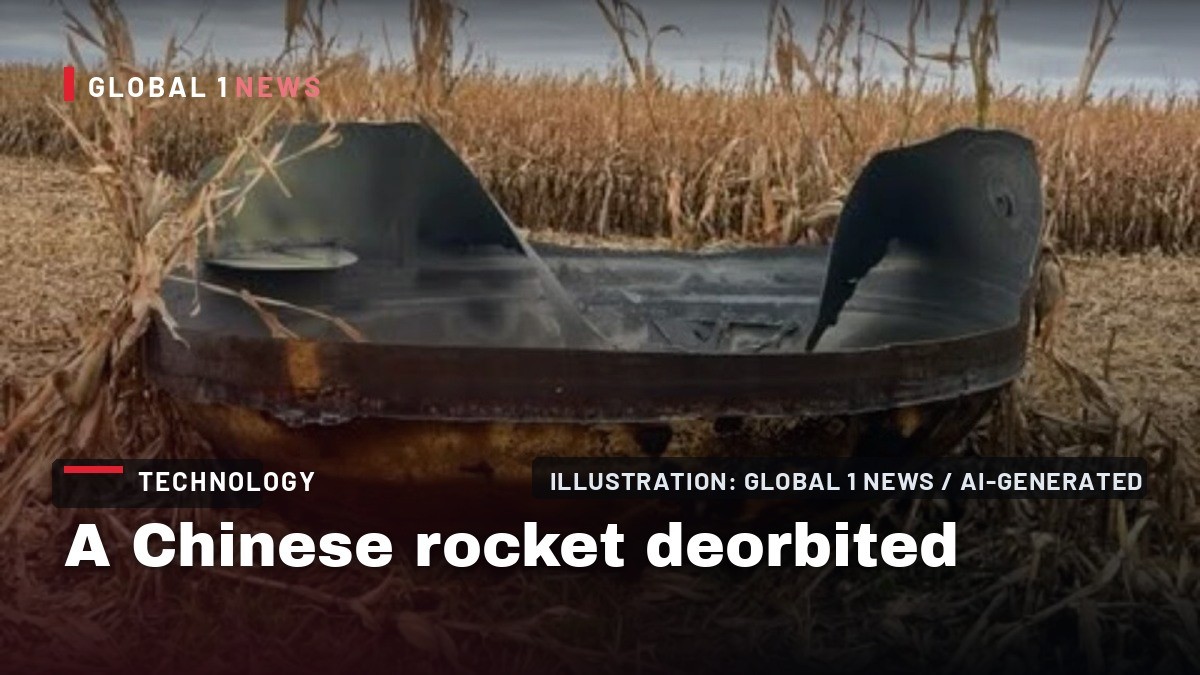
When a farmer in rural Minnesota stumbled upon a massive metallic disc buried in his cornfield last week, the find quickly spiraled from a local curiosity to a flashpoint in the ongoing debate over space debris and international liability. The object—an 11‑foot‑diameter metal sphere—matches the exact size of the upper stage of China’s Zhuque‑2E launch vehicle, which lifted off from the Gobi Desert on September 15. That same day, the rocket released ten Qianfan communications satellites before attempting a controlled deorbit that, instead of heading for the ocean, sent the spent stage hurtling back toward the American heartland. The incident underscores how quickly space activities can have tangible, ground‑level consequences, and it raises fresh questions about the responsibilities of emerging space powers.
From Gobi to the Midwest: The flight that never completed an orbit
The launch took place at Dongfeng, a commercial site co‑located with the military‑run Jiuquan Satellite Launch Center in northwestern China. Within two hours of liftoff, the Zhuque‑2E rocket released its payload of ten Qianfan satellites into a circular polar orbit roughly 560 miles (900 kilometers) above Earth. According to the Ars Technica report, the upper stage then reignited its engine for a deorbit burn, but the maneuver fell short of a full orbital lap. The entire flight lasted between 75 and 80 minutes before the stage re‑entered the atmosphere over the central United States.
Social‑media footage captured fiery streaks of debris arcing northward over Kansas and into Minnesota, with observers in Wisconsin noting the spectacle on the western horizon. Experts were able to link the timing, trajectory, and debris pattern directly to the Zhuque‑2E launch, confirming that the object seen burning across the sky was indeed the spent upper stage of the Chinese rocket.
The Minnesota find: Size matters
When the farmer in Scott Township, west‑central Minnesota, began combining his corn for the fall harvest, he encountered a circular metal object about 11 feet in diameter lodged among the stalks. The Stevens County Sheriff’s Office reported the discovery on Facebook, noting that deputies confirmed the object was “presumably a space object.” Law enforcement emphasized that the debris posed no immediate danger to the public, a fortunate circumstance given its landing in a sparsely populated agricultural area.
What makes this find extraordinary is its size. Most re‑entering debris fragments are small enough to burn up or scatter harmlessly. The 11‑foot diameter matches the upper stage of the Zhuque‑2E, which is 3.35 meters across. This alignment of dimensions strongly suggests the farmer’s find is the very same stage that attempted a controlled deorbit on September 15, making it one of the largest intact pieces of space hardware ever recovered on U.S. soil.
International law and liability: Who’s on the hook?
Under the Outer Space Treaty and related liability conventions, the nation that launches an object into space bears responsibility for any damage caused by that object on the ground. In this case, China is the launching nation, and the United States could seek compensation if the debris had caused property damage or injury. While the Minnesota incident resulted in no reported injuries, the potential for harm was real—had the stage landed in a more densely populated region, the outcome could have been far less benign.
The legal framework also obliges the launch nation to identify and notify the owner of any recovered debris. The sheriff’s office indicated that state and federal agencies are now working to locate the owner, but LandSpace, the private Chinese firm behind the Zhuque family, has not publicly acknowledged the debris fall. This silence complicates the process of formal liability claims and highlights a gap in transparency that the international community has long warned about.
China’s Qianfan constellation: Ambitions and risks
The Zhuque‑2E’s payload was part of China’s Qianfan, or “Thousand Sails,” communications network—a direct counterpart to SpaceX’s Starlink. Since 2024, China has launched 258 Qianfan satellites, aiming for an initial constellation of 1,296 and long‑term ambitions exceeding 15,000. The September 15 launch added ten more satellites to the network, expanding China’s broadband reach and its strategic foothold in low‑Earth orbit.
However, the rapid expansion of satellite constellations heightens the risk of collisions and debris generation. The article notes that the Zhuque‑2E’s previous flight in June broke apart in low‑Earth orbit, scattering dozens of fragments into a region already crowded with the International Space Station and SpaceX’s Starlink satellites. While the June debris was at a lower altitude that ensures re‑entry within months, each breakup adds to the congestion and the probability of future incidents.
Deorbit practices: Guiding the spent stage to the ocean
Standard practice for responsible space operators is to reserve enough propellant for a controlled disposal burn that steers a spent stage toward a remote oceanic re‑entry corridor, minimizing risk to populated areas. The Ars Technica piece points out that most U.S. launch providers follow this protocol, deliberately targeting the South Pacific or other uninhabited zones.
In contrast, the Zhuque‑2E’s deorbit burn on September 15 appears to have been miscalculated or otherwise botched, sending the stage on a trajectory that intersected the continental United States. While the company has not commented, the deviation suggests a lapse in either planning or execution, raising concerns about the reliability of Chinese deorbit procedures and the broader implications for space traffic management.
Implications for U.S. aerospace policy and security
The incident arrives at a time when the United States is tightening its focus on space security and debris mitigation. The Department of Defense and the Federal Aviation Administration have both emphasized the need for clearer norms and more robust tracking of foreign launches. The unexpected arrival of a Chinese rocket stage on U.S. soil could accelerate policy discussions around mandatory debris‑removal agreements and stricter launch licensing requirements for foreign entities.
Moreover, the event underscores the vulnerability of the American heartland to space‑related hazards. While the debris caused no damage this time, the potential for harm in more densely populated areas is real. This reality may push lawmakers to demand greater transparency from foreign launch providers and to consider reciprocal measures, such as requiring foreign operators to post insurance or bonds that cover potential ground‑level damages.
What comes next: Investigation and accountability
State and federal agencies are now tasked with identifying the exact origin of the metallic disc and coordinating its removal. The sheriff’s office has already engaged multiple agencies, and the debris is being treated as a space object pending formal verification. Once confirmed, the next step will involve diplomatic channels to notify China and request cooperation in addressing the liability issue.
In the meantime, the farmer’s unexpected find serves as a stark reminder that the frontier of space is not a distant abstraction—it can, and does, intersect with everyday American life. As the world watches how this case unfolds, the incident may become a catalyst for stronger international standards, tighter deorbit protocols, and a renewed focus on ensuring that the expansion of satellite constellations does not come at the expense of safety on the ground.
This article was produced with AI-assisted research and editorial support. Reporting is based on the source material cited below. Sources: Ars Technica; arstechnica.com; Global1.News (20 October 2026).
By Jessica Ali, Staff Writer
What's Your Reaction?
 Like
0
 Dislike
0
 Love
0
 Funny
0
 Wow
0
 Sad
0
 Angry
0

Editor-in-Chief at Global1.News. Atlanta-based journalist who cuts through the BS and tells it like it is. Lead anchor, host, and the voice you hear when the spin stops and the truth starts.















Comments (0)