
Weapons to Russia, Wigs to China: How North Korea Balances Its Allies
North Korea’s diplomatic choreography has entered a new phase as the regime leverages freshly opened land bridges to deepen distinct, complementary ties with its two most important patrons, Russia and China.
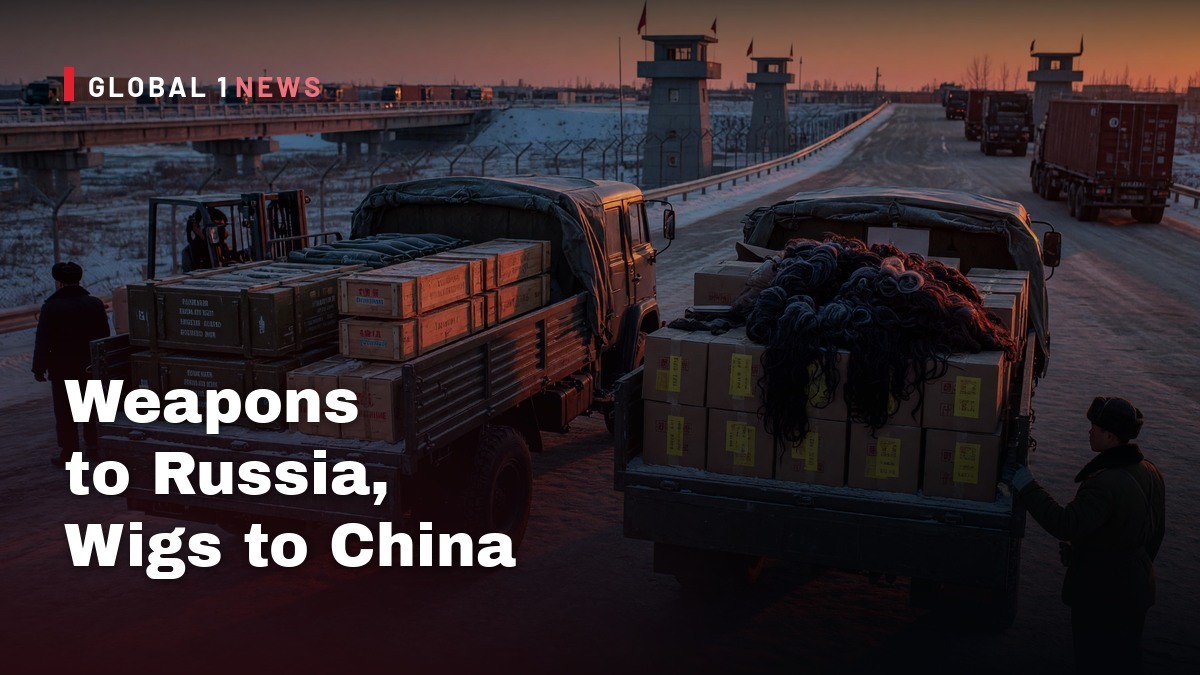
North Korea’s diplomatic choreography has entered a new phase as the regime leverages freshly opened land bridges to deepen distinct, complementary ties with its two most important patrons, Russia and China. The recent inaugurations—a bridge to Russia in September and a parallel crossing to China last week—are more than infrastructure projects; they are physical symbols of a carefully calibrated division of labor that allows Pyongyang to extract military support from Moscow while securing vital economic inputs from Beijing. This balancing act, rooted in Cold‑War‑era tactics but adapted to contemporary realities, offers a window into how the Hermit Kingdom navigates an increasingly complex regional environment.
Historical Roots of the Balancing Strategy
The origins of North Korea’s dual‑patron approach trace back to the early 1960s, when Pyongyang signed separate alliance treaties with the Soviet Union and China. By exploiting the Sino‑Soviet split, the regime extracted generous aid from both sides, achieving a higher living standard than its fellow communist states and maintaining a military on par with South Korea. This historic playbook relied on the rivalry between Moscow and Beijing to keep aid flowing.
When the Soviet Union’s economy faltered in the mid‑1980s and Moscow began to reconcile with Beijing, the balance collapsed. Soviet aid dwindled, and China, facing its own constraints, reduced its support. Deprived of a split to leverage, North Korea entered a period of economic collapse in the 1990s, and its armed forces fell behind those of the South. The lesson from that era—dependence on inter‑patron competition—remains embedded in Pyongyang’s strategic thinking, even as the current environment no longer offers such a rivalry.
Redefining the Russia Relationship: A Military Focus
In the contemporary playbook, North Korea assigns Russia the role of a military partner. Pyongyang seeks Russian assistance for its weapons‑of‑mass‑destruction program and broader arms modernization, offering in return its own labor and a willingness to support Moscow’s war effort in Ukraine. This quid‑pro quo is underscored by the 2024 Comprehensive Strategic Partnership Treaty, which includes a pledge by Russia to defend North Korea.
Trade data illustrate the depth of this military cooperation. Arms sales to Russia nearly doubled between 2023 and 2025, rising from $7.7 billion to $14.4 billion. By contrast, the food and fuel trade peaked at $34 million in 2024, a fraction of the arms value. North Korean workers are deployed in Russian drone factories and near the front lines, reinforcing the narrative of a “blood sacrifice” that Pyongyang uses to remind Moscow of its debt to the regime.
China as the Economic Anchor
While Russia supplies weapons, China is positioned as the primary source of economic sustenance. Pyongyang emphasizes trade in energy, raw materials, and heavy equipment—commodities essential for domestic consumption and reconstruction. In the first half of 2026, bilateral trade with China reached $1.5 billion, a 19.6 percent increase over the same period in 2025, marking the highest level since sanctions were imposed after a 2017 nuclear test.
The composition of this trade is markedly non‑military. Weapons account for only a small share of the rebound, and North Korean laborers in China are largely employed in food service and textile sectors, a stark contrast to their deployment in Russian defense factories. The June 2026 visit by President Xi Jinping, coinciding with the 65th anniversary of the 1961 Treaty of Friendship, underscored a political and cultural rapprochement, while the military dimension remained subdued in public statements.
Mutual Acceptance of the Division of Labor
Both Moscow and Beijing have accommodated Pyongyang’s bifurcated partnership without perceiving it as a threat. China tolerates North Korean troop deployments to support Russian operations in Ukraine, provided these actions do not destabilize the Korean Peninsula—a core Chinese security interest. Meanwhile, Russia has facilitated Chinese use of the Tumen River for sea access and has not objected to Chinese vessels assisting Russian ships involved in the arms trade.
This tacit acceptance is reinforced by each patron’s broader strategic calculus. For Russia, a militarily capable North Korea serves as a buffer and a source of arms technology, while China values a stable neighbor that can help enforce regional stability without challenging Beijing’s primacy. Neither patron appears eager to outbid the other for influence, as the division of labor reduces the likelihood of direct competition.
Implications for North Korea’s Domestic Situation
The dual support structure has translated into a notable economic upswing and an ambitious military modernization program—the most extensive since the early 1990s. Russian arms deliveries and Chinese economic inputs have revived industrial activity, allowing Pyongyang to pursue advanced weapons development while addressing chronic shortages of energy and raw materials.
Beyond material gains, the arrangement bolsters North Korea’s diplomatic leverage. With both major powers backing its core interests, Pyongyang can negotiate from a position of relative strength in any future talks with the United States or other regional actors. The regime’s ability to decouple its foreign policy from the state of Moscow‑Beijing relations—unlike during the Cold War—adds a layer of resilience to its strategic calculations.
Potential Risks and Future Scenarios
Although the current equilibrium appears stable, it rests on the continued willingness of Russia and China to sustain their respective commitments. A shift in Russian domestic politics or a decisive turn in the Ukraine conflict could alter Moscow’s capacity or appetite for arms transfers. Similarly, China’s economic priorities or its response to international pressure over sanctions could affect the flow of trade and investment.
Importantly, the source material notes that even if one patron reduces its aid, the other is unlikely to curtail support simply to “win” a competition. This redundancy provides North Korea with a buffer against unilateral policy changes, but it also means Pyongyang must continuously manage the expectations of both partners to avoid diplomatic friction that could jeopardize the division of labor.
Strategic Outlook for the Asia‑Pacific
North Korea’s refined balancing act signals a broader trend of smaller states seeking tailored partnerships with great powers, extracting specific benefits while minimizing the risk of over‑dependence on a single patron. For regional observers, the model illustrates how Pyongyang can maintain strategic relevance without forcing Moscow and Beijing into a zero‑sum contest.
In the coming years, the durability of this arrangement will likely influence the security calculus of neighboring countries, particularly South Korea and Japan, as they assess the extent of North Korea’s military modernization and its economic resilience. The ongoing development of land bridges—facilitating both arms shipments to Russia and commodity flows from China—will remain a tangible barometer of Pyongyang’s ability to sustain its dual‑track diplomacy.
This article was produced with AI-assisted research and editorial support. Reporting is based on the source material cited below. Sources: The Diplomat; thediplomat.com; Global1.News (22 October 2026).
By Kenji Tanaka, Staff Writer
What's Your Reaction?
 Like
0
 Dislike
0
 Love
0
 Funny
0
 Wow
0
 Sad
0
 Angry
0

Japan Correspondent at Global1.News. Tokyo-based voice covering Japanese politics, technology, economy, and culture. Tracks the intersection of tradition and innovation in one of the world's most dynamic societies.













Comments (0)