
US Orders Diplomats Out of Saudi Arabia After Attacks Kill Three at Dammam Airport and an Aramco Oilfield
The State Department has ordered non-emergency US government staff and their families out of Saudi Arabia after attacks on Dammam's King Fahd airport and Aramco's Shaybah oilfield killed three people and wounded ten.
Three people are dead in Saudi Arabia after a night of attacks on the kingdom's civil aviation and energy infrastructure, and the United States has told part of its own diplomatic corps to get out. Brent crude was above $110 a barrel by Thursday morning. The official statements are careful, narrow and short on names. The facts are not.
US Orders Diplomats Out of Saudi Arabia After Attacks Kill Three at Dammam Airport and an Aramco Oilfield
Washington, D.C. — The State Department has ordered the departure of non-emergency US government staff and their families from its missions in Saudi Arabia, spokesperson Tommy Pigott announced on Wednesday in a post on X. The order landed hours after two attacks: one on Dammam's King Fahd International Airport, one on Saudi Aramco's Shaybah oil field. Saudi official statements put the toll at three dead and ten wounded.
The Order Came Hours After the Strikes
Pigott was blunt about the reason. "Iranian-supported Houthis have increasingly engaged in hostilities against Saudi Arabia, including attacks on civilian airports and other critical infrastructure resulting in civilian casualties and severe travel disruptions," he wrote. He added that the hostilities "have the potential to escalate rapidly."
The order covers "non-emergency US government employees and their family members in Saudi Arabia only," Pigott said. That is the narrow official line. Four US officials told Reuters that US missions in other Gulf states would also be ordering family members to leave. A diplomatic source in the Middle East told AFP that some families of US embassy personnel were also being withdrawn in the United Arab Emirates, Jordan, Qatar and Bahrain. Pigott did not address other missions. Two different claims, from different sources, pointing in the same direction.
The US embassy in Riyadh issued a security alert on Wednesday warning of possible further Houthi attacks on Saudi Arabia. Washington had returned some diplomatic personnel to the region in recent months, after many were pulled out when Tehran launched attacks on US facilities following the start of the US-Israeli war on Iran in late February 2026. The return did not last.
What Riyadh Said About Dammam
Saudi Arabia's General Authority of Civil Aviation announced that King Fahd International Airport in Dammam was targeted by an attack on the evening of Wednesday 21 October 2026. The statement, carried by the Saudi Press Agency, was issued at 01:38 local time on 22 October, which is 22:38 GMT on 21 October.
The authority said the attack "resulted in the fatality of a resident, and injuries to eight others, ranging from minor to critical." All the injured were taken to hospital. The attack "also caused property damage, the extent of which is currently being assessed." Further updates would follow, the authority said. It described the dead only as "a resident." No name. No nationality.
This is not the first time Dammam has been hit. On 11 October, GACA announced that the same airport "was targeted by an attack," adding that damage assessments and safety inspections were under way in co-ordination with relevant authorities. It gave no casualty figures then. Dammam sits in the Eastern Province, the heart of the kingdom's oil industry, and the airport serves the industry and the cities around it.
Shaybah: Two Killed Behind an Interception
The Ministry of Energy said Saudi air defences intercepted a drone attempting to target one of the processing facilities at Saudi Aramco's Shaybah oil field on Wednesday morning. An official source at the ministry said debris from the interception struck a vehicle belonging to a contractor working at the field, outside the facility's perimeter, and the vehicle caught fire. Operations at the field were not affected.
Two people were killed: one Filipino national and one Nepali national. Two others were injured: a Pakistani national and an Indian national. The ministry expressed condolences to the families and wished the injured a speedy recovery. The statement did not identify who was responsible for launching the drone.
Read that again. The air defence worked. The drone was stopped. And two contract workers still died, killed by falling debris outside the fence. The people who build and maintain this infrastructure are the ones who absorb the risk when an interception succeeds. The ministry's statement is precise about nationalities and silent on authorship. That silence is the point.
The Province Where the Oil Leaves
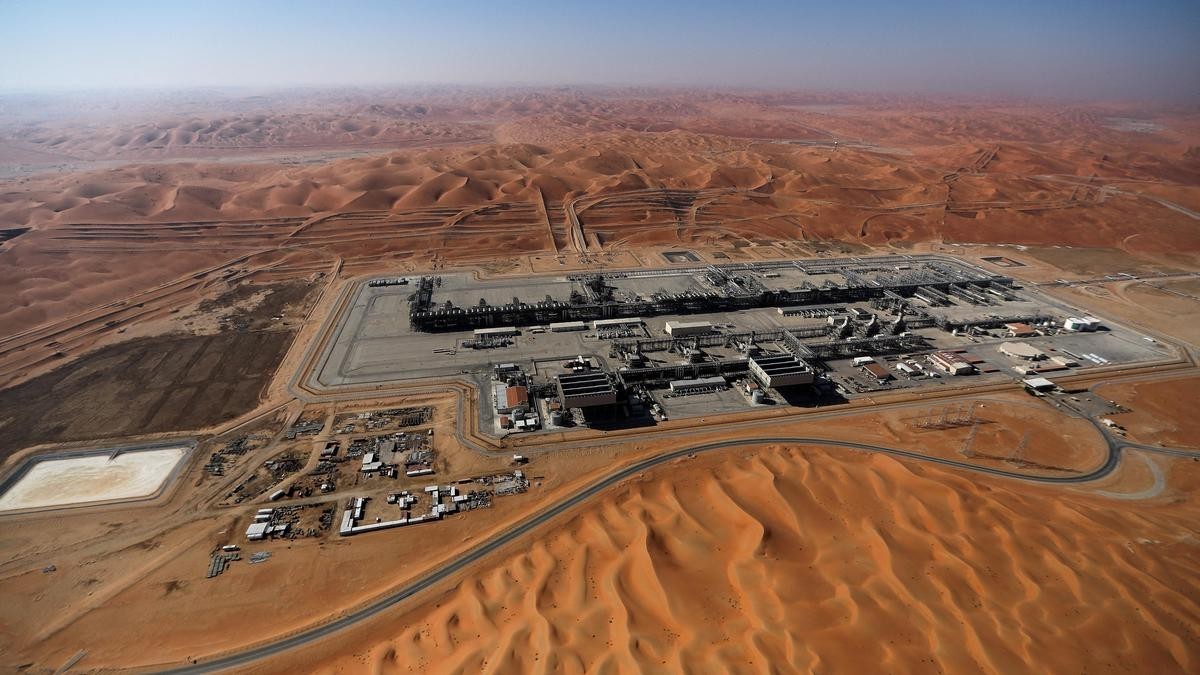
Shaybah is operated by Saudi Aramco. It lies deep in the Rub al-Khali, the Empty Quarter, near Saudi Arabia's border with the United Arab Emirates. It has a production capacity of approximately one million barrels per day. Hold that number while reading the market coverage.
The field has been targeted before. In August 2019, a drone attack claimed by the Houthis caused a fire at its natural gas liquids processing facility. Saudi Aramco reported no casualties at the time. The difference this time is the casualty count, not the target.
On Monday, the Houthis claimed attacks on several Saudi targets including the Shaybah oil field, an Aramco facility at Yanbu, and airports in Riyadh and Abha. Saudi authorities had not immediately confirmed those claims, and Reuters said it could not independently verify them. A claim is not a confirmation, however often it is repeated.
A Campaign That Began at the Capital's Airport
The pattern did not start this week. On 10 October, an attack on Riyadh's King Khalid International Airport killed 12 people and injured more than 300, according to figures the kingdom's civil aviation authority reported. That is the deadliest strike on the kingdom in years.
A separate projectile strike on the same airport on 11 October killed one person and injured 11. Different day, different attack, different figures. The 12 dead and more than 300 injured belong to 10 October. The single death and the 11 injured belong to 11 October.
Then came Dammam on 11 October, with no casualty figures released. Then Monday's claimed strikes on Shaybah, Yanbu, Riyadh and Abha. Then Wednesday's attack on Dammam again, this time with a death, and the drone over Shaybah, this time with two. The campaign has moved from the capital's main airport to the eastern oil belt. The targets are civilian airports and energy infrastructure. The direction of travel is clear even where the attribution is not.
Two Chokepoints, One Price
Brent crude futures rose $1.29, or 1.2 per cent, to $110.11 a barrel at 00:34 GMT on Thursday 22 October. US West Texas Intermediate gained 97 cents, or 1 per cent, to $98.12. Brent had settled largely unchanged on Wednesday and WTI had eased 67 cents. Thursday's move is the market pricing an evacuation order on top of a shooting war.
US crude stocks fell by 3.06 million barrels to 412.5 million barrels last week, the Energy Information Administration said on Wednesday, against analysts' expectations in a Reuters poll for an 820,000-barrel draw. Distillate stockpiles, which include diesel and heating oil, rose 1.68 million barrels to 104.3 million barrels, against expectations of a 1.16 million-barrel drop. The Department of Energy said the administration is offering to loan up to nearly a third of the 1-million-barrel US emergency heating oil reserve, seeking to contain prices that have surged on diesel shortages caused by the wars in Iran and Ukraine.
There were at least 18 attacks on shipping over the past two weeks, according to Kpler data. LSEG analysts warned that Iran was targeting tankers well beyond the Strait of Hormuz, reaching into the Gulf of Oman and jeopardising Gulf crude loadings and ship-to-ship transfers. Two chokepoints, Hormuz and the Bab al-Mandab, and one price.
What the Departure Order Signals
Ordered departure is a specific instrument. It is not a warning to citizens. It is the State Department telling its own people that the risk to their families now exceeds the cost of emptying a mission. On paper the order is limited to Saudi Arabia. The reporting around it is not.
The embassy alert warning of possible further Houthi attacks went out the same day. The personnel who returned to the region in recent months, after the February 2026 pullout when Tehran attacked US facilities, are being sent out again. And the phrase "have the potential to escalate rapidly" is not language chosen for calm. It is language chosen to justify a decision already taken.
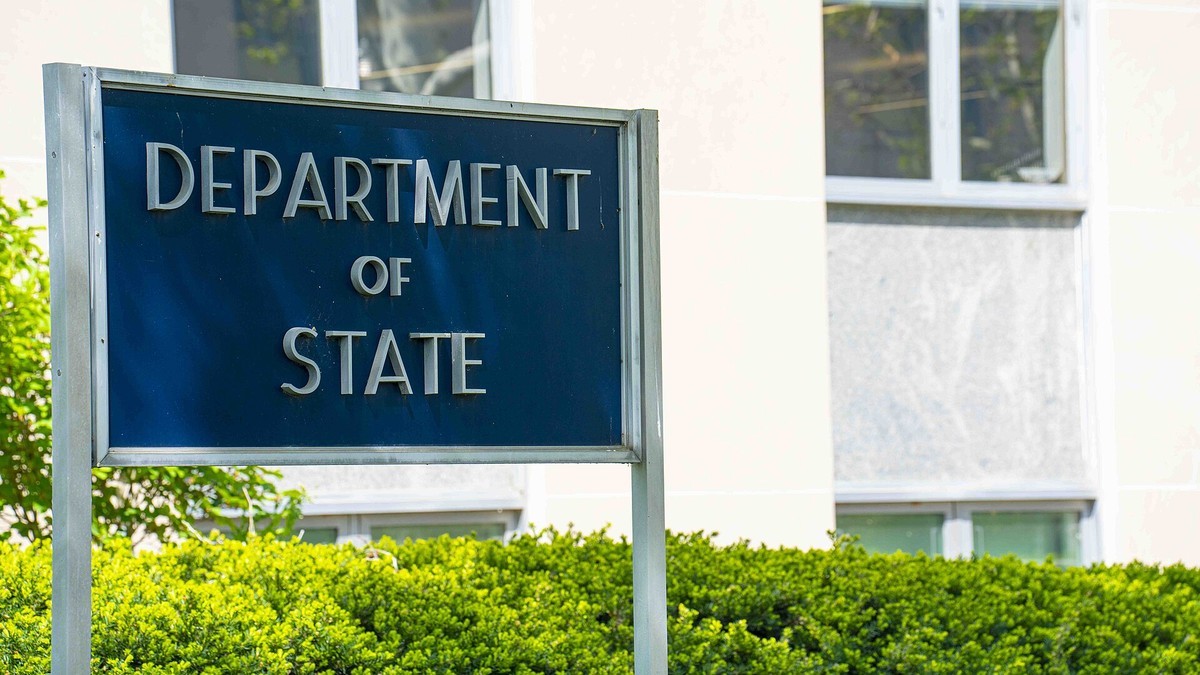
What the paperwork shows is a Gulf treated as a single risk zone while the formal order names one country. What it does not show, and what no official has said, is how long the departure is expected to last.
Iran's Side of the Ledger
Iranian media reported explosions in Sirik in Hormozgan province, in the Karpan area, on Wednesday. Local sources had not disclosed the nature of the explosions, and the reports said the nature and origin were unknown. Unknown nature. Unknown origin.
Iran's Foreign Minister Abbas Araqchi told the Financial Times that Iran was fully prepared to defend itself. President Masoud Pezeshkian told state media that the United States could not expect dialogue while blockading and threatening Iran. Neither remark addressed the strikes on Saudi Arabia.
The background is not complicated. Yemen's civil war began when the Houthis ousted the government from the capital Sanaa in 2014, and escalated in 2015 when a Saudi-led military coalition tried to restore the government's rule. An informal ceasefire held for the past four years. It unravelled in July 2026 after the Houthis announced a "maritime embargo" against Saudi Arabia and began missile and drone attacks on Saudi airports, oil facilities and tankers in the Red Sea. The Houthis said they were retaliating for what they called a Saudi blockade of their territory and for an air strike on Sanaa airport that they blamed on the kingdom.
What the Statements Do Not Say
Start with the gap between Washington and Riyadh. Pigott named the Houthis, and named Iran behind them. The Saudi Ministry of Energy did not identify who launched the drone at Shaybah. GACA did not identify who attacked Dammam. The kingdom is absorbing the casualties and declining the attribution. That is a choice, and it is worth asking why.
Then the gap between the official order and the reported one. Pigott said Saudi Arabia only. Four US officials told Reuters other Gulf missions would follow. A diplomatic source told AFP that families were being withdrawn from the UAE, Jordan, Qatar and Bahrain. The State Department has not confirmed the wider withdrawal. The reporting says it is happening anyway.
Then the gap in the casualty record. GACA described the dead at Dammam as "a resident" and stopped there. The ministry named the nationalities of the Shaybah dead but not their names. And the Houthi claims from Monday, which covered Shaybah, Yanbu, Riyadh and Abha, were never confirmed by Saudi authorities and were never independently verified.
What to Watch
Watch whether the State Department confirms the wider Gulf withdrawals that US officials and a diplomatic source have described, or leaves the reporting standing alone. Watch whether Saudi authorities name a perpetrator for Dammam or Shaybah, or continue to leave the attribution to Washington.
Watch the airports. Dammam was hit on 11 October and again on 21 October. Riyadh's King Khalid International was hit on 10 October and again on 11 October. Watch whether GACA publishes the damage assessment it says is under way.
Watch the water. At least 18 attacks on shipping in two weeks, per Kpler, and LSEG's warning that Iran is targeting tankers beyond Hormuz into the Gulf of Oman. Brent is already above $110.
And watch Tehran. Araqchi says Iran is prepared to defend itself. Pezeshkian says dialogue is impossible under blockade. Neither has addressed the Saudi strikes. The next statement, or the next silence, will say more than either one did.
By Jessica Ali, Staff Writer
This article was produced with AI-assisted research and editorial support. Sources used: US State Department spokesperson Tommy Pigott; Reuters, citing four US officials; AFP, citing a Middle East diplomatic source; the US embassy in Riyadh; Saudi Arabia's General Authority of Civil Aviation via the Saudi Press Agency; the Saudi Ministry of Energy; the Energy Information Administration; the US Department of Energy; Kpler; LSEG; the Financial Times; Iranian state media; and the BBC. Photographs: King Fahd International Airport arrivals hall, file photo by Hamad I Mohammed/Reuters via Al Jazeera; Aramco's Shaybah oil field in the Empty Quarter, file photo by REUTERS/Hamad I Mohammed via The Hindu; the US Department of State's Harry S. Truman Building, public domain photograph by the US Department of State.
What's Your Reaction?
 Like
0
 Dislike
0
 Love
0
 Funny
0
 Wow
0
 Sad
0
 Angry
0

Editor-in-Chief at Global1.News. Atlanta-based journalist who cuts through the BS and tells it like it is. Lead anchor, host, and the voice you hear when the spin stops and the truth starts.











Comments (0)