
No order, no seat: Starbucks China rolls out new store policy
Starbucks’ newest “purchase‑to‑sit” rule across its 8,000 Chinese outlets marks a decisive shift in the company’s approach to the country’s fiercely competitive coffee market.
Starbucks’ newest “purchase‑to‑sit” rule across its 8,000 Chinese outlets marks a decisive shift in the company’s approach to the country’s fiercely competitive coffee market. The policy, which takes effect on Thursday, obliges any patron who wishes to occupy a seat to buy something, a move framed by the firm as an effort to improve the “in‑store experience.” While the measure may appear modest on its surface, it reveals deeper strategic pressures confronting the U.S.‑based chain as it battles home‑grown rivals, navigates evolving consumer habits, and adapts to a broader global trend of tightening access to public‑space retail environments.
From “Open Door” to “Purchase to Sit”: The Policy in Context
Starbucks China’s announcement follows a pattern of similar restrictions emerging in other markets. In South Korea, the chain recently prohibited “bulky items” such as printers and desktop computers, citing seat‑hogging concerns. In North America, the company reversed a long‑standing open‑door policy that had allowed non‑paying customers to use seats and restrooms, emphasizing a renewed focus on “prioritising paying customers.” The Chinese rollout therefore aligns with a global recalibration of how the brand manages its physical space, seeking to balance hospitality with commercial viability.
Social media reactions in China illustrate the domestic resonance of the change. A top‑liked Weibo comment celebrated the end of “peak periods where people are just sitting there not ordering anything, drinking Luckin coffee, playing games and yelling on the phone.” Another user expressed personal discomfort at the idea of occupying a seat without purchasing, indicating that the policy may also address cultural expectations around fairness and reciprocity in public venues.
Competitive Pressures from Homegrown Coffee Chains
The policy cannot be understood without reference to the intense rivalry Starbucks faces from Chinese coffee brands, most notably Luckin Coffee. Luckin’s rapid ascent culminated in 2023 when it overtook Starbucks as the largest coffee chain in China, a milestone that underscores the shifting balance of power. Luckin’s business model emphasizes a robust app‑based ordering system and a grab‑and‑go experience, directly challenging Starbucks’ traditional café‑centric approach that encourages patrons to linger over a beverage.
These competitive dynamics are amplified by price differentials. Luckin’s lower‑priced offerings appeal to cost‑conscious consumers, while Starbucks’ premium positioning has been increasingly scrutinised amid a broader consumer pivot toward value. The “purchase to sit” rule can be seen as a defensive maneuver, aiming to protect seat availability for paying customers and to reinforce the value proposition of a full café experience.
Operational Adjustments: Staffing and Digital Enhancements
Beyond the seating rule, Starbucks China announced plans to boost staffing levels and upgrade digital systems in its stores. The firm stresses that these investments are intended to guarantee “timely and warm service even during peak hours.” By reinforcing human resources and technology, Starbucks seeks to mitigate the friction that could arise from the new seating policy, ensuring that customers who do purchase are served efficiently and feel the premium service they expect.
This operational focus dovetails with the broader strategic shift toward a more controlled in‑store environment. Enhanced digital ordering, for example, could streamline the purchase process, reducing queues and making the requirement to buy before sitting less burdensome. Such measures reflect an integrated response to both competitive threats and evolving consumer expectations around speed and convenience.
Strategic Implications of the Stake Sale to Boyu Capital
Starbucks’ decision last year to sell a 60% stake in its Chinese business to investment firm Boyu Capital, as part of a $4 billion deal, adds another layer of strategic significance. The partnership signals a deeper localisation of the brand, granting a domestic partner greater influence over operations and growth strategies. This structural change may have accelerated the adoption of policies that align more closely with Chinese market realities, such as stricter seat management and intensified focus on digital ordering.
The stake sale also reflects a broader trend among multinational retailers to share risk and tap local expertise in China’s complex regulatory and consumer environment. By ceding majority control, Starbucks positions itself to benefit from Boyu Capital’s insights into domestic consumer behaviour, supply chain optimisation, and competitive positioning against agile local rivals.
Consumer Behaviour Shifts and the “Full‑Cafe” Model
The emergence of “purchase to sit” policies highlights a transformation in how Chinese consumers utilise café spaces. While Starbucks traditionally marketed its outlets as “third places” where people could work, socialize, and linger, the rise of app‑driven, grab‑and‑go concepts—exemplified by Luckin—has redefined expectations. Consumers increasingly view coffee shops as transactional nodes rather than extended leisure environments.
Starbucks’ response suggests a recalibration of its value proposition: preserving the ambience of a full‑café experience for those willing to pay for it, while discouraging free‑riding that erodes profitability. The policy may also serve to re‑assert the brand’s premium identity, signalling that the comfort of a seat is a benefit tied to purchase, not a gratuitous public amenity.
Geopolitical and Regulatory Underpinnings
While the seating rule is framed as a commercial decision, it also intersects with broader regulatory trends in China that encourage orderly public spaces and discourage “anti‑social” behaviour. Recent years have seen increased scrutiny of businesses that allow non‑paying occupants to occupy valuable real‑estate resources. By proactively instituting a purchase requirement, Starbucks aligns itself with a regulatory climate that favours orderly commerce and may pre‑empt potential local mandates.
Moreover, the policy underscores the delicate balance multinational firms must strike between adhering to global brand standards and adapting to local governance expectations. Starbucks’ willingness to enforce such a rule demonstrates an awareness of the political economy in which Chinese consumer‑facing firms operate, where public perception of fairness and efficient use of space can have reputational ramifications.
Strategic Outlook: Balancing Brand Integrity and Market Share
Looking ahead, Starbucks China’s “purchase to sit” policy is a microcosm of the broader strategic calculus the company faces in retaining relevance within its second‑largest market. The move aims to protect seat availability for paying customers, reinforce the premium café experience, and align operational practices with the competitive realities imposed by agile domestic rivals.
Success will hinge on the firm’s ability to integrate the new seating rule with its staffing and digital enhancements, ensuring that the customer journey remains seamless and that the perceived inconvenience of the rule does not alienate core patrons. If executed adeptly, Starbucks could preserve its brand equity while navigating the competitive pressure from Luckin and other local chains.
In the longer term, the partnership with Boyu Capital may provide the strategic flexibility needed to adapt further to Chinese consumer trends, potentially fostering innovations that blend Starbucks’ global brand appeal with locally resonant service models. The “purchase to sit” policy, therefore, is not merely a footnote in retail operations; it is a strategic lever that reflects the evolving intersection of commerce, consumer culture, and regulatory expectations in contemporary China.
This article was produced with AI-assisted research and editorial support. Reporting is based on the source material cited below. Sources: BBC News China; bbc.co.uk; Global1.News (22 October 2026).
By Prof. Marcus Chen, Staff Writer
What's Your Reaction?
 Like
0
 Dislike
0
 Love
0
 Funny
0
 Wow
0
 Sad
0
 Angry
0
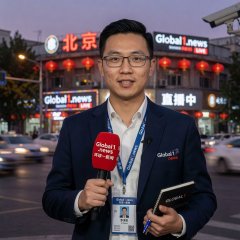
World Politics Analyst at Global1.News. Based in Beijing, covering US-China relations, global trade, and geopolitical strategy. Brings deep analytical perspective to the power dynamics shaping international affairs.













Comments (0)