
Israel turned West Bank into prisons, occupier violence made it battlefield: Palestinian official
The checkpoint regime and its impact on daily life Barghouti highlighted that more than 1,300 military checkpoints criss‑cross the West Bank, most of them sealed off, effectively isolating cities and towns from one another.
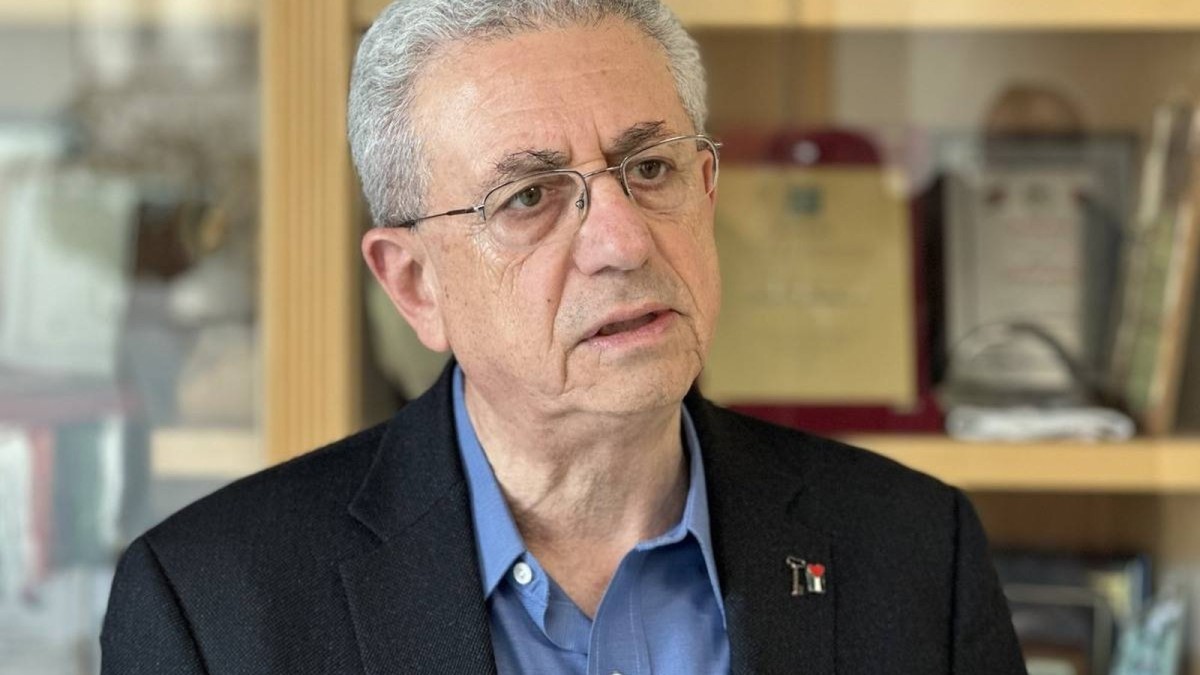
Palestinian National Initiative Secretary‑General Mustafa Barghouti warned on Thursday that the Israeli military’s extensive network of checkpoints has turned the occupied West Bank into a series of “fragmented prisons.” In a statement reported by Anadolu, he described how the daily reality of movement restrictions, raids and home demolitions has transformed the territory into a “battlefield where terror never stops.” The remarks come as the olive harvest season intensifies, a period traditionally marked by both economic hope and heightened violence.
The checkpoint regime and its impact on daily life
Barghouti highlighted that more than 1,300 military checkpoints criss‑cross the West Bank, most of them sealed off, effectively isolating cities and towns from one another. This extensive barrier system, he argued, has “severely paralyzed economic activity, education and health services.” Farmers cannot reach their groves, students are barred from schools, and patients are denied timely medical care, creating a humanitarian crisis that extends beyond the immediate violence of raids.
The fragmentation of movement also undermines the social fabric of Palestinian communities. Families are split by checkpoints, and the ability to gather for religious or cultural events is curtailed, eroding the communal bonds that sustain resilience under occupation. Barghouti’s description of “fragmented prisons” captures not only the physical barriers but also the psychological toll of living under constant restriction.
Military raids and mass arrests across the governorates
According to Barghouti, Israeli army raids now sweep through all West Bank governorates, accompanied by mass arrests and ongoing repression. The statement notes that these operations are not isolated incidents but part of a broader pattern of intimidation aimed at stifling dissent. Home demolitions, a tactic long used to punish families and deter resistance, continue unabated, further deepening the sense of insecurity among Palestinians.
The scale of these operations suggests a coordinated effort to maintain control over the territory. By targeting towns, villages and cities alike, the Israeli forces create a pervasive atmosphere of fear, reinforcing the notion of the West Bank as a battlefield where “terror never stops.” This environment hampers any prospects for normal civic life and pushes the population toward a state of chronic emergency.
The olive harvest under fire
The olive harvest season, a cornerstone of Palestinian agricultural life and cultural identity, has become a flashpoint for violence. Barghouti warned that “attacks by Israeli occupiers and the army against Palestinians and their land … have intensified during the olive harvest season.” Farmers are often prevented from reaching their orchards, a restriction that not only threatens their livelihoods but also symbolizes a broader attempt to sever Palestinians from their land.
Olive trees, many of which are decades old, represent more than economic value; they are a living testament to Palestinian attachment to the land. The denial of access to these trees during harvest season therefore carries a deep symbolic weight, reinforcing the narrative of dispossession that underpins the occupation.
Settler presence and the scale of colonisation
Barghouti cited figures indicating that around 750,000 Israeli occupiers reside in the West Bank, including occupied East Jerusalem. These settlers are spread across 194 settlements and approximately 400 outposts. International law, as reflected in United Nations resolutions and the advisory opinion of the International Court of Justice, regards these settlements as illegal because they are built on occupied Palestinian land.
The sheer number of settlers and the density of settlements underscore the demographic and territorial pressure exerted on the Palestinian population. The expansion of these communities is often accompanied by the demolition of Palestinian homes and the appropriation of land, further entrenching the occupation’s spatial reality.
The strategic aim behind the “occupier terror war”
Barghouti framed the current wave of violence as part of an “occupier terror war” aimed at driving Palestinians from most of their land. He described the ultimate goal as the “Zionist expansionist dream” of annexation, Judaization and displacement. By employing terror gangs as a “spearhead for settlement expansion,” the Israeli occupation seeks to alter the demographic balance and cement control over the territory.
This strategy, according to Barghouti, is designed to make the prospect of a viable Palestinian state increasingly untenable. The systematic use of force, combined with legal and administrative measures that favour settlement growth, creates a cumulative pressure that seeks to force a de‑facto annexation without formal declaration.
Palestinian resistance and popular committees
Despite the overwhelming challenges, Barghouti emphasized the steadfastness of the Palestinian people. He highlighted the role of popular committees that confront the occupiers on the ground, describing them as “the only factor preventing the implementation of the Israeli plan.” These grassroots organisations coordinate non‑violent resistance, document violations and provide essential services when official structures are hampered by the checkpoint regime.
The resilience of these committees reflects a broader commitment to remain on the land despite the threats of displacement. Their work, often carried out at great personal risk, underscores a collective determination to preserve Palestinian rights and identity in the face of systematic oppression.
Calls for international accountability and sanctions
Barghouti concluded his statement by urging the international community to cease “turning a blind eye to Israeli crimes.” He called for comprehensive sanctions and a boycott targeting the entire occupation and settlement system, including the Israeli government itself. The appeal reflects a growing frustration with the perceived impunity enjoyed by Israel in the international arena.
International law provides a framework for holding occupiers accountable for actions that violate the rights of the occupied population. Yet, as Barghouti’s remarks suggest, the lack of decisive action has allowed the continuation and escalation of settlement expansion, checkpoint proliferation and violent repression. The Palestinian official’s appeal therefore seeks to galvanize global actors to enforce existing legal standards and to apply pressure that could alter the trajectory of the occupation.
This article was produced with AI-assisted research and editorial support. Reporting is based on the source material cited below. Sources: Middle East Monitor; middleeastmonitor.com; Global1.News (23 October 2026).
By Fatima Al-Rashid, Staff Writer
What's Your Reaction?
 Like
0
 Dislike
0
 Love
0
 Funny
0
 Wow
0
 Sad
0
 Angry
0
Gulf/MENA Correspondent at Global1.News. Based in Doha, covering Gulf politics, energy markets, diplomacy, and development across the Middle East and North Africa. Tracks the economic transformation of the Gulf states.













Comments (0)