
ICC prosecutor updates trial brief vs Duterte
Manila – The International Criminal Court’s acting prosecutor, Mame Mandiaye Niang, filed a revised trial brief on Oct. 16, 2026, sharpening the focus on alleged crimes against humanity committed during former President Rodrigo Duterte’s first term.
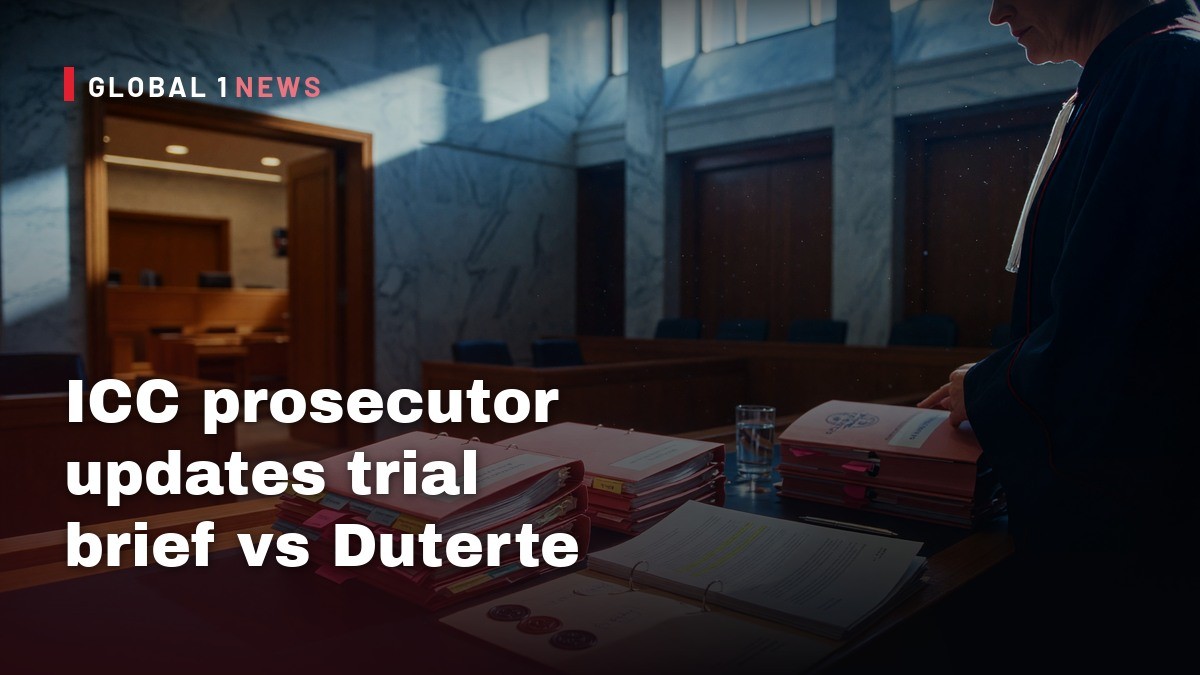
Manila – The International Criminal Court’s acting prosecutor, Mame Mandiaye Niang, filed a revised trial brief on Oct. 16, 2026, sharpening the focus on alleged crimes against humanity committed during former President Rodrigo Duterte’s first term. The filing, released on Wednesday, underscores the ICC’s determination to pursue accountability while also revealing the procedural hurdles that shape such high‑profile cases.
Background of the ICC investigation
The ICC’s Office of the Prosecutor has been examining alleged atrocities linked to the Philippines’ “war on drugs” that began in July 2016. The investigation zeroed in on a window of alleged violations stretching from roughly July 2016 to July 2017, a period that saw a surge of police operations, anti‑drug raids, and controversial killings that left many families grieving in barangays across Luzon, Visayas, and Mindanao.
These alleged crimes, ranging from extrajudicial killings to enforced disappearances, are framed by the prosecutor as part of a systematic campaign that could meet the legal threshold for crimes against humanity. The ICC’s involvement marks a rare moment when an international tribunal scrutinizes the actions of a former Philippine head of state, a development that has stirred both hope and anxiety among ordinary Filipinos.
The revised trial brief
In the three‑page filing, Niang explained that the prosecution had to excise references to “Incident 57” after Trial Chamber III denied its inclusion. The brief now shows the removed sections marked as “(DELETED)” to preserve cross‑references to other parts of the document. Despite the deletion, the prosecutor emphasized that the evidence and witnesses linked to the omitted incident remain relevant to the broader case, particularly for establishing the “contextual elements of crimes against humanity and Mr. Duterte’s individual criminal responsibility.”
Crucially, the filing noted that no changes were made to the List of Witnesses or the List of Evidence, signaling that the prosecution still intends to call the same individuals and present the same material, even as it adjusts its narrative to accommodate the court’s procedural ruling.
What was Incident 57?
Incident 57 was slated to be part of the charges concerning the alleged murder of “high‑value targets,” a term the ICC uses to describe individuals deemed especially significant by the state’s anti‑drug campaign. According to the brief, the incident occurred “two weeks after” the period covered by the confirmed charges, placing it outside the July 2016‑July 2017 window that the ICC has already accepted as admissible.
While the filing does not elaborate on the specifics of Incident 57, its removal highlights the delicate balance the ICC must strike between thoroughness and adherence to procedural limits. The prosecutor’s decision to retain the related evidence and witness testimony suggests that the incident may still illuminate patterns of conduct, even if it cannot be formally charged as a separate count.
Implications for Duterte’s individual responsibility
The prosecutor’s insistence that the removed incident remains “relevant to the charges” underscores a strategic focus on establishing Duterte’s personal role in the alleged crimes. By weaving together testimonies, documentary evidence, and contextual analysis, the ICC aims to demonstrate that the former president either ordered, tolerated, or failed to prevent the systematic violations that occurred during his administration.
For many Filipinos, the prospect of an international tribunal probing the actions of a former commander‑in‑chief is both unsettling and hopeful. Families of victims in remote barangays, who have long sought justice through local mechanisms that often fell short, now watch the ICC’s proceedings with a mixture of anticipation and caution.
Domestic reaction and the role of Philippine institutions
The filing has reignited debate within the Philippines’ political and legal circles. Lawmakers in Congress and members of the Senate have expressed divergent views, with some urging a robust defense of national sovereignty while others call for full cooperation with the ICC to uphold the country’s commitment to human rights. The Department of Justice, the Department of the Interior and Local Government, and the Philippine National Police are all under renewed scrutiny as the investigation’s findings could implicate officials who served under Duterte.
Meanwhile, the Office of the Ombudsman and the Supreme Court may be called upon to address questions of jurisdiction and the interplay between domestic law and international obligations. The case also places the Commission on Elections in a peripheral yet symbolic role, as the democratic process that once elected Duterte now faces the test of accountability beyond the ballot box.
Human impact: stories from the ground
Beyond the legal maneuvers, the ICC’s brief brings to light the lived experiences of ordinary Filipinos caught in the crossfire of the anti‑drug campaign. In a sari‑sari store in a provincial town, a mother recalls how her son vanished after a midnight raid, leaving her to shoulder the burden of raising three children alone. In the bustling streets of Manila, a former police officer speaks of the moral dilemmas he faced when ordered to target suspects without due process.
These narratives, while not detailed in the brief itself, are the very testimonies that the prosecution intends to present. They serve as a reminder that the stakes of the trial extend far beyond legal precedent; they touch the fabric of community life, the spirit of bayanihan, and the collective memory of a nation still healing from the wounds of a contentious era.
Looking ahead: what the trial could mean for the Philippines
As the ICC moves forward with its case, the Philippines stands at a crossroads. A conviction could set a powerful precedent for holding leaders accountable for human‑rights violations, reinforcing the country’s obligations under international law. Conversely, a dismissal or acquittal might embolden future administrations to sidestep accountability, potentially eroding public trust in both domestic and international justice mechanisms.
For now, the revised trial brief signals that the ICC is prepared to proceed within the procedural confines set by the Trial Chamber, while still pursuing a comprehensive picture of the alleged crimes. As the legal drama unfolds, ordinary Filipinos will continue to watch, pray, and hope that justice—whether delivered at home or abroad—will finally reach those who have suffered in silence for too long.
This article was produced with AI-assisted research and editorial support. Reporting is based on the source material cited below. Sources: Philstar.com; Global1.News (22 October 2026).
By Bella Reyes, Staff Writer
What's Your Reaction?
 Like
0
 Dislike
0
 Love
0
 Funny
0
 Wow
0
 Sad
0
 Angry
0

Philippines/Southeast Asia Correspondent at Global1.News. Manila-based journalist covering Philippine politics, environment, maritime security, and social issues. Passionate about marine conservation and the communities protecting the Philippines' natural heritage.












Comments (0)