


Want to get better at listening (and speaking)? Try this trick from Julian Treasure #TEDTalks
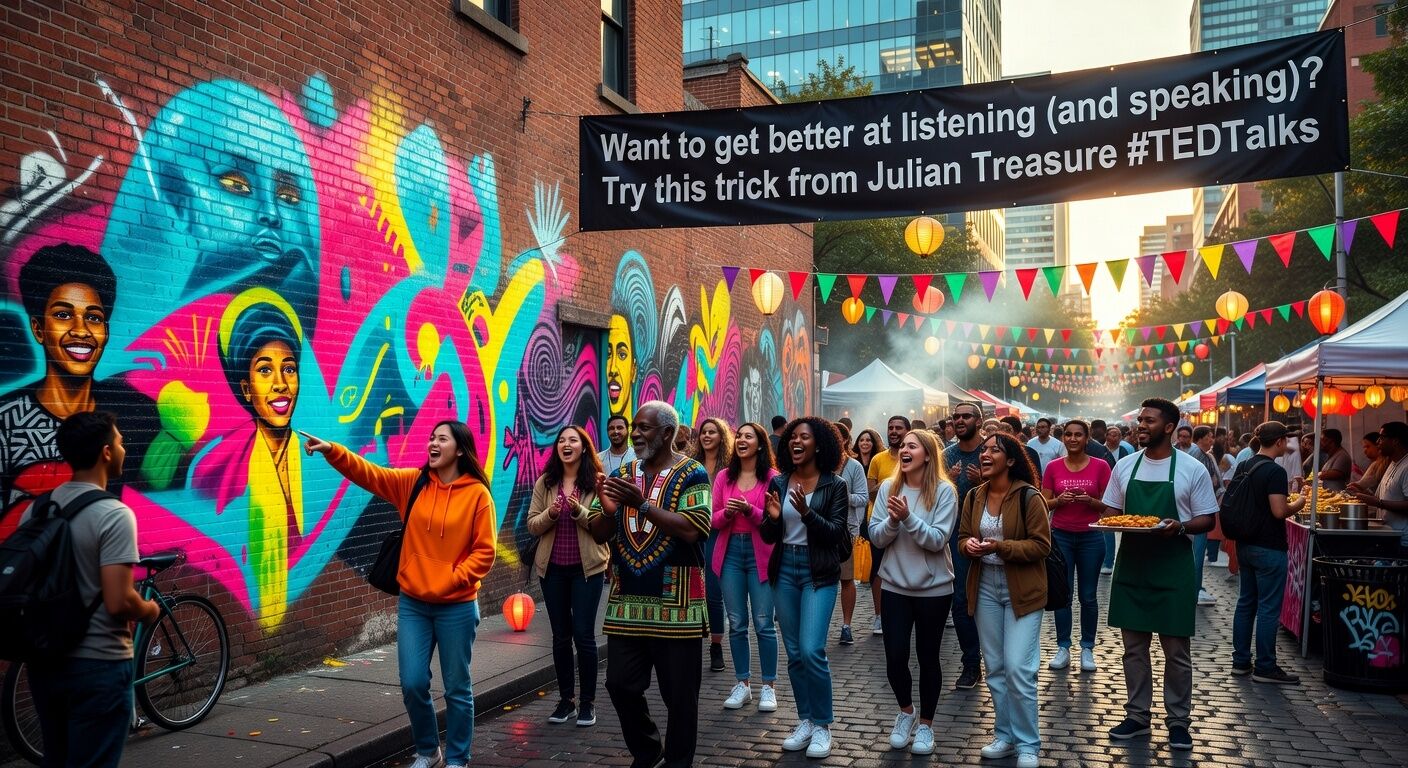
Want to get better at listening (and speaking)? Try this trick from Julian Treasure #TEDTalks
The Power of Presence: Julian Treasure's Timeless Listening Trick Resonates Across the African Diaspora
In a world flooded with notifications, endless scrolls, and fractured conversations, a fresh highlight from Julian Treasure's classic TED Talk has resurfaced on YouTube this week, reminding us that true connection begins with how we listen. Uploaded just yesterday under the title "Want to get better at listening (and speaking)? Try this trick from Julian Treasure," the clip is already sparking renewed conversations in cultural circles from Dakar to London to New York. At its core lies a deceptively simple technique: the RASA method—Receive, Appreciate, Summarize, Ask. Yet in 2026, as African diasporic communities navigate rapid digital transformation alongside the revival of ancestral oral practices, this framework feels more urgent than ever.
Treasure, a sound and communication expert, first delivered his insights in 2011, but the recent resurfacing arrives at a cultural inflection point. Across the continent and beyond, young artists, activists, and community leaders are reclaiming deep listening as both an artistic tool and a social necessity. In Senegal's thriving spoken-word scene, for instance, griot lineages have long modeled attentive reception—pausing to truly absorb a storyteller's rhythm before responding. Treasure's RASA echoes these traditions while offering a practical upgrade for today's hybrid spaces: Zoom town halls, Instagram Live poetry slams, and intergenerational family gatherings mediated by smartphones.
Receive: The Art of Full Attention
The first step, Receive, asks us to give someone our complete presence. No phone in hand, no rehearsing our reply. For Senegalese filmmaker Awa Thiam, whose latest documentary on Dakar's street musicians premiered at the FESPACO festival last month, this principle transformed her interview process. "When I stopped thinking about the next question and simply received the elder's silence," Thiam shared in a recent radio interview, "the stories unfolded like kora strings vibrating in the wind." Her experience mirrors a broader movement: the 2026 "Listen First" initiative launched by the African Cultural Alliance, which trains emerging journalists in attentive reception to counter misinformation during election cycles.
Appreciate: Honoring the Speaker's Gift
Appreciate follows naturally. A simple nod, an encouraging "mm-hmm," or even a culturally resonant phrase like "Waxal" (speak on) signals that the speaker's words matter. In Cape Verdean morna music circles, musicians have always used subtle vocal affirmations to keep the emotional thread alive. Today, the same technique appears in diaspora podcasting. The Nairobi-based series Voices of the Return, which explores reverse migration stories, deliberately trains hosts in appreciative listening. Episode 47, released this month, features a 12-minute uninterrupted reflection from a Senegalese returnee; the host's gentle affirmations allow raw vulnerability to surface without interruption.
Summarize and Ask: Closing the Loop of Understanding
The final two steps, Summarize and Ask, create closure and invitation. By paraphrasing what we heard ("So you're saying the rhythm of the sabar drum carries both joy and resistance?") and then inquiring further, we honor the speaker while deepening the exchange. This mirrors the call-and-response structures central to African American church traditions and Caribbean dub poetry. In Paris's growing Afrobeats community, sound engineers now apply the same loop during collaborative sessions, ensuring every voice in a multicultural track feels heard before the mix is finalized.
What makes the current TED clip especially timely is its timing amid global conversations about mental health and social cohesion. Studies released by the University of Cape Town's Centre for Social Science Research in April 2026 show that communities practicing structured listening report 34% lower rates of intergenerational conflict. In Dakar's bustling markets, where Wolof, French, and Arabic intermingle, vendors who consciously apply RASA report stronger customer loyalty and fewer misunderstandings, proof that ancient wisdom and modern technique can dance together.
Yet challenges remain. Digital platforms reward speed over depth. Algorithms push hot takes rather than thoughtful pauses. Treasure's trick, therefore, is development; it is cultural resistance. When young Senegalese activists used RASA principles during the 2025 youth climate dialogues, they transformed tense confrontations with elders into collaborative manifestos that now influence national policy.
The arts are leading this revival. At the upcoming Dakar Biennale, several installations invite visitors to practice paired listening exercises before viewing multimedia works about migration. One piece, Echoes of the Forgotten, requires participants to summarize their partner's reflections on displacement before entering the exhibition space. The result? Visitors report feeling more connected to both the artwork and each other.
As the YouTube clip climbs toward a million views, the message is clear: better listening is not passive. It is an active, creative, and deeply cultural act. Whether we are preserving griot stories, producing the next viral Afrobeats track, or simply sharing tea with neighbors in a Dakar courtyard, Julian Treasure's RASA offers a bridge between ancestral practices and contemporary life.
In reclaiming the power to listen well, African diasporic communities are communication, they are safeguarding the very soul of our shared humanity.
Source: TED via YouTube — 2026-05-12T20:00:17+00:00.

- Breaking News Analysis
- World Politics
- Business & Economy
- Technology & AI
- Science & Health
- Environment & Climate
- Culture & Society
- Travel & Tourism
- Sports & Entertainment
- Investigative Journalism
- Opinion & Commentary
- Media & Journalism
- Human Rights & Social Issues
- Education & Knowledge
- Citizen & Amateur Journalism
- Other News Topics

 English
 Arabic
 French
 Spanish
 Portuguese
 Turkish
 Dutch
Dutch
 Italiano
 Russian
 Romaian
 Portuguese (Brazil)
 Greek
Greek