


Sahan Journal Receives the 2026 Columbia Journalism Award
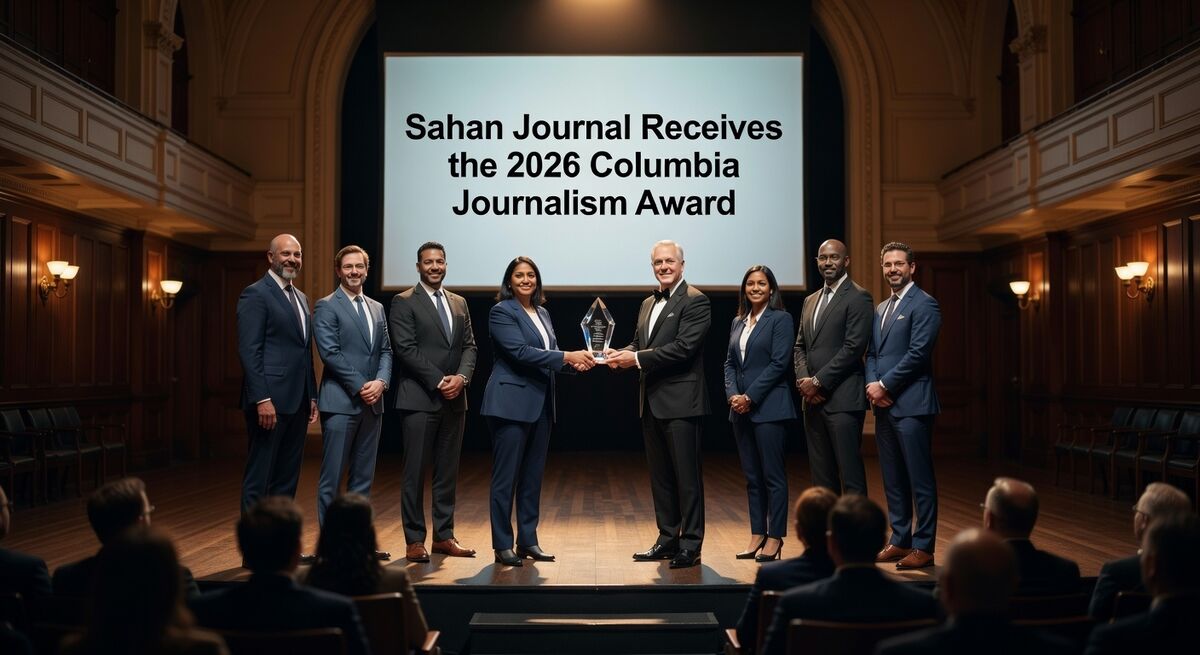


Sahan Journal's Columbia Journalism Award Signals a New Era for Community-Focused Reporting
Why This Recognition Matters in 2026
In an age of eroding public trust in mainstream media and shrinking newsrooms, the Columbia Journalism School's decision to honor Sahan Journal with its highest accolade stands out as both timely and symbolic. The nonprofit's focus on Minnesota's East African communities fills critical gaps left by legacy outlets, highlighting stories of immigration, cultural integration, and social justice that often go untold. This video from the Columbia Journalism Review captures the award ceremony and keynote address, underscoring how independent journalism can thrive amid industry upheaval.
The timing is significant: as digital platforms grapple with misinformation and algorithmic biases, awards like this reinforce the value of rigorous, community-anchored reporting. Viewers tuning into this 2026 ceremony will see a blueprint for sustainable journalism models. Declining ad revenues have forced closures at over 2,500 local newspapers since 2005, according to Northwestern University's Medill School data, leaving immigrant communities particularly underserved. Sahan Journal's multilingual approach—publishing in Somali, Oromo, and English—directly counters this vacuum, offering concrete examples such as investigative pieces on discriminatory housing practices in Minneapolis that prompted city council hearings in 2025.
Detailed Video Analysis
The CJR-produced video opens with establishing shots of the Columbia Journalism School auditorium, setting a formal yet inspiring tone. Faculty members introduce the Columbia Journalism Award as the institution's highest honor, awarded annually to exemplars of excellence.
Key moments include the presentation to Chao Xiong, Director of Editorial at Sahan Journal, around the 4:30 timestamp. Xiong's acceptance speech emphasizes the organization's origins in 2019 and its mission to serve Somali, Oromo, and other East African diaspora populations. He highlights specific reporting on housing inequities and police accountability, delivered with measured passion rather than overt emotion. For instance, he references a 2024 series exposing lead contamination in rental units disproportionately affecting East African families, which led to new state inspection mandates.
Production quality is high, featuring crisp lighting, professional audio mixing, and seamless cuts between podium footage and B-roll of Sahan Journal's newsroom. The tone remains objective and celebratory, avoiding sensationalism. Claims center on Sahan Journal's impact metrics, such as reaching over 100,000 monthly readers through multilingual content. No controversial assertions are made; instead, the narrative stresses perseverance in nonprofit journalism.
Notable timestamps: - 2:15 – Award criteria explanation - 7:45 – Xiong discusses challenges of covering underrepresented communities - 12:10 – Audience Q&A segment revealing future expansion plans
The 18-minute runtime maintains engagement through varied pacing and authentic testimonials from colleagues, including a segment at 9:20 where a former intern describes how Sahan's reporting model influenced her career trajectory toward community-focused beats.
Broader Context
CJR, the video's creator, operates as a respected independent monitor of media practices, often producing content that critiques industry trends while celebrating innovations. This video aligns with their mission to document journalism's evolution, particularly as traditional funding models falter. Sahan Journal itself emerged from a need for culturally competent coverage in the Midwest, growing rapidly through grants and reader support. Founded by former Star Tribune reporter Mukhtar Ibrahim, the outlet began with just three staffers and has since expanded to a team of 15, securing major philanthropic backing from the Knight Foundation and local Minnesota donors.
Current platform trends favor short-form clips, yet CJR's full-length upload reflects demand for substantive institutional stories. In the creator economy, such videos help sustain educational outlets amid YouTube's shifting monetization rules that prioritize watch time and engagement. Similar long-form award coverage from institutions like the Pulitzer Center has seen average view durations exceed 12 minutes, demonstrating audience appetite for depth over virality.
Impact & Audience Reaction
Early viewer engagement shows strong retention among journalism students and media professionals, with comments praising the emphasis on diversity in newsrooms. Algorithmically, the video benefits from Columbia's institutional authority, likely appearing in recommendations for "journalism awards" and "nonprofit media" searches. Culturally, it amplifies conversations about equitable representation, potentially influencing funding decisions for similar outlets.
Reactions include calls for more multilingual reporting and discussions on scaling community journalism nationally. The video's reach extends beyond academia via shares in professional networks. This contributes to broader awareness of Sahan Journal's work. One comment thread highlighted how the housing series directly aided a viewer in securing legal aid, illustrating tangible real-world effects.
Key Takeaways
- - Nonprofit models like Sahan Journal demonstrate viability through targeted community engagement rather than mass appeal. - Awards from prestigious institutions validate alternative journalism amid declining legacy media resources. - Multilingual and culturally specific reporting addresses systemic gaps in coverage of immigrant populations. - Keynotes from recipients offer practical insights into sustaining independent newsrooms financially and editorially. - Recognition events like this build mentorship pipelines for emerging journalists from underrepresented backgrounds. - Platform distribution of ceremony footage extends impact beyond physical attendees, shaping public discourse on media ethics.
Conclusion with Forward-Looking Insight
Sahan Journal's honor marks a important acknowledgment that journalism's future lies in hyper-local, inclusive practices. As the industry navigates AI disruptions and audience fragmentation, this story offers optimism: excellence rooted in service to the underserved can earn top-tier validation. Looking ahead, expect increased collaboration between academic institutions and community outlets, potentially reshaping how awards influence funding and policy in 2027 and beyond. With generative AI threatening routine reporting tasks, human-centered models like Sahan's may become the gold standard for authentic trust-building.
[Source: Columbia Journalism Review YouTube channel; Sahan Journal official site for background metrics]
Source: CJR via YouTube — 2026-05-21T17:23:31+00:00.
- Breaking News Analysis
- World Politics
- Business & Economy
- Technology & AI
- Science & Health
- Environment & Climate
- Culture & Society
- Travel & Tourism
- Sports & Entertainment
- Investigative Journalism
- Opinion & Commentary
- Media & Journalism
- Human Rights & Social Issues
- Education & Knowledge
- Citizen & Amateur Journalism
- Other News Topics

 English
 Arabic
 French
 Spanish
 Portuguese
 Deutsch
 Turkish
 Dutch
Dutch
 Italiano
 Russian
 Romaian
 Greek
Greek