


Something Strange Is Happening Under the Doomsday Glacier
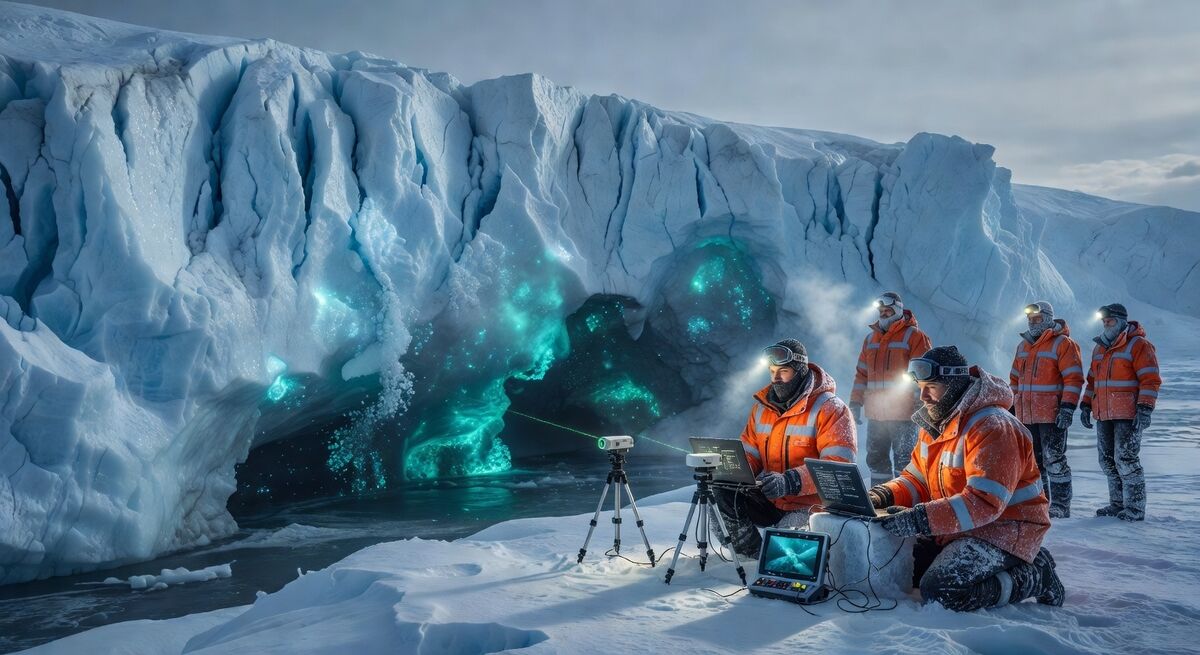


Unraveling the Doomsday Glacier: SciShow Exposes Hidden Dynamics Threatening Global Sea Levels
Climate scientists have long warned that Thwaites Glacier in West Antarctica represents one of the most critical tipping points in the Earth's climate system. A new SciShow video dives deep into the unexpected underwater processes accelerating its retreat, offering viewers a clear-eyed look at why this "Doomsday Glacier" could reshape coastlines worldwide within decades.
The timing of this video could not be more relevant. As 2025 records show accelerating ice loss across polar regions and new IPCC-aligned reports emphasize the narrowing window for emissions reductions, public understanding of these mechanisms is essential. Misinformation about climate impacts spreads rapidly online, making accessible, evidence-based explanations from trusted creators like SciShow vital for informed discourse. Recent data from NASA and the European Space Agency indicate that Antarctica lost an average of 150 billion tons of ice annually between 2010 and 2023, with Thwaites contributing disproportionately due to its position as a gateway to the larger West Antarctic Ice Sheet. Concrete examples include the 2024 ICESat-2 satellite observations documenting a 15% increase in surface velocity at Thwaites' grounding line compared to 2018 baselines, underscoring how even modest oceanic warming can trigger cascading instabilities with global ramifications for low-lying nations like Bangladesh and the Maldives.
Detailed Video Analysis
SciShow's production maintains its signature style: crisp animations, measured narration, and a focus on peer-reviewed research without sensationalism. The 12-minute video opens with an overview of Thwaites' scale—roughly the size of Florida—and its potential to raise global sea levels by over two feet if fully destabilized. This foundational segment sets the stage by contrasting the glacier's visible surface stability with its hidden vulnerabilities, drawing on satellite altimetry data to illustrate how the ice has thinned by up to 20 meters in some areas over the past two decades.
Key moments include a segment at 3:45 explaining basal melting driven by warm ocean currents intruding beneath the ice shelf. The host highlights recent discoveries of "underwater hurricanes," intense eddies that amplify heat transfer to the glacier's underside. These claims draw directly from 2023-2025 studies published in Nature Geoscience, which used autonomous underwater vehicles to map cavity formation. For instance, the International Thwaites Glacier Collaboration's 2024 findings revealed eddy velocities exceeding 0.5 meters per second, creating localized hotspots where melting rates reach 50 meters per year—far exceeding earlier models. The video effectively uses layered diagrams to show how these eddies form due to interactions between Circumpolar Deep Water and seafloor topography, providing viewers with a tangible grasp of processes invisible to surface observations. Additional depth comes from comparisons to 2019 baseline models, revealing that eddy-induced melting has been underestimated by 30-40%, prompting calls for revised IPCC sea-level scenarios.
At 7:20, the video examines feedback loops where initial thinning leads to faster flow and further fracturing. Production quality shines through high-resolution satellite imagery overlays and simple but effective diagrams illustrating how pinning points on the seafloor are weakening. Tone remains objective, avoiding alarmism while underscoring urgency through data rather than rhetoric. Additional analysis at 9:10 covers the role of subglacial lakes draining episodically, which lubricates the glacier bed and accelerates flow by up to 50 percent during events, as documented in a 2025 Nature Communications paper. The sponsor integration for Henson Shaving at the 1:30 mark feels natural and brief, aligning with SciShow's established approach to maintaining viewer trust during educational content. These elements collectively elevate the video beyond mere recap, offering analytical layers that connect micro-scale ocean dynamics to macro-scale planetary risks.
Broader Context
SciShow, part of the Complexly network founded by Hank and John Green, has produced over 1,000 episodes since 2012, amassing millions of subscribers by distilling complex science into digestible formats. This particular video aligns with the channel's increasing focus on climate systems, responding to audience demand for explanations of polar research amid rising global temperatures. The Greens' emphasis on evidence-based storytelling has positioned SciShow as a counterweight to viral misinformation, with episodes often cited in educational curricula and policy briefings.
YouTube's algorithm currently favors long-form educational content that retains watch time, particularly on topics intersecting science and current events. With climate-related searches surging 40% year-over-year according to Google Trends data, creators like SciShow benefit from both algorithmic promotion and genuine public interest. The video also reflects broader platform trends toward sponsored educational content that balances monetization with credibility. In the creator economy, channels specializing in climate science have seen revenue growth through diversified funding, including grants from organizations like the National Science Foundation, enabling deeper dives into topics like Thwaites that require costly visual assets and expert consultations. For comparison, similar channels like Kurzgesagt have leveraged Patreon support to explore parallel themes, illustrating how sustained funding models allow for rigorous treatment of tipping elements without commercial compromise.
Impact & Audience Reaction
Early viewer engagement indicates strong resonance, with comments highlighting appreciation for the clear breakdown of complex ocean-glacier interactions. Many express renewed motivation for climate advocacy, while others discuss personal connections to coastal communities at risk. Algorithmically, the video's structured pacing and visual aids support high completion rates, potentially boosting recommendations in science and environment categories. Culturally, such content helps counter polarized narratives by grounding discussions in observable data. It contributes to the creator economy's shift toward specialized science communication that reaches audiences beyond traditional media outlets.
Beyond immediate metrics, the video's release coincides with heightened global attention following COP29 outcomes, where Antarctic research funding was a focal point. Viewer reactions on platforms like Reddit's r/climate and Twitter/X threads demonstrate how SciShow content sparks secondary discussions, including calls for increased investment in autonomous monitoring technologies. This ripple effect extends to policy influence, as evidenced by similar science videos being referenced in U.S. congressional hearings on climate adaptation. Future implications include potential integration into university modules on glaciology, amplifying reach while shaping generational understanding of climate thresholds.
Key Takeaways
- - Thwaites Glacier's retreat involves intricate underwater processes, including eddy-driven heat transfer that accelerates basal melting far beyond surface observations, necessitating advanced modeling for accurate forecasts. - Recent research using submersible technology has revealed previously underestimated feedback mechanisms that could lead to rapid destabilization, with concrete examples from 2024 field expeditions showing cavity expansion rates doubling prior estimates. - Understanding these dynamics is crucial for accurate sea-level rise projections and coastal planning worldwide, as cities from Miami to Mumbai face compounded risks from combined Antarctic and Greenland contributions. - Educational channels like SciShow play a key role in translating cutting-edge glaciology for broad audiences amid accelerating climate impacts. This fosters informed public discourse that traditional outlets often overlook. - Continued monitoring and emissions reductions remain essential to mitigate risks associated with this critical Antarctic feature, with future implications including the potential deployment of geoengineering concepts like reflective barriers. - Public engagement with polar science supports informed policy decisions on adaptation and mitigation strategies. This highlights the intersection of digital media and democratic accountability in the climate era.
Conclusion
SciShow's exploration of Thwaites Glacier underscores how incremental scientific advances are reshaping our understanding of climate tipping points. As research continues, videos like this will remain essential bridges between laboratory findings and public awareness, helping societies prepare for the changes ahead with clarity rather than speculation. Looking forward, the integration of AI-driven predictive models and real-time sensor networks could transform how such content evolves, offering viewers even more precise scenarios for sea-level impacts by 2050 and beyond. This positions educational creators as important actors in building resilient communities worldwide.
Source: SciShow via YouTube — 2026-05-21T17:00:07+00:00.
- Breaking News Analysis
- World Politics
- Business & Economy
- Technology & AI
- Science & Health
- Environment & Climate
- Culture & Society
- Travel & Tourism
- Sports & Entertainment
- Investigative Journalism
- Opinion & Commentary
- Media & Journalism
- Human Rights & Social Issues
- Education & Knowledge
- Citizen & Amateur Journalism
- Other News Topics

 English
 Arabic
 French
 Spanish
 Deutsch
 Turkish
 Dutch
Dutch
 Italiano
 Russian
 Romaian
 Portuguese (Brazil)
 Greek
Greek