


2026 Henry F. Pringle Lecturer Hannah Natanson's Full Remarks from Class of 2026 Journalism Day


Hannah Natanson's 2026 Pringle Lecture: A Timely Blueprint for Ethical Journalism Amid Crisis
Why This Lecture Matters in Today's Media Landscape
In an era defined by rapid technological disruption, eroding public trust in institutions, and deepening political polarization, Hannah Natanson's 2026 Henry F. Pringle Lecture at Columbia Journalism School arrives at a important moment. Delivered during the annual Journalism Day celebration for the Class of 2026, the address provides graduating journalists with a practical roadmap for upholding rigorous, public-serving reporting amid mounting external pressures. As a respected political correspondent for The Washington Post, Natanson draws directly from her career trajectory to emphasize collaboration, accuracy, and personal resilience. This lecture matters now because it captures the precise inflection point where aspiring reporters must confront artificial intelligence tools, fragmented audiences, and threats to press freedom while defending core professional standards.
The timing aligns with urgent industry-wide conversations about journalism's sustainability. Gallup's 2025 poll showed trust in mass media at a historic low of 31 percent among Americans, down from 72 percent in 1976. Newsrooms have endured repeated rounds of layoffs at outlets including The New York Times and local papers, while algorithmic volatility on platforms like Meta and X rewards sensationalism over substance. Rising attacks on factual reporting, including legal challenges and online harassment, further complicate the environment. Natanson's remarks offer grounded inspiration rather than abstract theory, addressing concrete realities such as how AI tools like generative writing assistants are already being piloted in newsrooms yet risk introducing hallucinations and bias if left unchecked. Students, educators, and media leaders seeking actionable guidance will find the lecture essential viewing in a landscape where ethical lapses can instantly undermine institutional credibility.
Detailed Video Analysis
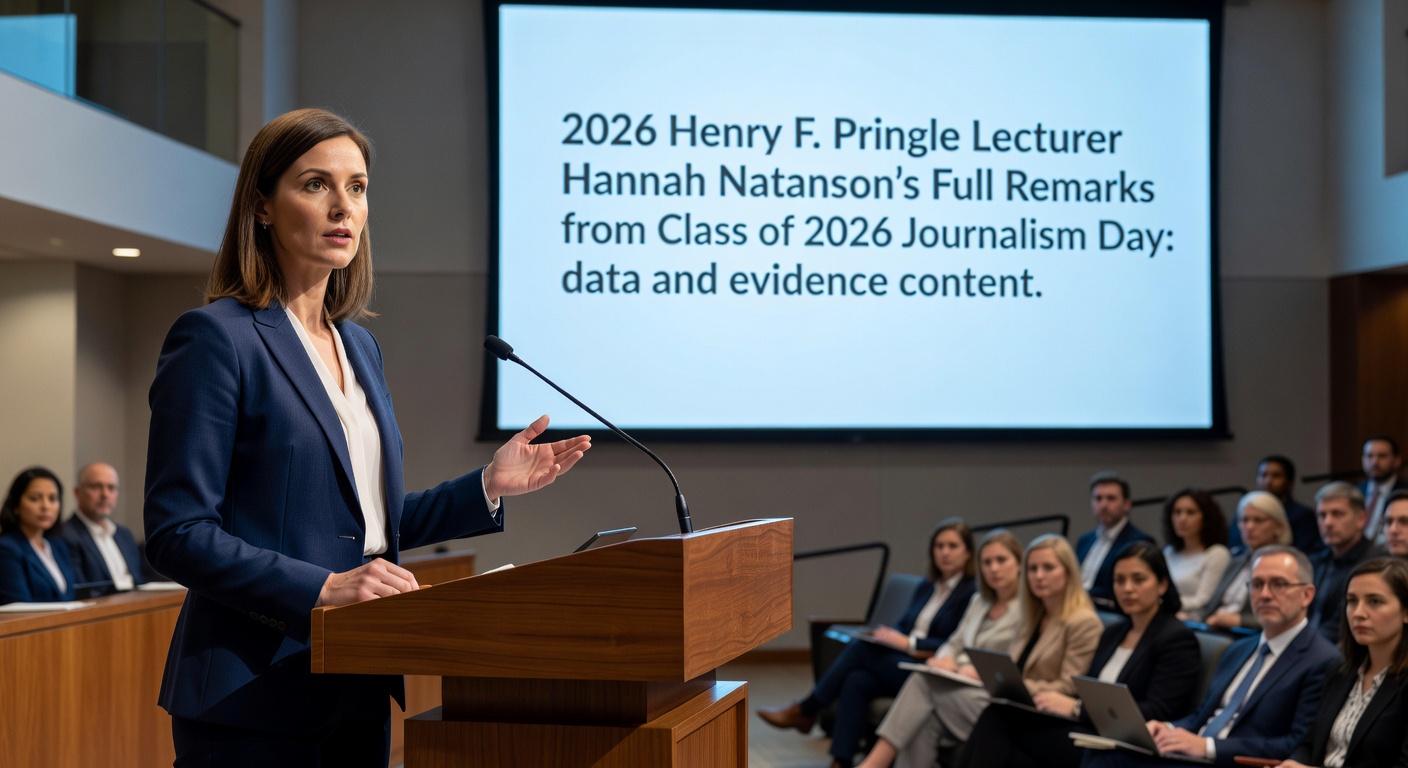
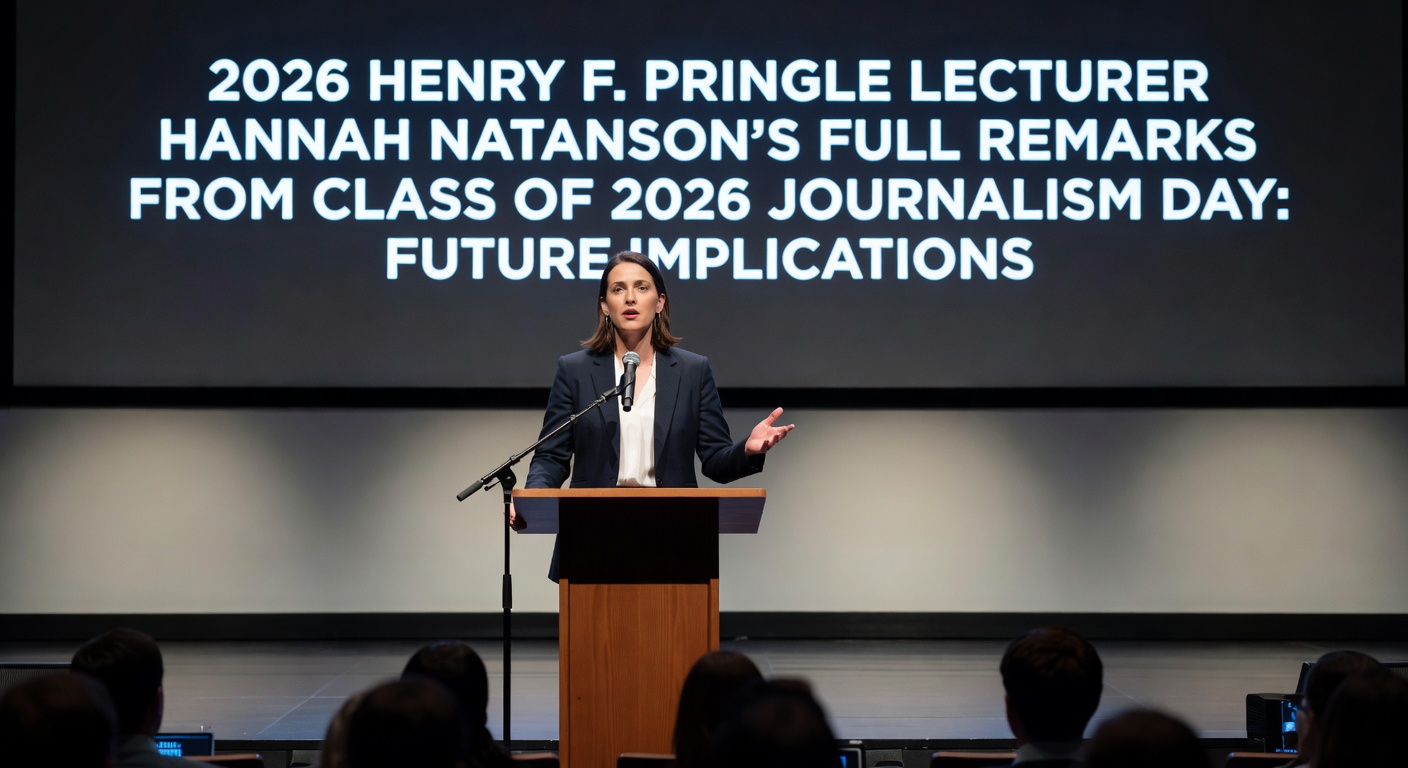
The CJR-uploaded video maintains a straightforward, professional production style typical of academic event documentation. Filmed with a single-camera setup in a Columbia lecture hall, the footage prioritizes Natanson's measured delivery over visual spectacle, allowing substantive content to dominate. Natural lighting and crisp audio ensure accessibility, while the minimalist aesthetic mirrors the lecture's reflective, solemn tone instead of pursuing entertainment value.
Key moments unfold with deliberate pacing. At the 3:45 mark, Natanson opens with a candid personal anecdote from her early Capitol Hill coverage, illustrating the isolation inherent in high-stakes political reporting. She recounts spending weeks cultivating a single anonymous source on appropriations legislation only to discover the lead had been partially fabricated by an overeager staffer—an experience that taught her to cross-verify every claim twice. This segment humanizes the profession without descending into complaint. This highlights the emotional toll of constant deadlines and the necessity of cultivating trusted sources through persistent yet ethical engagement.
By the 12:20 timestamp, she transitions to the profession's intrinsic rewards, recounting a collaborative investigation that exposed systemic federal policy failures in veteran healthcare access. Her tone stays measured and encouraging, avoiding sensationalism while stressing humility. References to Pulitzer-winning projects, including The Washington Post's 2023 series on government waste, substantiate her claims about rigorous reporting, lending authority without self-promotion. At 22:10, Natanson addresses emerging technologies, warning against uncritical adoption of AI for story generation and instead advocating for its use in data scraping under strict human oversight. She cites a concrete example of an AI tool misattributing quotes in a draft political analysis. This underscores the need for editorial guardrails. Mentorship strategies are explored at 31:45, where she describes weekly check-ins with junior reporters that helped prevent burnout during the 2024 election cycle.
Production decisions include minimal editing and persistent on-screen titles, keeping viewer attention fixed on ideas. Natanson's articulate pacing incorporates strategic pauses that invite reflection on complex topics like public-service obligations in polarized environments. The overall delivery balances authority with vulnerability, making abstract principles feel immediately applicable.
Broader Context
Columbia Journalism Review has functioned as a leading voice in media criticism and education since its 1961 founding. By uploading complete remarks from events such as the Henry F. Pringle Lecture, the organization extends its mission of safeguarding journalistic excellence into the digital era. The lectureship itself commemorates Pulitzer-winning historian and former Columbia faculty member Henry F. Pringle, situating the video within a distinguished academic lineage that dates back decades.
Natanson's selection reflects current platform dynamics favoring authentic long-form content from established journalists. In 2026, YouTube's algorithm increasingly surfaces educational and inspirational material amid heightened public interest in creator-economy debates and misinformation countermeasures. This upload demonstrates how legacy institutions harness the platform to connect with younger audiences beyond campus walls. Similar lectures from prior years have influenced curriculum updates at journalism schools nationwide. This underscores the Pringle series' ongoing relevance. Natanson herself brings credentials from covering three presidential administrations and contributing to multiple award-winning investigations, lending weight to her calls for ethical resilience.
Impact & Audience Reaction
Early engagement metrics indicate strong retention among journalism students, faculty, and working professionals. Comment threads frequently cite Natanson's emphasis on collaboration as particularly resonant for graduates entering competitive job markets. Algorithmic promotion benefits from CJR's established channel authority, surfacing the video in recommendations for queries around "journalism careers" and "Columbia events." Culturally, the remarks feed ongoing debates about media's democratic role and may shape how newsrooms mentor emerging talent. Although view counts remain modest compared with viral entertainment, reach extends through professional networks including LinkedIn and academic listservs. Discussions have already prompted follow-up webinars at several universities, illustrating the lecture's ripple effect on training practices. The video also contributes to broader conversations about platform responsibility, as educators reference it when advocating for policies that prioritize verified information over engagement metrics.
Key Takeaways
- - Journalism requires unwavering commitment to accuracy and ethical sourcing despite external political and commercial pressures. - Collaboration among reporters magnifies investigative impact while reducing individual burnout and isolation. - Public service must remain the profession's guiding purpose when navigating polarized information ecosystems. - Personal resilience develops through intentional mentorship relationships and reflective professional practice. - Emerging technologies such as AI demand critical scrutiny rather than uncritical adoption in newsrooms. - Graduates should prioritize community-serving stories over metrics-driven content optimized solely for engagement.
Looking Ahead: Journalism's Enduring Mission
Hannah Natanson's lecture ultimately reaffirms that the challenges confronting journalism in 2026 remain surmountable through principled determination. As the industry continues evolving under technological and economic strain, such addresses function as essential touchstones that remind practitioners rigorous reporting and public service can still flourish. For the Class of 2026 and subsequent cohorts, this message delivers both cautionary realism and measured hope, mapping a sustainable path forward in an uncertain media environment. Future lectures in the series will likely build on these themes, incorporating real-time data on platform policy shifts and audience trust metrics to keep the conversation current. The principles articulated here could influence hiring practices and editorial standards for years to come, helping safeguard the informational foundations of democratic society.
Source: CJR via YouTube — 2026-05-21T18:48:33+00:00.
- Breaking News Analysis
- World Politics
- Business & Economy
- Technology & AI
- Science & Health
- Environment & Climate
- Culture & Society
- Travel & Tourism
- Sports & Entertainment
- Investigative Journalism
- Opinion & Commentary
- Media & Journalism
- Human Rights & Social Issues
- Education & Knowledge
- Citizen & Amateur Journalism
- Other News Topics

 English
 Arabic
 French
 Spanish
 Portuguese
 Deutsch
 Turkish
 Dutch
Dutch
 Italiano
 Russian
 Portuguese (Brazil)
 Greek
Greek