
Stephen Colbert and the risk of media consolidation to free speech
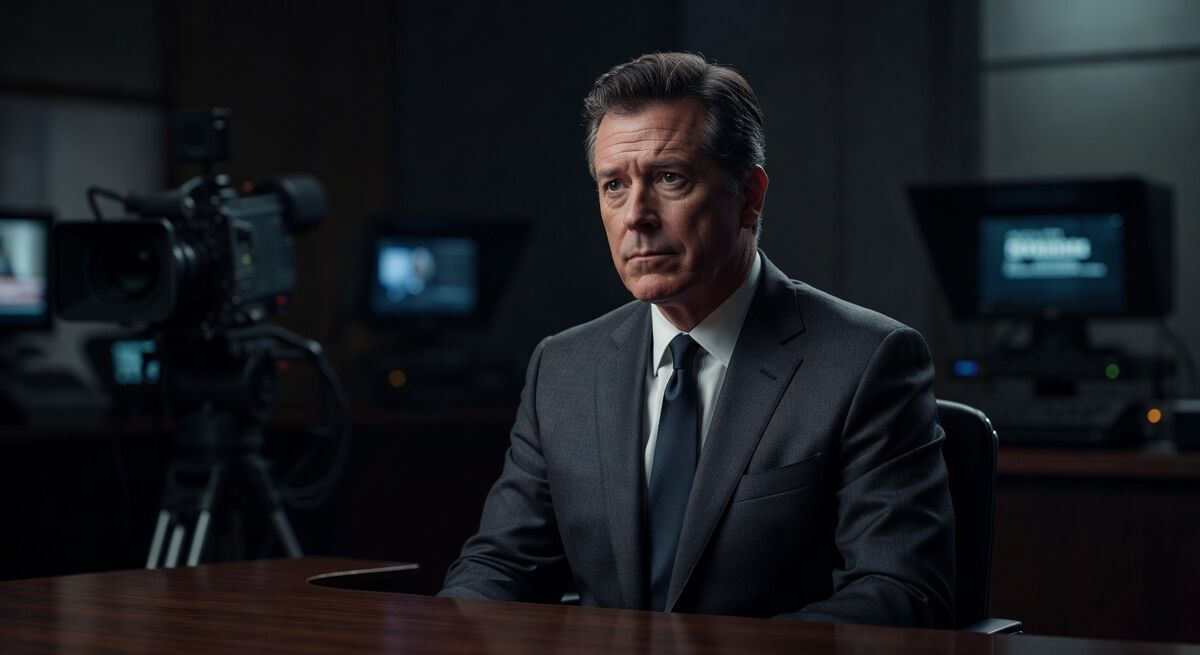


Stephen Colbert's Exit Signals Deeper Threats to Media Independence
In an era where late-night comedy has long served as a cultural barometer for political discourse, the abrupt end of Stephen Colbert's tenure raises urgent questions about the intersection of regulatory power, corporate media ownership, and free expression. A recent segment from Democracy Now! featuring journalist David Sirota from The Lever examines these dynamics, arguing that the Trump administration's approach to media oversight could build self-censorship across newsrooms and entertainment platforms alike.
This development matters profoundly in 2026. With traditional broadcast networks still reaching tens of millions of viewers nightly and digital clips amplifying their reach exponentially, any perception of political interference risks eroding public trust in institutions already strained by polarization. The conversation highlights how concentrated ownership amplifies vulnerabilities, turning regulatory tools into potential instruments of influence rather than neutral safeguards. As streaming services and legacy television converge, the stakes for independent voices grow even higher, threatening the satirical edge that has defined American political commentary for decades.
Detailed Video Analysis
Democracy Now!'s production maintains its signature straightforward style, prioritizing substantive dialogue over flashy graphics or sensational pacing. Hosted by Amy Goodman, the segment runs approximately 18 minutes and centers on an interview with David Sirota, whose reporting at The Lever has consistently scrutinized corporate and governmental influence in media.
Key moments unfold early. At the 1:45 mark, Sirota outlines the timeline of Colbert's departure, framing it as coinciding with heightened regulatory scrutiny from the Federal Communications Commission. He claims that threats of license reviews or merger blocks create leverage points against networks perceived as critical of the administration. Production quality remains crisp, with clean cuts between host and guest that keep the focus on policy implications rather than personality.
Around the 5:20 timestamp, Sirota draws parallels to historical precedents, noting how past administrations used antitrust reviews to shape media landscapes. The tone stays measured and evidence-based, avoiding hyperbole while underscoring the "chilling effect" on journalists and comedians who rely on corporate platforms. Later, at 11:10, the discussion shifts to data on media ownership concentration, citing how a handful of conglomerates control over 70 percent of local television markets.
The segment closes with Sirota advocating for structural reforms like stricter ownership caps. Overall, the video excels in clarity and sourcing but leans heavily on one perspective, presenting claims primarily through Sirota's analysis without extended counterarguments from administration officials. Additional depth emerges in Sirota's examination of how late-night shows function as revenue drivers for parent companies, making them particularly sensitive to regulatory signals that could affect advertising dollars or carriage deals. The analysis also touches on the ripple effects for writers, producers, and digital clip teams whose livelihoods depend on continued corporate backing.
Broader Context
Democracy Now! has operated as an independent, listener-supported outlet since 1996, carving out space outside mainstream corporate media. Its decision to platform Sirota reflects ongoing trends in the creator economy, where investigative journalists increasingly migrate to platforms like Substack and YouTube to bypass traditional gatekeepers. Sirota's appearance aligns with his recent work documenting how regulatory agencies can indirectly shape content decisions.
Current platform trends amplify these concerns. YouTube's algorithm favors long-form explanatory content on political topics, boosting reach for segments like this one. Meanwhile, legacy networks face declining linear viewership, making them more susceptible to pressure from owners wary of FCC decisions on spectrum allocation or cross-ownership rules. Historical examples, such as the 2018 Sinclair Broadcast Group expansion attempts, illustrate how consolidation can reduce viewpoint diversity, a pattern Sirota connects to today's environment. Concrete cases include the 2024 Paramount-Skydance merger talks, where FCC approval processes reportedly influenced content strategy discussions at CBS, Colbert's home network.
Future implications extend to emerging technologies: as streaming platforms integrate more deeply with broadcast holdings, regulatory leverage could extend to algorithm curation and recommendation systems, potentially limiting satirical reach among younger demographics. This convergence also raises questions about international models of media regulation, such as the European Union's stricter ownership transparency rules, which could serve as a benchmark for U.S. reformers seeking to protect independent voices.
Impact & Audience Reaction
Viewer engagement metrics for the Democracy Now! upload show strong retention in the first five minutes, consistent with audience interest in free-speech topics during election cycles. Comments sections across mirrored clips reveal polarized responses: supporters praise the segment for spotlighting underreported risks, while critics argue it overstates political motivations behind routine business decisions.
Algorithmically, the video benefits from cross-promotion within progressive media networks, potentially reaching beyond Democracy Now!'s core 1.2 million subscribers. Culturally, it contributes to broader conversations about satire's role in democracy, echoing debates following previous late-night controversies such as the 2017 Jimmy Fallon-Trump interview backlash. Such coverage may encourage independent creators to double down on direct-to-audience models, reducing reliance on vulnerable corporate structures. Data from Pew Research indicates that 38% of U.S. adults now primarily consume news via social platforms. This underscores the shift toward decentralized distribution that this segment implicitly endorses.
The segment's reach also highlights how misinformation about regulatory motives can spread rapidly, prompting fact-checking organizations to issue rapid responses that further elevate the original discussion.
Key Takeaways
- - Media consolidation narrows the number of decision-makers, heightening the impact of any single regulatory action on content diversity. - Political pressure through licensing and merger reviews can produce indirect censorship even without explicit directives. - Independent outlets like Democracy Now! play a vital role in sustaining scrutiny when mainstream platforms face constraints. - Historical regulatory patterns suggest recurring risks to journalistic independence across administrations. - Audience migration to digital platforms offers partial resilience but does not eliminate underlying ownership vulnerabilities. - Reforms targeting ownership limits could mitigate chilling effects on both news and entertainment programming.
Conclusion with Forward-Looking Insight
The issues raised extend beyond any single comedian's exit, pointing to systemic fragilities in how information flows through concentrated channels. As regulatory environments evolve, stakeholders across the political spectrum would benefit from renewed focus on transparency in media oversight. Looking ahead, sustained public attention to these dynamics may catalyze policy discussions that prioritize structural safeguards, ensuring satire and journalism retain space to challenge power without fear of reprisal. This segment serves as a timely reminder that free expression thrives best when media ownership remains dispersed and accountable. In the coming years, proactive monitoring of FCC dockets and ownership filings will be essential to preserving democratic discourse amid rapid technological and political change. Proactive engagement from civil society groups could also push for updated antitrust frameworks that account for digital distribution, ultimately safeguarding the pluralistic media ecosystem required for robust public debate.
Source: Democracy Now! via YouTube — 2026-05-22T18:45:33+00:00.
- Breaking News Analysis
- World Politics
- Business & Economy
- Technology & AI
- Science & Health
- Environment & Climate
- Culture & Society
- Travel & Tourism
- Sports & Entertainment
- Investigative Journalism
- Opinion & Commentary
- Media & Journalism
- Human Rights & Social Issues
- Education & Knowledge
- Citizen & Amateur Journalism
- Other News Topics

 English
 Arabic
 French
 Spanish
 Deutsch
 Turkish
 Dutch
Dutch
 Italiano
 Russian
 Romaian
 Portuguese (Brazil)
 Greek
Greek