


Oil Price Surge in 2026 Forces Drivers to Rethink Fuel Costs and Vehicle Choices
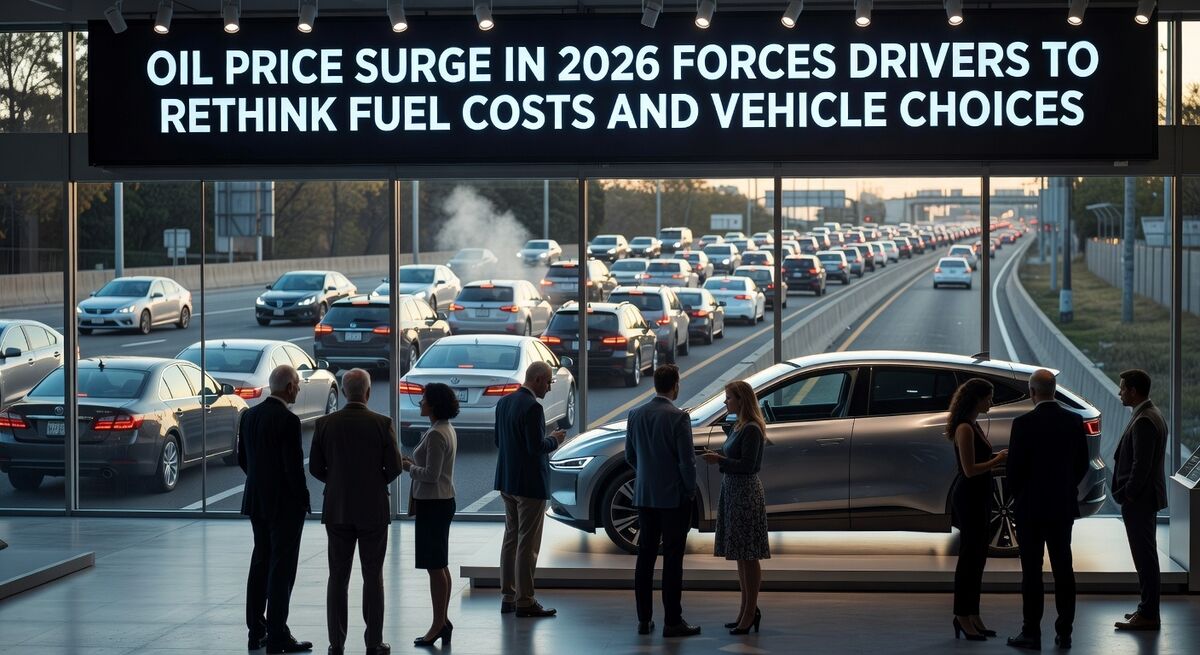
Oil Price Surge in 2026 Forces Drivers to Rethink Fuel Costs and Vehicle Choices
Oil Price Surge in 2026 Forces Drivers to Rethink Fuel Costs and Vehicle Choices
In March 2026, renewed geopolitical tensions in the Middle East triggered a sharp spike in global crude oil prices, pushing Brent crude above $115 per barrel for the first time in nearly two years. Shipping routes through the Strait of Hormuz faced fresh disruptions, and several major producers announced production cuts. The result has been felt at petrol stations worldwide, with average pump prices in Europe and North America rising by 18 to 25 percent in just six weeks.
This sudden increase has once again placed fuel costs at the centre of household budgets. Commuters and families who previously viewed petrol and diesel vehicles as convenient are now examining their options more carefully. The conversation has quickly shifted toward vehicles that consume less fuel or run on electricity.
Rising Fuel Prices Reshape Automotive Priorities
Higher oil prices do not simply increase the cost of filling a tank. They influence resale values, insurance premiums, and even the speed at which manufacturers accelerate their electric vehicle programmes. Industry analysts note that every sustained $10 rise in the price of a barrel adds roughly $0.25 to the cost of a litre of petrol in most markets.
For drivers, the immediate effect is visible in monthly expenses. A typical family saloon that returns 8 litres per 100 km now costs an extra $60–80 each month compared with early 2025 prices. Vehicles achieving 5 litres per 100 km or better, or fully electric models, show markedly lower running costs under the same conditions.
Fuel Efficient Cars Gain Fresh Attention
The renewed focus on fuel economy has boosted interest in hybrid and efficient petrol models. Manufacturers report stronger orders for vehicles such as the Toyota Corolla Hybrid and Honda Civic e:HEV. These cars combine modest purchase prices with strong real-world economy, making them attractive when petrol prices climb quickly.
At the same time, pure electric vehicles continue to benefit from the price environment. With electricity costs remaining relatively stable in most regions, owners of cars such as the Tesla Model 3 or Hyundai Ioniq 5 report savings of 40 to 60 percent on energy compared with equivalent petrol models at current pump prices.
How Insurance Costs Interact with Efficiency
Car insurance is another factor that shifts with vehicle choice. Insurers increasingly price policies according to both risk and expected repair costs. Electric vehicles often carry higher premiums because of expensive battery packs, yet many companies now offer discounts for low-mileage or highly efficient cars that are statistically involved in fewer claims.
Drivers comparing policies should request quotes for both a fuel-efficient hybrid and an EV on the same platform. In several markets, switching from a large petrol SUV to a compact hybrid has reduced annual premiums by 10 to 15 percent, even before fuel savings are counted.
What This Means For You
If you are reviewing your next vehicle purchase, begin by calculating your annual kilometres and local fuel or electricity rates. A simple spreadsheet comparing total cost of ownership over three years usually reveals the break-even point between petrol, hybrid and electric options.
Next, obtain fresh insurance quotes before you shortlist cars. Many comparison sites allow you to model different powertrains on the same vehicle, highlighting any premium differences. Consider usage patterns too: frequent short trips favour EVs, while long highway commutes may still suit efficient hybrids.
Finally, review your existing policy for any efficiency-related discounts. Some insurers reward drivers who maintain vehicles with verified low fuel consumption or who install telematics devices that track economical driving.
Practical Steps Drivers Can Take Now
- Track your actual fuel or charging costs for one month to establish a baseline. - Test drive both a hybrid and an electric model back-to-back on your typical routes. - Request side-by-side insurance quotes rather than relying on advertised averages. - Check local incentives such as reduced road tax or congestion charge exemptions that further improve the economics of efficient vehicles.
These actions help turn a global oil shock into a personal opportunity to lower long-term motoring expenses.
The current price environment is unlikely to ease quickly. Drivers who act on efficiency and insurance data now can lock in meaningful savings for years rather than reacting month by month at the pump.
This article is for informational purposes and does not constitute financial or insurance advice. Always verify current prices and policy details with licensed providers.
- Breaking News Analysis
- World Politics
- Business & Economy
- Technology & AI
- Science & Health
- Environment & Climate
- Culture & Society
- Travel & Tourism
- Sports & Entertainment
- Investigative Journalism
- Opinion & Commentary
- Media & Journalism
- Human Rights & Social Issues
- Education & Knowledge
- Citizen & Amateur Journalism
- Other News Topics

 English
 Arabic
 French
 Spanish
 Portuguese
 Turkish
 Dutch
Dutch
 Italiano
 Russian
 Romaian
 Portuguese (Brazil)
 Greek
Greek