


Covering Civil and Human Rights: Presidential Power, What the Constitution Really Says
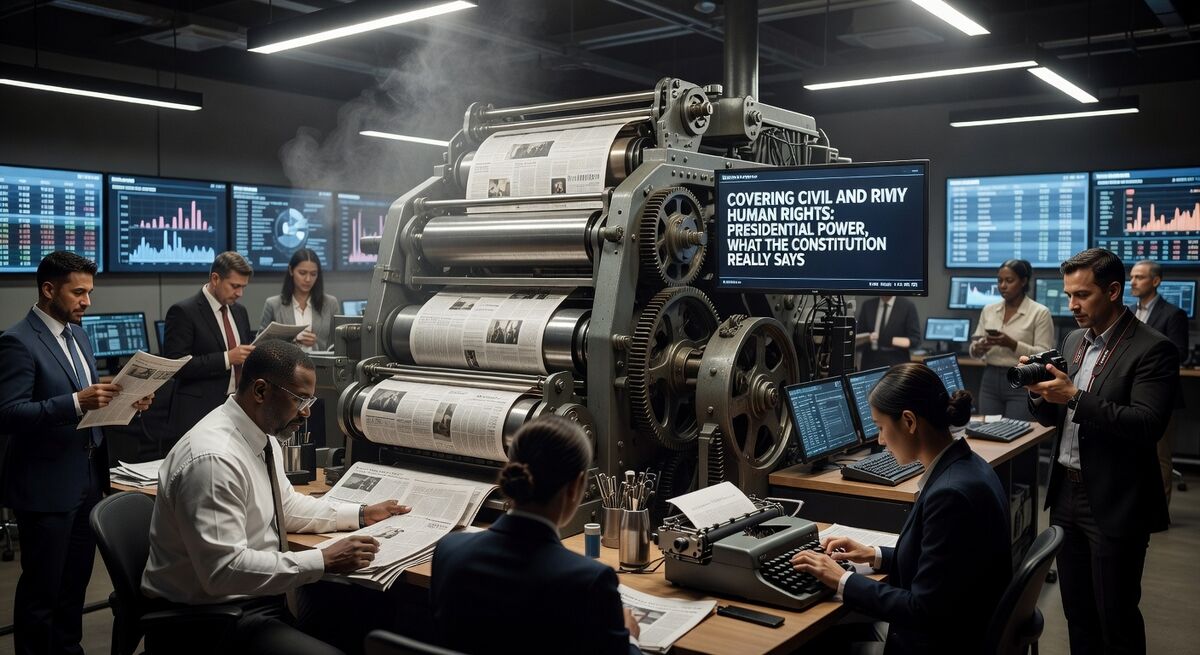
Covering Civil and Human Rights: Presidential Power, What the Constitution Really Says
Examining Presidential Power: Columbia Journalism Forum Sheds Light on Constitutional Limits and Reporting Challenges
As debates over the limits of executive authority continue to reshape American politics, a timely virtual conversation hosted by Columbia Journalism School's Ira A. Lipman Center for Journalism, Civil and Human Rights offered critical insights for journalists navigating these turbulent waters. Held just yesterday on May 21, 2026, the event titled "Covering Civil and Human Rights: Presidential Power, What the Constitution Really Says" drew media professionals, scholars, and students eager to understand how the nation's founding document constrains—or fails to constrain—the modern presidency.
In an era marked by rapid policy shifts via executive orders and heightened scrutiny of institutional guardrails, the forum underscored journalism's indispensable role in safeguarding civil liberties. Panelists emphasized that accurate, context-rich reporting is a bulwark against potential overreach.
Constitutional Foundations Under the Microscope
The discussion opened with a deep dive into Article II of the U.S. Constitution, which outlines the powers of the executive branch. Legal scholars on the panel reminded attendees that while the president serves as commander-in-chief and holds authority to enforce laws, these powers are deliberately checked by Congress and the judiciary. Recent expansions of executive action, particularly in areas touching immigration, national security, and regulatory reform, have tested these boundaries, prompting renewed questions about accountability.
Journalists were urged to ground their coverage in primary sources rather than partisan narratives. One Columbia faculty member noted that mischaracterizing constitutional text can erode public trust, especially when stories influence perceptions of legitimacy in governance. The forum highlighted how historical precedents, from the New Deal era through post-9/11 expansions, reveal a pattern of gradual power accrual that demands vigilant monitoring.
Challenges for Journalists Covering Rights Issues
Beyond textual analysis, the conversation turned to practical hurdles reporters face in the field. Covering civil and human rights under shifting executive policies requires balancing speed with precision. Panelists shared strategies for verifying claims of rights violations, including cross-referencing government data with nonprofit reports and on-the-ground interviews.
The virtual format allowed global participants to join. This reflects the international stakes of U.S. executive decisions. As an anchor based in Tel Aviv, I found particular resonance in discussions about how American policy reverberates abroad, influencing human rights standards worldwide. Journalists were encouraged to contextualize domestic stories within broader democratic norms, avoiding isolationist framing that obscures global implications.
Press freedom emerged as a recurring theme. With increasing legal pressures on newsrooms and the proliferation of disinformation campaigns, maintaining independence while covering sensitive topics like executive authority has never been more demanding. The Lipman Center's focus on civil rights journalism training was praised for equipping the next generation with tools to withstand these pressures.
Implications for the Future of Journalism
Looking ahead, the forum painted a picture of journalism evolving alongside constitutional interpretation. Data-driven reporting, collaborative fact-checking networks, and multimedia storytelling were identified as essential innovations. Yet panelists cautioned against over-reliance on technology at the expense of human sources who can articulate lived experiences of rights infringements.
Media consolidation trends also surfaced indirectly, with concerns that fewer independent outlets may limit the diversity of voices examining presidential power. Strengthening local and investigative reporting was proposed as a countermeasure, ensuring executive actions in Washington do not escape granular scrutiny.
Audience questions probed ethical dilemmas, such as when aggressive coverage might itself be viewed as political. The consensus: transparency about sourcing and methodology remains the profession's strongest defense.
This event arrives at a important moment for American governance and the media ecosystem that documents it. As executive authority continues to be tested, the lessons from Columbia's virtual gathering offer a roadmap for responsible, rights-centered journalism.
This is Hannah Berg for Global1.news, reporting from Tel Aviv.
Source: CJR via YouTube — 2026-05-21T19:13:25+00:00.
- Breaking News Analysis
- World Politics
- Business & Economy
- Technology & AI
- Science & Health
- Environment & Climate
- Culture & Society
- Travel & Tourism
- Sports & Entertainment
- Investigative Journalism
- Opinion & Commentary
- Media & Journalism
- Human Rights & Social Issues
- Education & Knowledge
- Citizen & Amateur Journalism
- Other News Topics

 English
 Arabic
 French
 Spanish
 Portuguese
 Deutsch
 Turkish
 Dutch
Dutch
 Russian
 Romaian
 Portuguese (Brazil)
 Greek
Greek