


Covering Civil and Human Rights: Presidential Power, What the Constitution Really Says
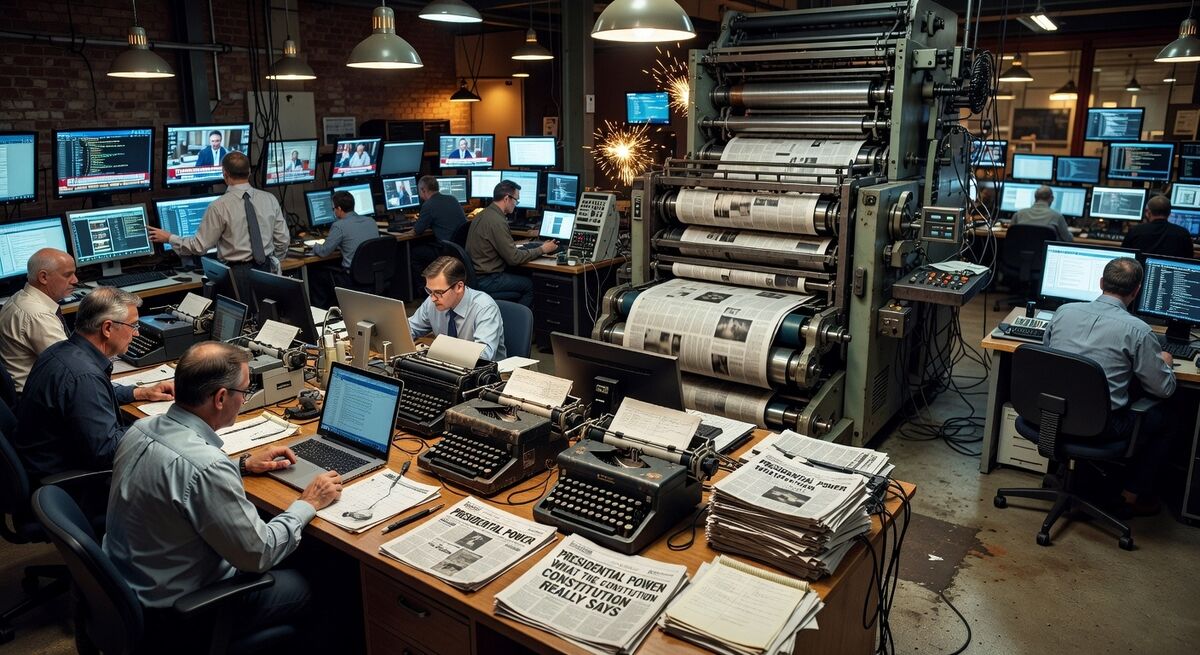
Covering Civil and Human Rights: Presidential Power, What the Constitution Really Says
Columbia Journalism School Tackles Presidential Power and the Press
In the wake of intensifying debates over executive authority, Columbia Journalism School's Ira A. Lipman Center for Journalism, Civil and Human Rights convened a timely virtual conversation on May 21, 2026, exploring what the Constitution actually says about presidential power and the unique challenges facing journalists who cover civil and human rights. The event arrives as American politics grapples with fresh questions about the limits of executive action, making the discussion both urgent and essential for newsrooms across the country.
The session, hosted under the banner "Covering Civil and Human Rights: Presidential Power, What the Constitution Really Says," brought together legal scholars, constitutional historians, and veteran reporters to unpack how the founding document balances power among branches and why accurate, contextual reporting matters now more than ever. Participants examined landmark clauses—from the Take Care Clause to the Commander-in-Chief powers—while dissecting recent executive orders that have sparked litigation and public controversy.
Constitutional Clarity in an Age of Executive Expansion
Panelists emphasized that the Constitution grants the president significant but not unlimited authority. They traced how Article II's vesting clause has been interpreted over two centuries, noting that while the framers envisioned a vigorous executive, they deliberately withheld legislative and appropriations powers. Journalists in the audience were reminded that many contemporary flashpoints, immigration enforcement, emergency declarations, and regulatory rollbacks, hinge on whether the executive is faithfully executing laws passed by Congress or stretching statutory language beyond recognition.
One recurring theme was the press's responsibility to distinguish between policy disagreement and constitutional overreach. Reporters were urged to cite primary sources, including the text of executive orders and the specific statutes invoked, rather than relying solely on partisan talking points. This approach, panelists argued, helps readers understand that not every controversial action constitutes a crisis of democracy, even when it raises legitimate legal questions.
Challenges for Journalists Covering Rights and Power
The conversation turned candid when addressing practical obstacles in the field. Journalists described increasing difficulty obtaining timely responses from agencies, particularly on matters involving civil rights enforcement and national security. Some noted that FOIA backlogs and narrowed classification guidelines have slowed accountability reporting. Others highlighted the risk of being labeled "activist" for simply scrutinizing executive claims.
The Lipman Center's focus on civil and human rights added an important dimension. Participants discussed how coverage of voting rights, protest policing, and immigration detention often intersects with presidential directives. They stressed the need for reporters to ground stories in both constitutional text and lived impact, pairing legal analysis with the experiences of affected communities.
Why This Matters for Press Freedom
From my vantage in Tel Aviv, where media outlets routinely navigate complex security laws and political pressures, the American conversation resonates deeply. The Columbia discussion underscored that robust coverage of presidential power is itself an exercise in press freedom. When journalists clearly explain constitutional boundaries, they equip citizens to evaluate leaders and hold institutions accountable. Conversely, when reporting blurs legal nuance with political spin, public trust erodes.
The May 21 event also touched on emerging threats: algorithmic amplification of misleading claims about executive authority and the chilling effect of legal threats against news organizations. Recommendations included greater investment in constitutional literacy within newsrooms and partnerships with legal experts who can provide rapid, on-the-record analysis.
Looking Ahead
As the 2026 midterm cycle approaches, the lessons from Columbia's virtual forum are likely to inform coverage across outlets large and small. Newsrooms that invest in precise, sourced reporting on the separation of powers will serve their audiences best. The Lipman Center has signaled plans to release a follow-up resource guide for journalists later this summer, offering templates for explaining complex constitutional issues in plain language.
For now, the May 21 conversation stands as a reminder that the press remains a critical check on power precisely because it can illuminate what the Constitution actually permits and prohibits. In an era of rapid executive action and polarized media, that clarity is more valuable than ever.
Source: CJR via YouTube — 2026-05-21T19:13:25+00:00.
- Breaking News Analysis
- World Politics
- Business & Economy
- Technology & AI
- Science & Health
- Environment & Climate
- Culture & Society
- Travel & Tourism
- Sports & Entertainment
- Investigative Journalism
- Opinion & Commentary
- Media & Journalism
- Human Rights & Social Issues
- Education & Knowledge
- Citizen & Amateur Journalism
- Other News Topics

 English
 Arabic
 French
 Spanish
 Portuguese
 Turkish
 Dutch
Dutch
 Italiano
 Russian
 Romaian
 Portuguese (Brazil)
 Greek
Greek