


Ben-Gvir causes diplomatic storm for Israel over abuse of flotilla activists video
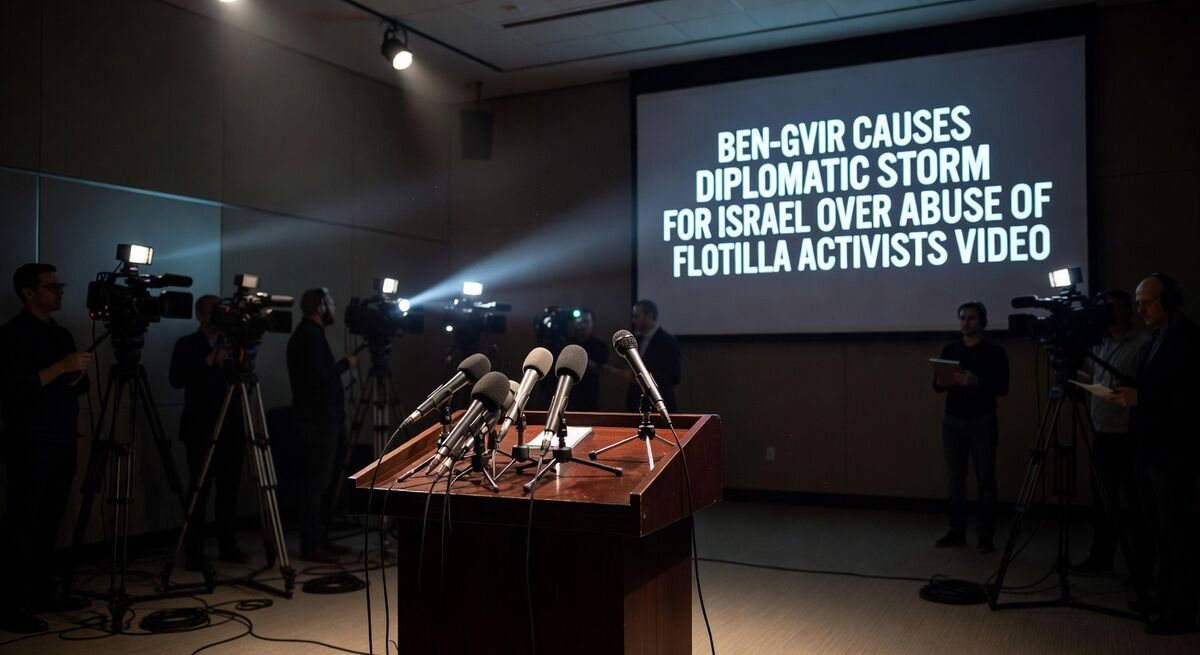
Ben-Gvir causes diplomatic storm for Israel over abuse of flotilla activists video
Ben-Gvir's Cruel Spectacle: How One Video Has Isolated Israel Further
In a move that stunned even Israel's staunchest allies, National Security Minister Itamar Ben-Gvir personally released footage this week showing the degrading treatment of activists detained aboard a Gaza-bound flotilla. The images—grainy yet unmistakable—depict blindfolded passengers, rough handling by security forces, and what EU officials have labeled "appalling" and "unacceptable." Within hours, condemnations poured in from Brussels, London, Paris, Rome, and Ottawa. What was intended as a show of strength has instead become a diplomatic own-goal, accelerating Israel's growing isolation at a moment when global patience with its Gaza policies is already threadbare.
The timing could hardly be worse. Just weeks after renewed clashes along the Gaza perimeter and amid stalled ceasefire talks mediated by Qatar and Egypt, the video has handed critics fresh ammunition. European leaders who had previously hedged their language now speak openly of "collective punishment" and the erosion of international humanitarian law. For a country that prides itself on being a "villa in the jungle," the spectacle of a cabinet minister turning detainee abuse into viral content is a self-inflicted wound that will take months, if not years, to heal.
A Minister Who Courts Outrage
Ben-Gvir has never hidden his desire to project an image of unapologetic toughness. Since assuming his post, he has championed policies ranging from expanded settlement construction to arming West Bank settlers. Releasing the flotilla footage fits squarely within that brand: a deliberate signal to his domestic base that Israel will not coddle "provocateurs." Yet the calculation misfired spectacularly on the international stage. Diplomats in European capitals are privately describing the episode as evidence that Israel's current government has lost any remaining instinct for damage control.
The flotilla itself was hardly a military threat. Composed of civilian vessels carrying humanitarian supplies and solidarity activists, it represented the latest in a long line of attempts to break the naval blockade of Gaza. Israel's navy intercepted the ships in international waters, an action that itself raises legal questions under the law of the sea. Instead of a quiet diplomatic resolution or standard processing of detainees, Ben-Gvir chose public humiliation. The result is a propaganda gift to Israel's adversaries and fresh headaches for its friends.
Europe's Shifting Red Lines
What makes the reaction notable is the breadth of condemnation. The European Union, often divided on Middle East questions, spoke with unusual unity. The United Kingdom, still navigating post-Brexit trade realities, joined France, Italy, and Canada in demanding explanations and threatening reviews of security cooperation. Even Washington, normally quick to defend Israel's right to self-defense, issued a muted statement expressing "concern" over the images.
This convergence reflects deeper fatigue. European publics, watching nightly footage of Gaza's humanitarian crisis, have grown increasingly skeptical of Israeli narratives. When a senior Israeli minister appears to revel in the mistreatment of non-violent activists, it confirms the worst suspicions rather than dispelling them. Analysts in Brussels now openly discuss conditioning future arms sales or upgrading the EU-Israel association agreement, moves that would have been unthinkable five years ago.
The Domestic Calculus and Its Limits
Inside Israel, Ben-Gvir's move plays differently. His far-right base sees the video as proof that the government finally has the courage to confront "fifth columnists." Polling shows his Otzma Yehudit party holding steady among voters who prioritize security and Jewish supremacy over international legitimacy. Yet this domestic insulation comes at a steep price. Israel's economy, already strained by prolonged conflict and reservist call-ups, depends heavily on European markets and technology partnerships. When foreign ministries begin reviewing those ties, the costs become tangible.
Moreover, the episode reveals a governing coalition increasingly untethered from traditional diplomatic norms. Prime Minister Netanyahu, once the master of managing international fallout, appears unwilling or unable to rein in his most extreme partners. The result is a pattern of provocation followed by damage limitation that satisfies no one.
Regional Repercussions
Beyond Europe, the video has energized activists across the Arab world and in Turkey, where calls for renewed flotillas are already circulating. Iran and its proxies will undoubtedly exploit the images to portray Israel as a rogue actor indifferent to civilian suffering. Even moderate Gulf states that normalized relations under the Abraham Accords are quietly recalibrating their public stance, wary of popular backlash at home.
For Palestinians, the episode reinforces a narrative of systemic dehumanization. Whether the activists were naive or politically motivated is beside the point; the images of their treatment feed a cycle of radicalization that makes future negotiated solutions harder to achieve.
A Reckoning Long Overdue
Israel has long argued that it faces unique security threats requiring unique measures. That argument carried weight after October 7, 2023. But the repeated spectacle of ministers turning cruelty into political theater erodes whatever moral high ground remains. Ben-Gvir's video is not an aberration; it is the logical endpoint of a politics that prizes domination over diplomacy.
The international community's response will determine whether this moment is a turning point or merely another data point in Israel's slow drift from the Western mainstream. If past patterns hold, statements of concern will fade and cooperation will resume. Yet the velocity and breadth of this condemnation suggest something has shifted. Allies are no longer willing to absorb unlimited reputational damage on Israel's behalf.
In Beirut and across the region, the lesson is clear: when a government confuses strength with impunity, it eventually runs out of friends. Ben-Gvir may have pleased his base, but he has handed Israel's critics a weapon they will wield for years to come.
This is Malik Hassan for Global1.news, reporting from Beirut.
Source: Middle East Eye via YouTube — 2026-05-22T12:11:18+00:00.
- Breaking News Analysis
- World Politics
- Business & Economy
- Technology & AI
- Science & Health
- Environment & Climate
- Culture & Society
- Travel & Tourism
- Sports & Entertainment
- Investigative Journalism
- Opinion & Commentary
- Media & Journalism
- Human Rights & Social Issues
- Education & Knowledge
- Citizen & Amateur Journalism
- Other News Topics

 Arabic
 French
 Spanish
 Portuguese
 Deutsch
 Turkish
 Dutch
Dutch
 Italiano
 Russian
 Romaian
 Portuguese (Brazil)
 Greek
Greek