


Why are railway crossings so dangerous in Thailand?
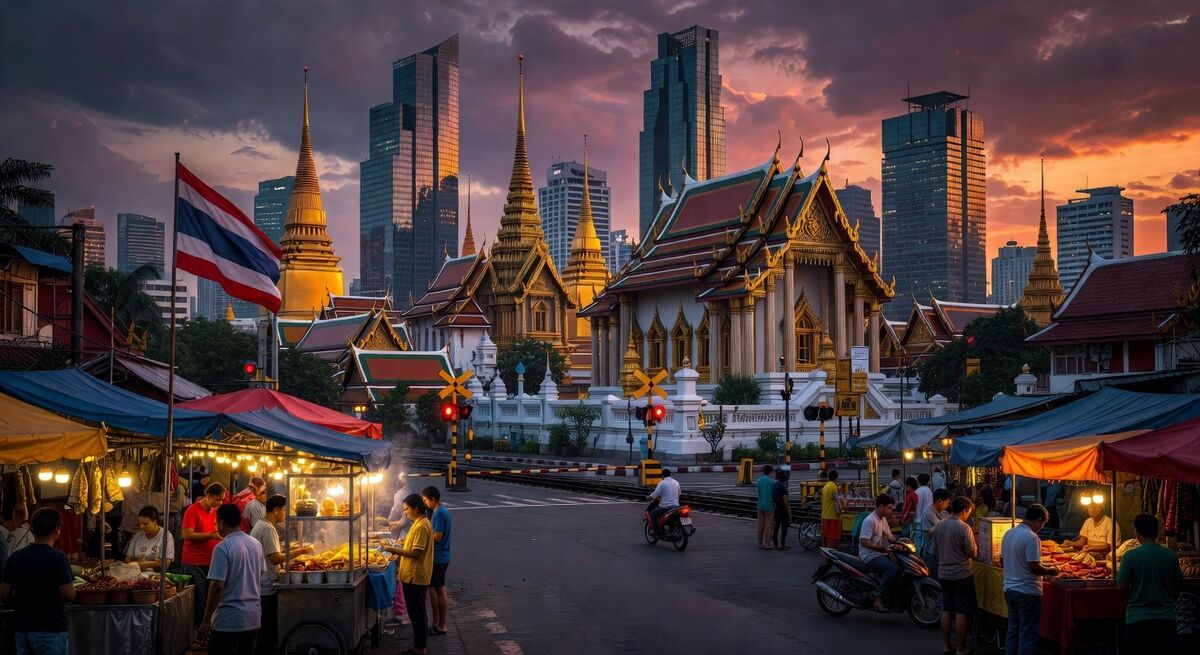
Why are railway crossings so dangerous in Thailand?
Railway Crossings Claim Lives Across Thailand: What Thai PBS World Uncovered Today
Earlier today, Thai PBS World dropped a hard-hitting video examining why railway crossings remain one of the most dangerous spots in the kingdom. Released at 1:00 PM UTC on 18th May, 2026, the report has already sparked fresh debate in Krung Thep and beyond about road safety at level crossings.
A Daily Gamble on the Tracks
Every morning, thousands of motorists, motorbike riders and songthaew drivers navigate hundreds of unguarded or poorly marked railway crossings. Many crossings still lack automatic barriers or even flashing lights. In rural provinces, faded signs and broken gates leave travellers guessing whether a train is approaching.
The Thai PBS investigation highlights how this daily gamble turns deadly far too often. Just last night, another collision near Nakhon Ratchasima claimed two lives when a pickup truck ignored warning signals.
Root Causes Revealed
According to transport experts interviewed in the video, the problem is not one single failure but a combination of factors. Outdated infrastructure tops the list. Many crossings were built decades ago when traffic volumes were much lower. Rapid urban growth has turned quiet rural tracks into busy commuter routes.
Driver behaviour also plays a major role. In Thailand's fast-paced culture, many road users treat crossings like any other intersection, speeding through without stopping. The report shows dashcam footage of cars racing barriers just seconds before trains thunder past.
Calls for Urgent Action
Thai PBS World speaks with safety advocates who demand modern solutions already common in other ASEAN countries. They want more automatic half-barriers, brighter LED warnings, and stricter enforcement against violators. Some experts even suggest closing the most dangerous crossings altogether and building overpasses or underpasses.
The government has promised upgrades, yet progress remains slow. Funding gaps and coordination issues between the State Railway of Thailand and local authorities continue to delay projects.
What It Means for Daily Life
For ordinary Thais, these crossings are part of everyday routines—whether heading to temples for morning merit-making or rushing to markets for fresh street food. Until real changes happen, families will keep living with the fear that a simple journey could end in tragedy.
The conversation sparked by today's report is a reminder that infrastructure and awareness must improve together. Only then can Thailand's railways become safer for everyone sharing the tracks.
This is Ann Srisawat for Global1.news, reporting from Bangkok. 🇹🇭
Source: Thai PBS World via YouTube — 2026-05-18T13:00:38+00:00.
- Breaking News Analysis
- World Politics
- Business & Economy
- Technology & AI
- Science & Health
- Environment & Climate
- Culture & Society
- Travel & Tourism
- Sports & Entertainment
- Investigative Journalism
- Opinion & Commentary
- Media & Journalism
- Human Rights & Social Issues
- Education & Knowledge
- Citizen & Amateur Journalism
- Other News Topics

 English
 Arabic
 Spanish
 Portuguese
 Deutsch
 Turkish
 Dutch
Dutch
 Italiano
 Russian
 Romaian
 Portuguese (Brazil)
 Greek
Greek