


How Cartels are Using FPV Drones
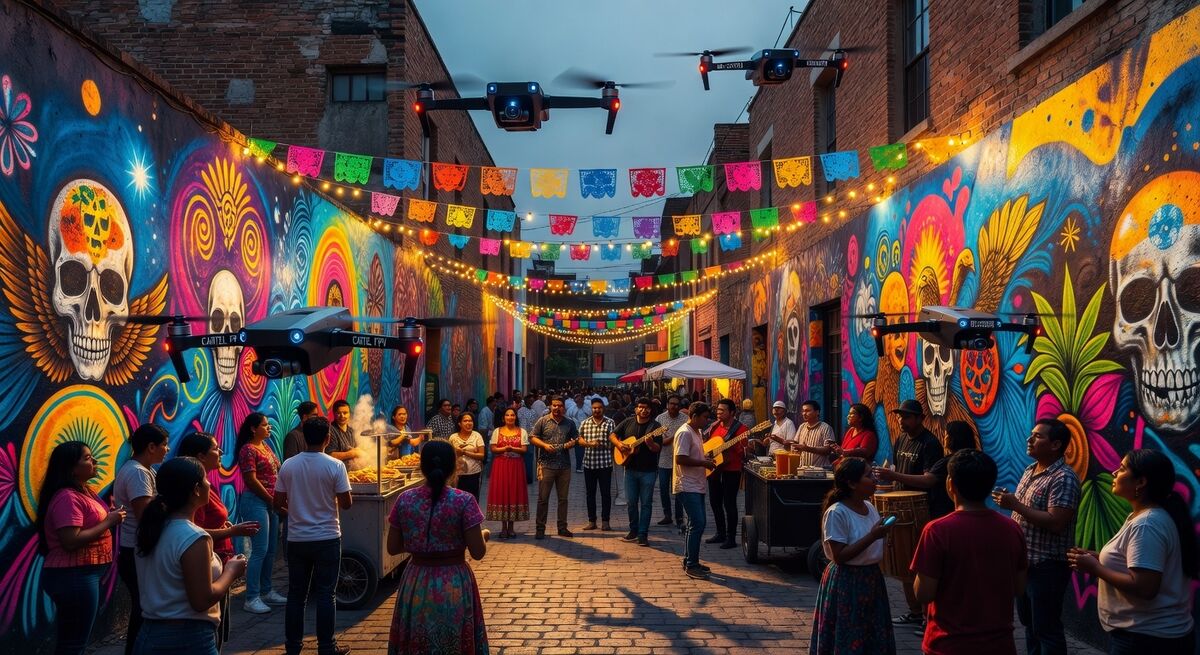
How Cartels are Using FPV Drones
Shadows of the Skies: How Mexican Cartels Are Weaponizing Drone Warfare and Reshaping Global Society
By Amara Diop | Global1.news Published: May 21, 2026
In the sun-baked streets of Culiacán and the rugged mountains of Sinaloa, a new kind of terror has taken flight. Mexican cartels are no longer relying solely on ground troops and traditional smuggling routes. They are deploying FPV (first-person view) drones—nimble, camera-equipped machines once popular among hobbyists—to conduct surveillance, deliver explosives, and intimidate communities. According to a recent VICE News investigation released yesterday, these criminal organizations are sending operatives to Ukraine for specialized training in drone warfare tactics honed amid the ongoing conflict there.
This development is tactical evolution in the drug war; it signals a profound cultural and societal shift. Across the African diaspora and the broader Global South, communities connected through migration, trade, and shared histories of conflict are watching closely. The fusion of battlefield technology with narco-violence echoes patterns we have seen in other regions where technology accelerates social fragmentation.
From Hobby Shops to Cartel Skies
FPV drones, small quadcopters piloted via live video feeds, offer cartels unprecedented advantages. They can hover over rival territories, map safe houses, and even drop small payloads of explosives or fentanyl precursors. The VICE report highlights how cartel members have traveled to Ukraine, embedding with units experienced in the Russia-Ukraine war to master these skills. Training includes night operations, electronic warfare countermeasures, and coordinated swarm tactics.
One anonymous source close to the investigation described scenes of cartel scouts practicing over abandoned lots in eastern Ukraine before returning to Mexico with new expertise. The result? Increased violence in border regions and urban centers alike, where drones now serve as both eyes and fists.
This technological leap mirrors broader societal changes in how conflict is waged. In Dakar, where I report from, we have witnessed similar appropriations of accessible tech, drones used by artists for aerial performances or by activists documenting protests. Yet when the same tools fall into the hands of organized crime, the cultural narrative shifts from empowerment to fear.
Cultural Ripples Across the Diaspora
Mexican cartel violence has long influenced migration patterns that touch African and Caribbean communities in the United States and Europe. Young people from West Africa often travel similar dangerous routes, sometimes intersecting with Latin American networks. The introduction of drone warfare adds a new layer of danger, potentially affecting diaspora families whose loved ones remain in high-risk zones.
Artistically, this moment is fertile ground. Photographers and filmmakers in Mexico are already capturing the eerie beauty of drones silhouetted against desert sunsets, turning instruments of terror into subjects of reflection. In the African context, spoken-word poets and digital artists could draw parallels to drone strikes in the Sahel, exploring themes of surveillance, autonomy, and resistance.
Societal trust erodes when invisible eyes patrol neighborhoods. Families in cartel-controlled areas report children growing up with a normalized fear of the sky, an inversion of the wonder drones once inspired in educational workshops across Latin America and Africa.
The Ukraine Connection and Global Knowledge Transfer
The training pipeline from Ukraine to Mexico underscores how modern conflicts export entire methodologies. Ukraine's innovative use of commercial drones against a better-equipped adversary has become a masterclass studied by state and non-state actors worldwide. Cartels, with their vast resources, are quick adapters.
This knowledge transfer raises urgent questions for policymakers. How do we regulate dual-use technologies without stifling innovation in creative industries? In Senegal, drone festivals celebrate aerial photography and mapping for agriculture. The same open-source designs now enable cartel reconnaissance.
Looking Ahead
As these developments unfold in real time, the cultural response must keep pace. Documentarians, musicians, and community organizers across the diaspora have a role in narrating this story, not glorifying violence, but illuminating its human cost. International cooperation on drone regulation, combined with investment in alternative economic pathways for at-risk youth, offers a path forward.
The skies above Mexico are no longer neutral. They carry the weight of evolving conflict, technological ingenuity, and the urgent need for societies to reclaim technology for connection rather than control.
This is Amara Diop for Global1.news, reporting from Dakar.
Source: VICE News via YouTube — 2026-05-20T21:57:13+00:00.
- Breaking News Analysis
- World Politics
- Business & Economy
- Technology & AI
- Science & Health
- Environment & Climate
- Culture & Society
- Travel & Tourism
- Sports & Entertainment
- Investigative Journalism
- Opinion & Commentary
- Media & Journalism
- Human Rights & Social Issues
- Education & Knowledge
- Citizen & Amateur Journalism
- Other News Topics

 English
 Arabic
 French
 Portuguese
 Deutsch
 Turkish
 Dutch
Dutch
 Italiano
 Russian
 Romaian
 Portuguese (Brazil)
 Greek
Greek