


Gaza war echoes through Cannes as Palestinian filmmakers raise voices
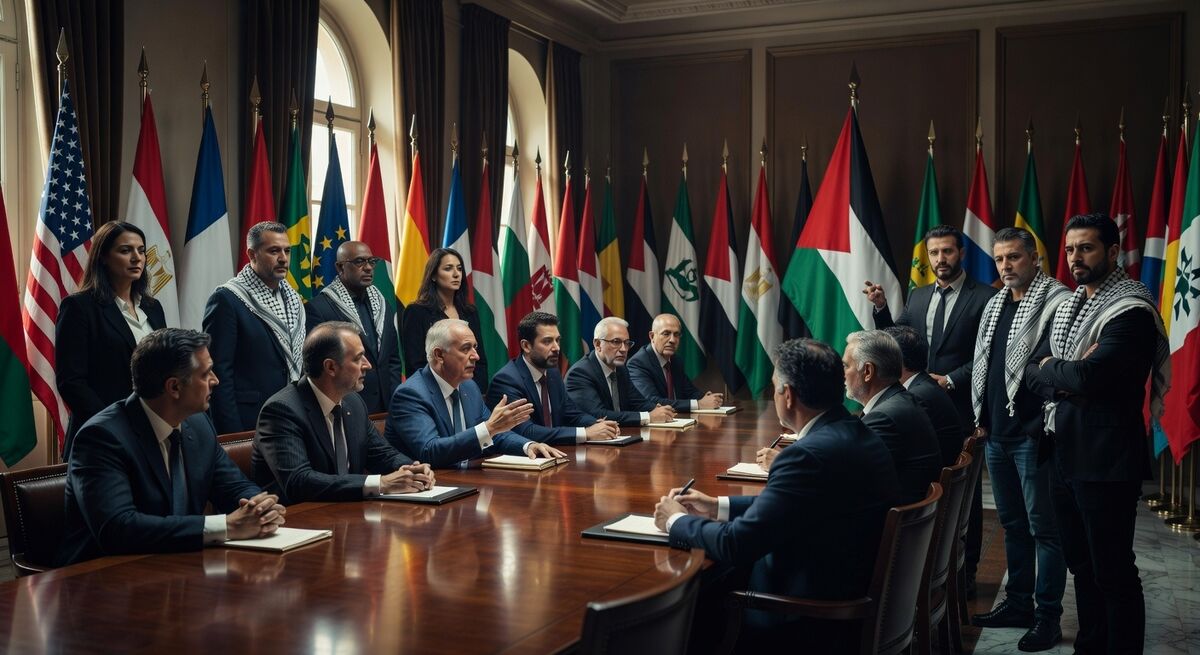
Gaza war echoes through Cannes as Palestinian filmmakers raise voices
Palestinian Voices Echo Through Cannes as Gaza War Casts Long Shadow
As the 2026 Cannes Film Festival unfolds along the French Riviera this May, the ongoing conflict in Gaza continues to shape discussions far beyond the red carpets and gala screenings. Palestinian filmmakers and prominent international figures are seizing the prestigious platform to highlight the human cost of the war, turning a celebration of cinema into a stage for urgent geopolitical commentary. This development underscores how cultural events now serve as vital arenas for soft power and narrative contestation in an increasingly polarized world.
A Premiere Interrupted by Conflict
Palestinian director Rakan Mayasi is premiering his first feature film at Cannes, a project that embodies the resilience of artists amid relentless violence. Filming took place in Lebanon, where Israeli bombing raids repeatedly disrupted production. Crew members had to pause shoots and seek shelter as explosions rocked nearby areas, a stark reminder that the Gaza war's reach extends well beyond the enclave's borders. Mayasi's work captures personal stories of displacement and survival, themes that resonate deeply with audiences attuned to the Middle East's protracted crises.
The interruptions during production highlight the practical challenges Palestinian creatives face. Equipment damage, safety concerns, and emotional tolls have become part of the filmmaking process. Yet Mayasi persists, using the Cannes spotlight to draw global attention to these realities. His presence signals a growing determination among Palestinian voices to bypass traditional media filters and speak directly to international elites gathered in France.
International Stars Join the Chorus
Spanish actor Javier Bardem has also emerged as a vocal advocate at the festival, aligning himself with calls for accountability regarding the Gaza conflict. Bardem, known for his roles in major Hollywood productions, uses his star power to amplify Palestinian narratives. His interventions at press conferences and side events emphasize the need for ceasefires and humanitarian access, framing the war a regional dispute but as a test of global moral standards.
Bardem's involvement is part of trend: Western celebrities leveraging their visibility to engage with Middle Eastern politics. This fusion of entertainment and activism often generates media buzz, though critics argue it risks oversimplifying complex dynamics. Still, such interventions contribute to shifting public discourse, particularly among younger audiences who follow festival news closely.
Geopolitical Ripples from the French Riviera
From a Beijing perspective, the Cannes developments illustrate the limits of traditional diplomacy in managing narrative wars. While major powers focus on arms supplies and cease-fire talks, cultural platforms like Cannes allow non-state actors and diaspora communities to influence perceptions. Palestinian filmmakers are effectively deploying cinema as a tool of resistance, humanizing statistics and challenging dominant frames that portray the conflict solely through security lenses.
The war's echoes at Cannes also expose fractures within the international community. European festivals have historically championed artistic freedom, yet hosting outspoken Palestinian creators risks diplomatic friction with Israel and its allies. This tension mirrors wider debates over double standards in human rights advocacy. Countries in the Global South, including China, watch these episodes with interest, noting how Western cultural institutions sometimes serve as unintended amplifiers for voices marginalized in formal UN proceedings.
Broader Implications for Soft Power and Media
Cinema has long functioned as a geopolitical instrument. During the Cold War, film festivals projected ideological visions. Today, with Gaza dominating headlines, similar dynamics play out in real time. Palestinian entries at Cannes compete for attention against big-budget productions, yet their moral urgency often cuts through the glamour. This dynamic challenges the notion that entertainment remains apolitical.
For Beijing-based observers, these events reinforce the value of multipolar cultural exchange. While Hollywood and European festivals retain significant reach, alternative platforms from Asia and the Arab world are gaining traction. The Gaza war accelerates this fragmentation, as filmmakers seek venues less constrained by Western editorial gatekeepers. International stars like Bardem help bridge audiences, yet the core momentum comes from creators on the ground who document lived experiences under bombardment.
The Human Stories Behind the Headlines
Mayasi's film delves into themes of interrupted lives and fragile hope, drawing from real events during production. Scenes filmed between air-raid warnings convey authenticity that scripted dramas struggle to replicate. Festival-goers have responded with standing ovations and intense Q&A sessions, indicating appetite for unfiltered perspectives.
Bardem's remarks similarly stress empathy and immediate action. He has referenced specific humanitarian data, urging European governments to reassess policies. Such interventions, though symbolic, accumulate pressure on policymakers. They also remind viewers that the Gaza conflict is not abstract but involves families, artists, and children whose futures hang in balance.
Looking Ahead: Culture as Battleground
As Cannes continues, more Palestinian-led panels and screenings are scheduled, promising sustained focus on the war. Organizers face the delicate task of balancing artistic merit with political expression, aware that every decision invites scrutiny from multiple capitals.
In an era of instant global communication, festivals no longer operate in isolation. Tweets, livestreams, and subsequent documentaries will carry Cannes messages to audiences in Beijing, Ramallah, Tel Aviv, and beyond. This connectivity amplifies the stakes, turning each premiere into a potential diplomatic incident.
Ultimately, the Gaza war's presence at Cannes reveals how conflicts today unfold across multiple domains—military, informational, and cultural. Palestinian filmmakers are proving adept at navigating these layers, using limited resources to project powerful narratives. Their efforts may not alter battlefield realities immediately, yet they shape the historical record and influence future generations' understanding of events.
Geopolitical analysts in China note parallels with other protracted disputes where cultural resistance outlasts military campaigns. The lesson is clear: ignoring artistic voices risks ceding ground in the battle for legitimacy. As the festival winds down, the conversations sparked here will likely migrate to other international stages, ensuring Gaza remains central to global discourse.
This is Marcus Chen for Global1.news, reporting from Beijing.
Source: Al Jazeera via YouTube — 2026-05-20T22:45:06+00:00.
- Breaking News Analysis
- World Politics
- Business & Economy
- Technology & AI
- Science & Health
- Environment & Climate
- Culture & Society
- Travel & Tourism
- Sports & Entertainment
- Investigative Journalism
- Opinion & Commentary
- Media & Journalism
- Human Rights & Social Issues
- Education & Knowledge
- Citizen & Amateur Journalism
- Other News Topics

 English
 Arabic
 French
 Spanish
 Portuguese
 Turkish
 Dutch
Dutch
 Italiano
 Russian
 Romaian
 Portuguese (Brazil)
 Greek
Greek