


Oil Price Spike Rocks 2026 Markets: How Rising Fuel Costs Are Shifting Driver Priorities
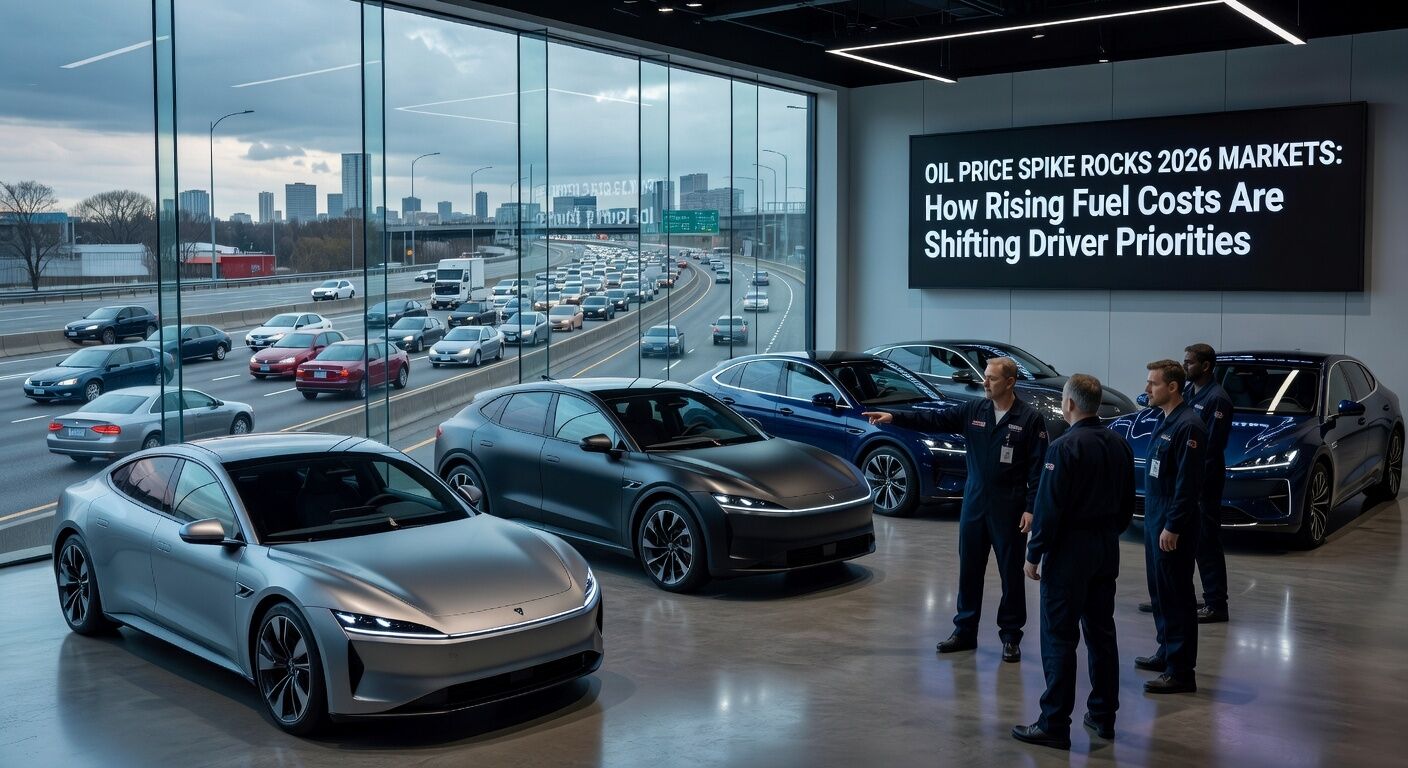
Oil Price Spike Rocks 2026 Markets: How Rising Fuel Costs Are Shifting Driver Priorities
Oil Price Spike Rocks 2026 Markets: How Rising Fuel Costs Are Shifting Driver Priorities
In March 2026, fresh geopolitical tensions in the Middle East triggered OPEC+ to announce unexpected production cuts. Brent crude quickly climbed above US$95 a barrel, the sharpest single-month jump since 2022. Motorists worldwide are already feeling the pinch at the pump, with average petrol prices in many regions rising 18-25 cents per litre in just six weeks.
The immediate effect is simple: every extra kilometre now costs more. Families planning summer road trips and commuters locked into daily drives are revisiting long-term vehicle decisions. While headlines focus on the macro picture, the practical question for most people is straightforward—what should I drive next, and how will insurance costs change?
Fuel Efficiency Moves From Nice-to-Have to Essential
Higher petrol prices have historically accelerated interest in smaller engines and hybrid powertrains. Data from early 2026 already shows a 14 % jump in searches for fuel-efficient cars compared with the same period last year. Models that deliver 5.5 L/100 km or better are suddenly appearing on more shortlists.
Yet the conversation has broadened beyond traditional petrol savings. Battery-electric vehicles now feature in the same calculations because their "fuel" cost remains largely insulated from oil volatility. In markets where electricity tariffs are stable, owners report effective running costs of roughly 3–4 cents per kilometre—less than half the current petrol equivalent.
Insurance Realities for New Powertrains
The shift toward fuel-efficient cars and EVs also changes insurance dynamics. Repair costs for electric vehicles remain higher due to specialised parts and technician training, pushing some premiums up 10–20 %. At the same time, insurers increasingly offer usage-based discounts for lower annual mileage or telematics data showing smooth driving—advantages that can offset part of the premium gap.
Drivers considering a switch should compare quotes that specifically factor in the vehicle's powertrain. Some providers now segment EV policies separately, recognising both the higher repair exposure and the statistically lower claim frequency linked to regenerative braking.
What This Means For You
If your current vehicle averages 8 L/100 km or more, the recent price surge adds roughly US$1,200–1,800 per year at 15,000 km of driving. That figure alone can justify evaluating alternatives.
Start by calculating your break-even point. Use online tools that input local fuel prices, electricity rates, and annual distance. A hybrid that costs US$4,000 more than your current car might pay for itself in under four years at today's prices; an EV with home charging can reach parity even sooner.
Next, review insurance early. Request quotes for the exact models you are considering rather than relying on general averages. Ask about:
- Discount programmes for low-mileage or EV owners - Coverage for home-charging equipment - Glass and battery protection add-ons
Finally, test drive both a modern hybrid and a comparable EV on your typical routes. Real-world efficiency numbers often differ from brochure claims once air-conditioning, highway speeds, and payload are factored in.
Practical Steps to Prepare
1. Track your fuel spend for the next 30 days using a simple spreadsheet or app. Accurate personal data beats national averages. 2. Check local incentives. Several jurisdictions extended EV rebates or interest-free loans into 2026 to cushion the transition. 3. Inspect your existing policy renewal date. Timing a vehicle change just before renewal can avoid short-term coverage gaps. 4. Factor in resale value. Fuel-efficient cars and EVs currently hold value better than larger petrol SUVs, reducing long-term ownership cost.
The 2026 oil shock is unlikely to reverse quickly. Drivers who treat it as a planning signal rather than a temporary inconvenience stand to save the most, both at the pump and on their insurance renewals.
As global energy markets remain uncertain, informed vehicle choices deliver lasting financial resilience.
- Breaking News Analysis
- World Politics
- Business & Economy
- Technology & AI
- Science & Health
- Environment & Climate
- Culture & Society
- Travel & Tourism
- Sports & Entertainment
- Investigative Journalism
- Opinion & Commentary
- Media & Journalism
- Human Rights & Social Issues
- Education & Knowledge
- Citizen & Amateur Journalism
- Other News Topics

 English
 Arabic
 French
 Spanish
 Portuguese
 Deutsch
 Turkish
 Dutch
Dutch
 Russian
 Romaian
 Portuguese (Brazil)
 Greek
Greek