


Looking The Other Way
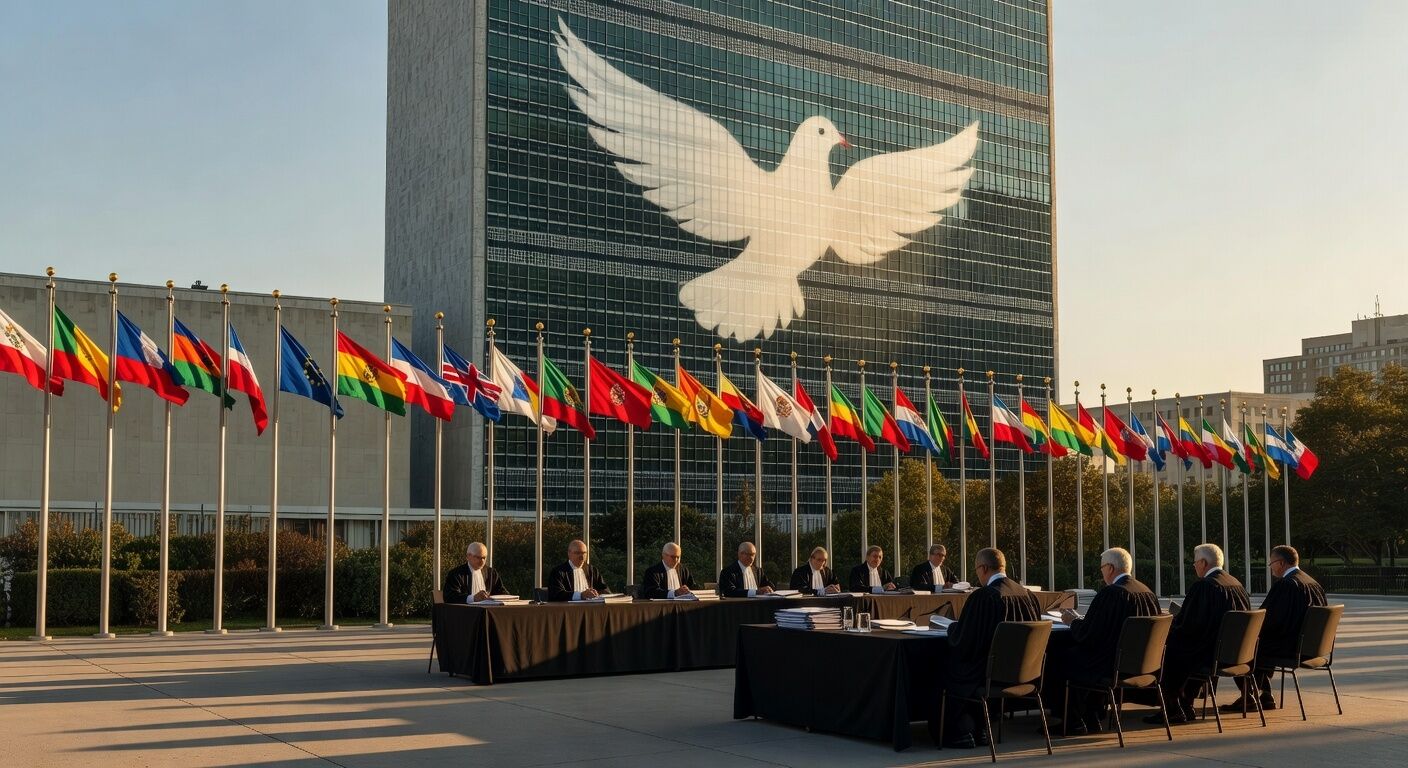
Looking The Other Way
The Shadow of Surveillance: HRW Warns of Spyware's Assault on Dissent
Just three hours ago, Human Rights Watch dropped a searing new video exposé titled "Looking The Other Way," laying bare how commercial spyware and advanced surveillance tools are being weaponized by governments worldwide. Released on May 12, 2026, the report documents a chilling pattern: police forces and intelligence agencies are deploying these technologies to silence activists, journalists, humanitarians, and academics who dare to challenge power. In an era when digital connectivity was meant to empower the marginalized, it is instead being turned into an instrument of repression.
The core message from HRW researchers is unambiguous. Once limited to a handful of sophisticated state actors, commercial spyware such as Pegasus and its successors has proliferated. Private firms sell these tools to authoritarian regimes and even democratic governments that claim to uphold human rights. The result is a global dragnet that undermines democratic institutions and erodes the fundamental right to privacy and free expression.
A Growing Arsenal Against Dissent
Recent cases highlighted in the video reveal the scale of the problem. In several Middle Eastern countries, including those bordering Palestine, journalists investigating corruption and land displacement have found their phones infected within hours of publishing critical reports. Their messages, locations, and even private conversations with sources are siphoned off in real time. Human rights defenders working on refugee issues in North Africa report similar intrusions, with their devices turned into constant surveillance beacons.
The technology does intimidates. When activists discover they are being tracked, self-censorship follows. Meetings move offline, sources dry up, and stories that could expose injustice remain untold. Academics researching sensitive topics on governance or security have seen their research networks compromised, forcing many to abandon projects altogether.
HRW emphasizes that this is not an isolated phenomenon. The same tools are appearing in Europe, Latin America, and parts of Asia. The commercial market has lowered the barrier to entry, allowing even mid-level security agencies to purchase capabilities once reserved for intelligence superpowers.
Human Cost in Real Time
Consider the story of a Palestinian journalist based in the West Bank who, in early 2026, began reporting on forced evictions in the Jordan Valley. Within days, her device showed signs of infection. Unknown actors accessed her Signal chats and Google location data. Colleagues received fabricated messages designed to sow distrust. The psychological toll was immediate: fear replaced focus, and her reporting slowed.
Similar patterns emerge among humanitarian workers assisting displaced communities in Gaza and Syria. Their ability to coordinate aid and document violations is crippled when every conversation risks interception. The human cost extends beyond individual targets to entire movements for dignity and justice.
The International Community Looks Away
Perhaps most damning in the HRW video is the documented complicity or willful blindness of governments that publicly champion digital rights. Export controls remain weak or poorly enforced. Companies based in democratic nations continue to profit from sales to known human rights abusers. International forums have issued statements but little concrete action.
The report calls for immediate measures: a global moratorium on the sale and transfer of spyware to governments with poor human rights records, mandatory transparency requirements for vendors, and stronger legal protections for those targeted. Without such steps, the already fragile space for civic activism will continue to shrink.
A Call for Accountability
As someone reporting from Ramallah, I have seen firsthand how surveillance chills the work of those fighting for Palestinian rights and broader justice. The HRW findings are not abstract; they describe the lived reality of colleagues whose devices have been compromised simply for telling the truth.
The fight against digital authoritarianism requires more than technical fixes. It demands political will. Civil society, tech companies, and states that still value open societies must unite to close the market for repression. Victims deserve remedies, not further silence.
We cannot afford to look the other way any longer.
This is Fatima Al-Rashid for Global1.news.
Source: HRW via YouTube — 2026-05-12T13:32:02+00:00.
- Breaking News Analysis
- World Politics
- Business & Economy
- Technology & AI
- Science & Health
- Environment & Climate
- Culture & Society
- Travel & Tourism
- Sports & Entertainment
- Investigative Journalism
- Opinion & Commentary
- Media & Journalism
- Human Rights & Social Issues
- Education & Knowledge
- Citizen & Amateur Journalism
- Other News Topics

 Arabic
 French
 Spanish
 Portuguese
 Deutsch
 Turkish
 Dutch
Dutch
 Italiano
 Russian
 Romaian
 Portuguese (Brazil)
 Greek
Greek