


Is OpenAI making a ChatGPT phone? #Vergecast
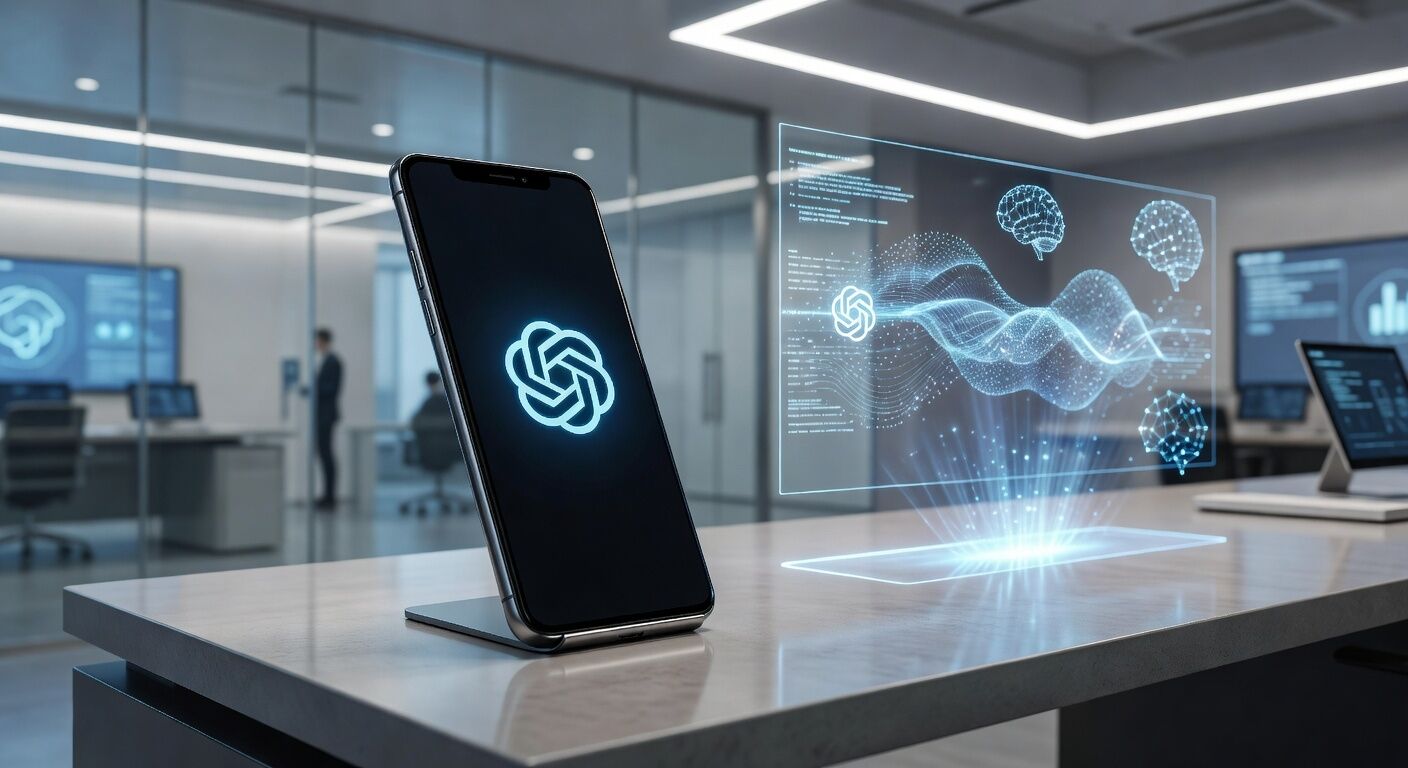
Is OpenAI making a ChatGPT phone? #Vergecast
OpenAI Eyes a ChatGPT Phone: The Next Leap in AI Hardware?
Just hours ago, The Vergecast dropped fresh insight suggesting OpenAI’s first consumer hardware device may take the form of a dedicated smartphone rather than the long-speculated Jony Ive-designed gadget. This pivot, if confirmed, marks a significant evolution for the AI leader as it moves from cloud-based models into the physical world of mobile devices. For users in Tokyo and across the Asia-Pacific region, where smartphones are the primary gateway to digital life, the implications could reshape everything from daily productivity to data sovereignty.
From Software Giant to Hardware Player
OpenAI has built its reputation on powerful language models like GPT-4o and the ChatGPT interface that millions rely on daily. Yet the company has signaled for months that software alone is not enough. Early rumors pointed to a mysterious collaboration with former Apple design chief Jony Ive, hinting at a sleek, high-end AI companion device. The Vergecast discussion reframes that trajectory: instead of a niche gadget, OpenAI could deliver a full-featured phone optimized for conversational AI.
This approach makes strategic sense. A ChatGPT phone would integrate large language models at the system level, enabling instant voice interaction, proactive assistance, and seamless multimodal capabilities without relying on cloud latency. Imagine dictating complex emails in Japanese while the device automatically handles translation, context, and follow-ups—all powered by on-device inference where possible.
Why a Phone Instead of a Standalone Gadget?
Hardware decisions at this scale are driven by user behavior and market realities. Smartphones already sit in pockets worldwide, serving as cameras, wallets, and entertainment hubs. By building its own device, OpenAI could control the entire stack: silicon optimized for AI workloads, custom software layers, and tight integration with its models. This mirrors Apple’s strategy but with AI as the core differentiator rather than ecosystem lock-in.
Recent industry trends support this direction. Companies like Google have embedded Gemini deeply into Pixel phones, while Samsung leverages its own chips and software for on-device AI features. An OpenAI phone could leapfrog these efforts by offering native, always-available ChatGPT experiences that feel more natural than current app-based interactions.
Asia-Pacific Perspective: Opportunity and Competition
From my vantage in Tokyo, this development carries particular weight. Asia-Pacific markets account for the majority of global smartphone shipments, led by Samsung in South Korea, Chinese giants like Xiaomi and Oppo, and Japanese players such as Sony and Sharp. An OpenAI-branded phone would enter a crowded arena but could carve a niche among professionals and early adopters who prioritize AI productivity tools.
Japanese enterprises, already exploring generative AI for manufacturing and customer service, might welcome a device purpose-built for secure, enterprise-grade conversations. However, concerns around data privacy and U.S.-based model training could slow adoption. Regulators in Tokyo and Brussels are watching closely as AI hardware raises new questions about where user data resides and how it is processed.
Supply-chain implications also matter. Any new smartphone would likely depend on Taiwanese foundries for advanced chips and Southeast Asian assembly lines. OpenAI would need to navigate geopolitical tensions and secure reliable component access—challenges that established players like Apple have spent decades mastering.
Technical and Practical Hurdles
Building a competitive phone is no small feat. Battery life, thermal management, and radio performance all become critical when running large models locally. OpenAI would need partnerships with chipmakers—perhaps leveraging recent advances in efficient inference hardware—to avoid the power drain that plagued early AI phones.
Software fragmentation presents another risk. Would the device run a modified Android base or a fully custom OS? Developers would require clear APIs and incentives to build around ChatGPT-centric features. Without a robust app ecosystem, even the smartest AI phone risks becoming a niche curiosity.
Broader Implications for the AI Industry
Should OpenAI proceed, it accelerates the arms race toward AI-native hardware. Competitors will respond with deeper integrations of their own models, potentially lowering costs and improving accessibility for consumers across emerging Asian markets. At the same time, questions of antitrust and platform dominance will intensify if one company controls both the model and the device users interact with daily.
For everyday users, the promise is compelling: phones that anticipate needs, handle complex tasks conversationally, and reduce reliance on multiple apps. Yet success hinges on execution—delivering real utility without compromising privacy or battery performance.
As rumors continue to circulate, one thing is clear: the boundary between AI software and consumer hardware is rapidly dissolving. OpenAI’s potential move into phones signals a new chapter where intelligence lives not just in the cloud but in the devices we carry everywhere.
This is Kenji Tanaka for Global1.news, reporting from Tokyo.
Source: The Verge via YouTube — 2026-05-10T13:01:21+00:00.
- Breaking News Analysis
- World Politics
- Business & Economy
- Technology & AI
- Science & Health
- Environment & Climate
- Culture & Society
- Travel & Tourism
- Sports & Entertainment
- Investigative Journalism
- Opinion & Commentary
- Media & Journalism
- Human Rights & Social Issues
- Education & Knowledge
- Citizen & Amateur Journalism
- Other News Topics

 English
 Arabic
 Spanish
 Portuguese
 Deutsch
 Turkish
 Dutch
Dutch
 Italiano
 Russian
 Romaian
 Portuguese (Brazil)
 Greek
Greek