
Bloomberg This Weekend | US Awaits Iranian Response to Proposed Deal, Hantavirus Hits Cruise Ship
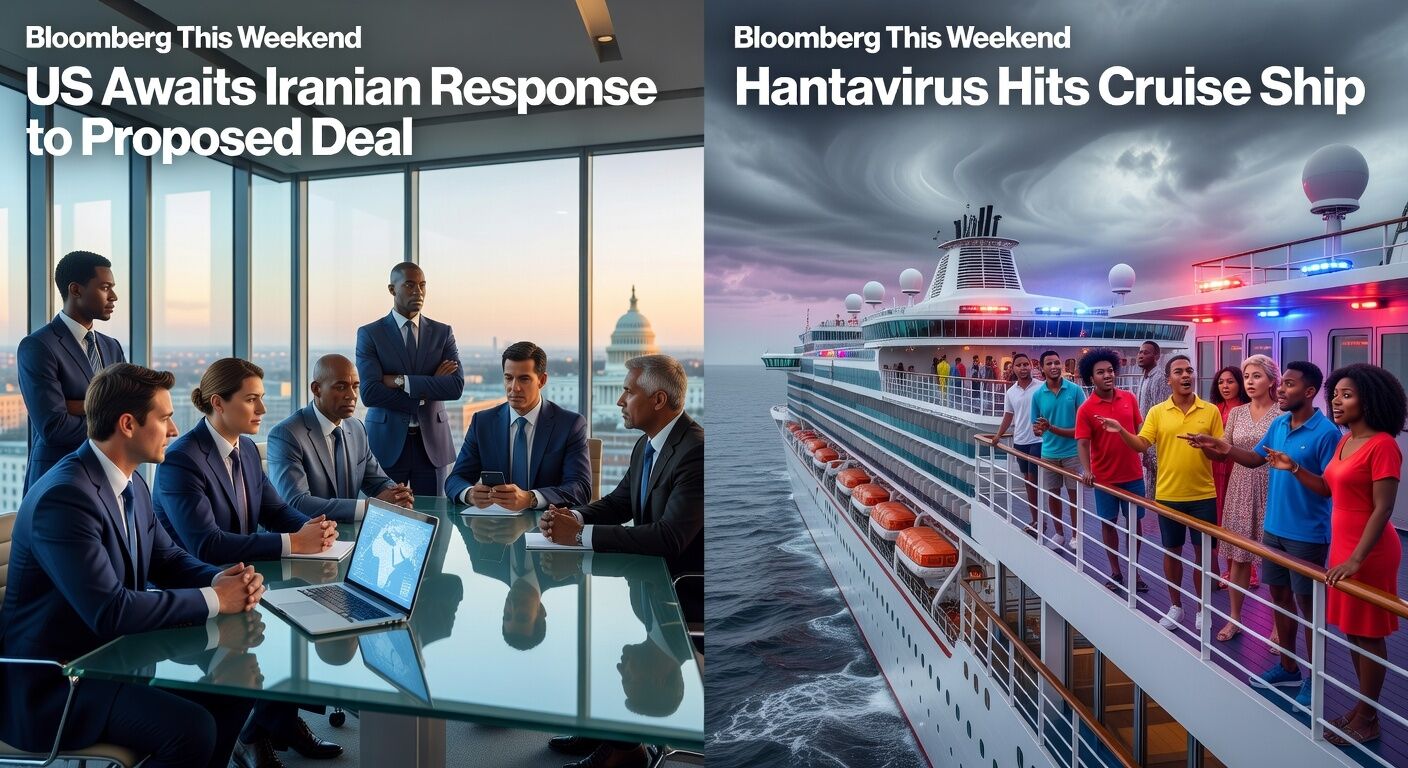
Bloomberg This Weekend | US Awaits Iranian Response to Proposed Deal, Hantavirus Hits Cruise Ship
US-Iran Deal Uncertainty Rattles Oil Markets While Cruise Health Scare Hits Travel Stocks
Lagos, May 10, 2026 — Markets across the globe are navigating a weekend of heightened geopolitical tension and unexpected health headlines. On Bloomberg This Weekend, anchors David Gura, Christina Ruffini and Lisa Mateo dissected the latest developments, including Washington’s wait for Tehran’s reply to a proposed nuclear-related agreement and a confirmed hantavirus case aboard a luxury cruise liner. From my vantage point here in Lagos, these stories carry direct implications for Nigeria’s oil-dependent economy and the broader emerging-market investment landscape.
Waiting on Tehran: Oil Prices and Naira Stability
The United States is holding its breath for Iran’s formal response to the latest draft framework aimed at capping uranium enrichment in exchange for phased sanctions relief. Former Ambassador Nicholas Burns, appearing on the Bloomberg program, emphasized that any breakthrough could unlock roughly 1 million barrels per day of Iranian crude within six months. That volume would land at a time when OPEC+ is already managing output quotas and global demand growth is softening.
Brent crude futures settled Friday just above $78 a barrel, but implied volatility has ticked higher as traders price in the binary outcome. For Nigeria, the calculus is straightforward: every $5 move in Brent translates to roughly $1.2 billion in annual fiscal revenue. The naira, already under pressure from parallel-market demand, could see modest breathing room if Iranian barrels flood the market and push prices lower. Conversely, a collapse in talks would likely send oil toward $85–$90, giving the Central Bank of Nigeria temporary relief on foreign-exchange reserves but stoking imported inflation.
Emerging-market fund managers I have spoken with this week are rotating toward energy names with low geopolitical exposure while trimming Iranian-adjacent holdings. The Nigerian National Petroleum Company’s planned $2.5 billion Eurobond issuance, slated for later this month, now carries an added layer of pricing uncertainty.
Hantavirus on the High Seas: A New Headache for Cruise Operators
In a separate segment, the Bloomberg team reported that a passenger aboard the Royal Caribbean ship Serenade of the Seas has tested positive for hantavirus, prompting enhanced sanitation protocols and voluntary cabin quarantines. While the cruise industry has largely recovered from the pandemic-era shutdowns, this rare outbreak is a stark reminder that health risks remain an operational wildcard.
Carnival Corporation and Royal Caribbean Cruises shares each slipped between 2.8 % and 3.4 % in Friday’s session on the news. Analysts note that even contained incidents can dent forward bookings for up to two quarters, particularly among the high-margin North American demographic. For African tourism stakeholders, the ripple effects are indirect but real: fewer American and European cruisers mean reduced stopover demand at ports such as Cape Town and Durban, hurting ancillary revenue for local suppliers and transport firms.
Daniel Dae Kim, the show’s other guest and executive producer of the Korean entertainment series “K-Everything,” offered a lighter counterpoint by highlighting how Korean cultural exports continue to diversify revenue streams for Asian cruise lines. Yet the broader message was clear: operators must now bake scenario planning for novel pathogens into their risk models, much as they did for COVID-19.
Emerging-Market Lens: Nigeria’s Dual Exposure
Nigeria sits at the intersection of both stories. Higher oil prices from a failed Iran deal would bolster government coffers but risk pushing already elevated domestic fuel-subsidy costs further into the red. At the same time, any sustained weakness in global travel sentiment could dampen foreign direct investment into Nigeria’s nascent hospitality and aviation sectors—areas the government has flagged for post-oil diversification.
Portfolio flows into Nigerian equities have been choppy this month. The NGX All-Share Index closed the week down 1.7 %, with oil majors mixed and consumer-facing stocks underperforming. Fixed-income investors are watching the Central Bank’s next monetary policy meeting closely; a dovish tilt could be undermined if imported inflation spikes on the back of stronger crude.
Forward Outlook
The coming week will be defined by two binary catalysts: Tehran’s reply and the cruise industry’s ability to contain the hantavirus case before it migrates into mainstream media narratives. Should the diplomatic track advance, expect a relief rally in risk assets and a softening in oil that would pressure Nigeria’s fiscal math. Should talks stall, energy equities and the naira could enjoy a short-term tailwind at the expense of broader growth sentiment.
For investors with an emerging-market mandate, the prudent stance remains selective exposure to energy, paired with defensive positioning in travel-related holdings. Volatility, it appears, is the only certainty this weekend.
Source: Bloomberg via YouTube — 2026-05-09T17:38:55+00:00.
- Breaking News Analysis
- World Politics
- Business & Economy
- Technology & AI
- Science & Health
- Environment & Climate
- Culture & Society
- Travel & Tourism
- Sports & Entertainment
- Investigative Journalism
- Opinion & Commentary
- Media & Journalism
- Human Rights & Social Issues
- Education & Knowledge
- Citizen & Amateur Journalism
- Other News Topics

 Arabic
 French
 Spanish
 Portuguese
 Deutsch
 Turkish
 Dutch
Dutch
 Italiano
 Russian
 Romaian
 Portuguese (Brazil)
 Greek
Greek