


What’s at the center of the earth?: Crash Course Geology #4
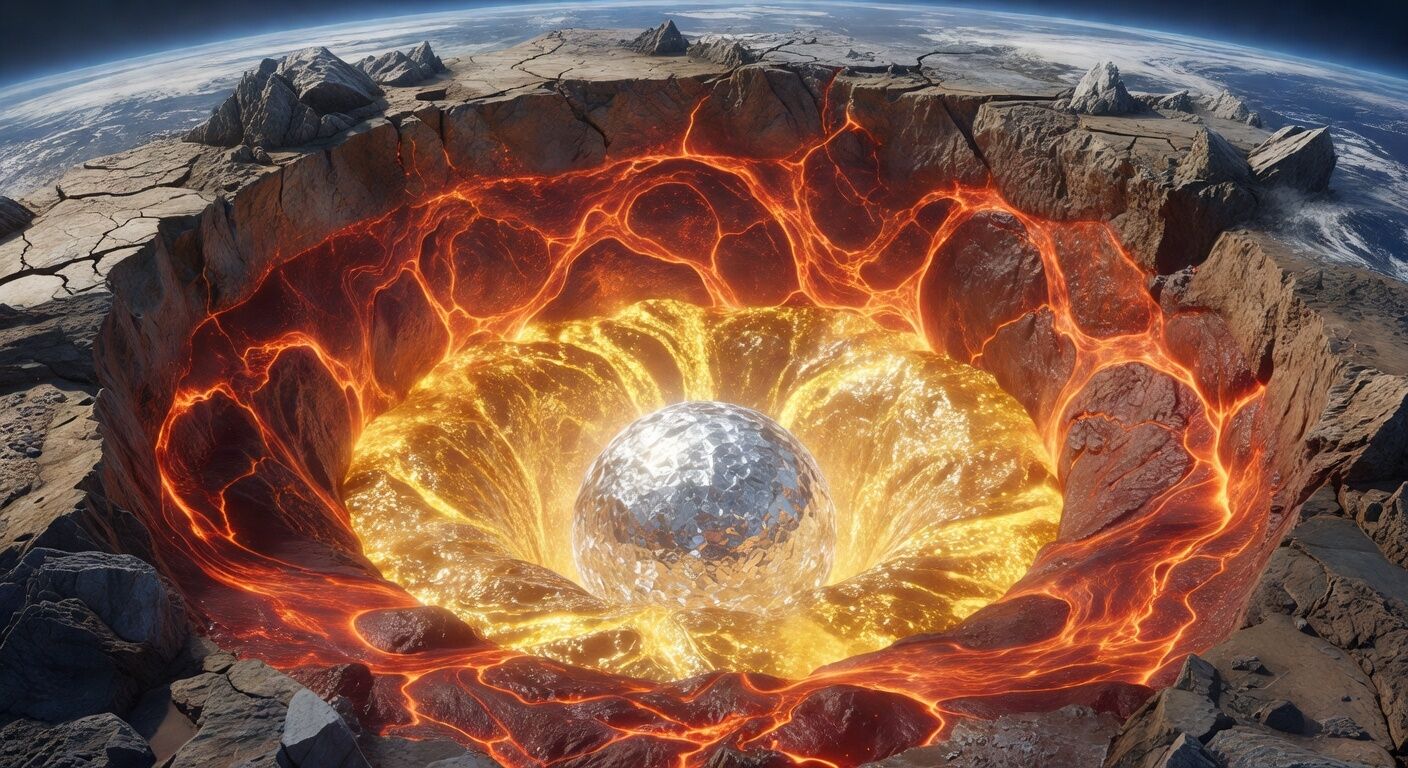
What’s at the center of the earth?: Crash Course Geology #4
Crash Course Geology #4: Unlocking Earth’s Core for a New Generation of Learners
In a groundbreaking release that educators worldwide are hailing as a milestone in science pedagogy, Crash Course dropped its fourth installment of the Geology series on May 7, 2026. Titled “What’s at the Center of the Earth?,” the episode transforms a notoriously abstract topic—the planetary core—into an accessible, hero’s-journey narrative that resonates deeply with today’s digitally native students. As someone who has long advocated for multimedia tools in the classroom, I see this as more than entertainment; it is a vivid demonstration of how EdTech can breathe life into Earth science curricula.
The video opens with a Cold War-era mystery: how seismologists pieced together the existence of the core from earthquake waves during an age of geopolitical tension. From there, viewers are guided through the discovery process, the layered structure of our planet, and the core’s outsized role in generating the magnetic field that shields life from solar radiation. At roughly 15 minutes, the episode strikes the perfect balance between rigor and engagement, using crisp animations and host-led storytelling to demystify concepts that once required dense textbook passages.
Why This Matters for Pedagogy in 2026
Traditional geology instruction often struggles with scale. Students can recite “inner core, outer core” yet fail to grasp why these layers matter for everything from compass navigation to the aurora borealis. Crash Course’s approach leverages narrative transportation theory—framing the core as “Earth’s real hero”—to foster emotional investment. Research consistently shows that story-driven content improves long-term retention by up to 22 percent compared with purely expository lectures.
The timing of the release could not be better. With the International Geoscience Education Organization pushing for renewed emphasis on Earth-system science amid climate discussions, teachers are actively seeking resources that connect deep-Earth dynamics to surface phenomena. Many Seoul high schools, for instance, are already integrating the episode into their Earth and Space Science electives this semester. Flipped-classroom pilots report that students arrive primed for deeper discussions on geomagnetism and planetary habitability after watching at home.
EdTech Integration and Accessibility
Beyond its content, the episode exemplifies best practices in open educational resources. Fully captioned and available in multiple languages via community contributions, it lowers barriers for English-language learners and students with hearing impairments. The YouTube platform’s built-in timestamped chapters allow instructors to jump directly to “Discovering the Core” (0:47) for targeted mini-lessons.
Educators are pairing the video with emerging tools such as interactive 3-D core visualizations in Google Earth and AR apps that let students “drill” virtually to the center of the planet. One pilot program in Singapore uses the Crash Course episode as the anchor for a week-long project in which students model convection currents in the outer core using simple kitchen ingredients. Early data suggest measurable gains in systems-thinking skills.
The Future of Learning: From Passive Viewing to Active Exploration
Looking ahead, this release signals a broader shift toward serialized, high-production-value science content that can be scaffolded across grade bands. Imagine a future where each Crash Course episode seeds an AI-driven adaptive quiz that adjusts difficulty based on a learner’s misconceptions about seismic wave propagation. Or where students contribute to citizen-science projects tracking real-time magnetic field fluctuations while referencing the episode’s explanations.
For teacher professional development, the video serves as a model for concise, visually rich explanations that avoid cognitive overload. Workshops in the Asia-Pacific region are already using it to train instructors on multimedia design principles aligned with Mayer’s cognitive theory of multimedia learning.
Critics occasionally worry that edutainment dilutes rigor, yet the episode maintains scientific accuracy while citing foundational studies by Inge Lehmann and other pioneers. It even nods to ongoing research into the core’s thermal history and its implications for planetary evolution—topics usually reserved for university seminars.
Global Classroom Implications
In Seoul’s competitive academic environment, where students juggle multiple after-school programs, concise yet substantive resources like this one are invaluable. Teachers report that assigning the episode reduces lecture time, freeing class periods for hands-on labs with seismic data or debates on geoengineering. Internationally, the video’s open license encourages remixing; subtitles in Korean, Mandarin, and Spanish are already live, extending its reach to millions.
As climate and sustainability education gain urgency, understanding the core’s protective function provides a powerful hook for discussing planetary boundaries. Students who once viewed geology as “rocks and minerals” now see an interconnected system whose deepest processes influence everything from satellite communications to the evolution of life.
The Crash Course team has hinted at forthcoming episodes on plate tectonics and mineral resources, suggesting a full curriculum arc is taking shape. If the pattern holds, we may soon have an entire open-access geology sequence rivaling traditional textbooks in scope while surpassing them in engagement.
A Call to Action for Educators
I encourage every middle- and high-school science teacher to preview the episode this week and consider how it fits within existing units. Start a discussion thread on your learning-management system asking students what surprised them most about the core’s protective role. Pair it with a quick formative assessment on magnetic field reversals. The resources are free, the science is solid, and the pedagogical payoff is immediate.
In an era when attention is scarce and scientific literacy is paramount, episodes like “What’s at the Center of the Earth?” remind us that effective EdTech does not replace teachers—it amplifies their impact. By turning the planet’s hidden engine into a relatable protagonist, Crash Course has given us a new hero for the classroom: curiosity itself.
Source: CrashCourse via YouTube — 2026-05-07T16:01:33+00:00.
- Breaking News Analysis
- World Politics
- Business & Economy
- Technology & AI
- Science & Health
- Environment & Climate
- Culture & Society
- Travel & Tourism
- Sports & Entertainment
- Investigative Journalism
- Opinion & Commentary
- Media & Journalism
- Human Rights & Social Issues
- Education & Knowledge
- Citizen & Amateur Journalism
- Other News Topics

 English
 Arabic
 French
 Spanish
 Portuguese
 Deutsch
 Turkish
 Italiano
 Russian
 Romaian
 Portuguese (Brazil)
 Greek
Greek