


Google’s new Fitbit Air #Vergecast
Google’s new Fitbit Air #Vergecast
Google's Fitbit Air: A Screenless AI Coach That Could Redefine Wearable Fitness
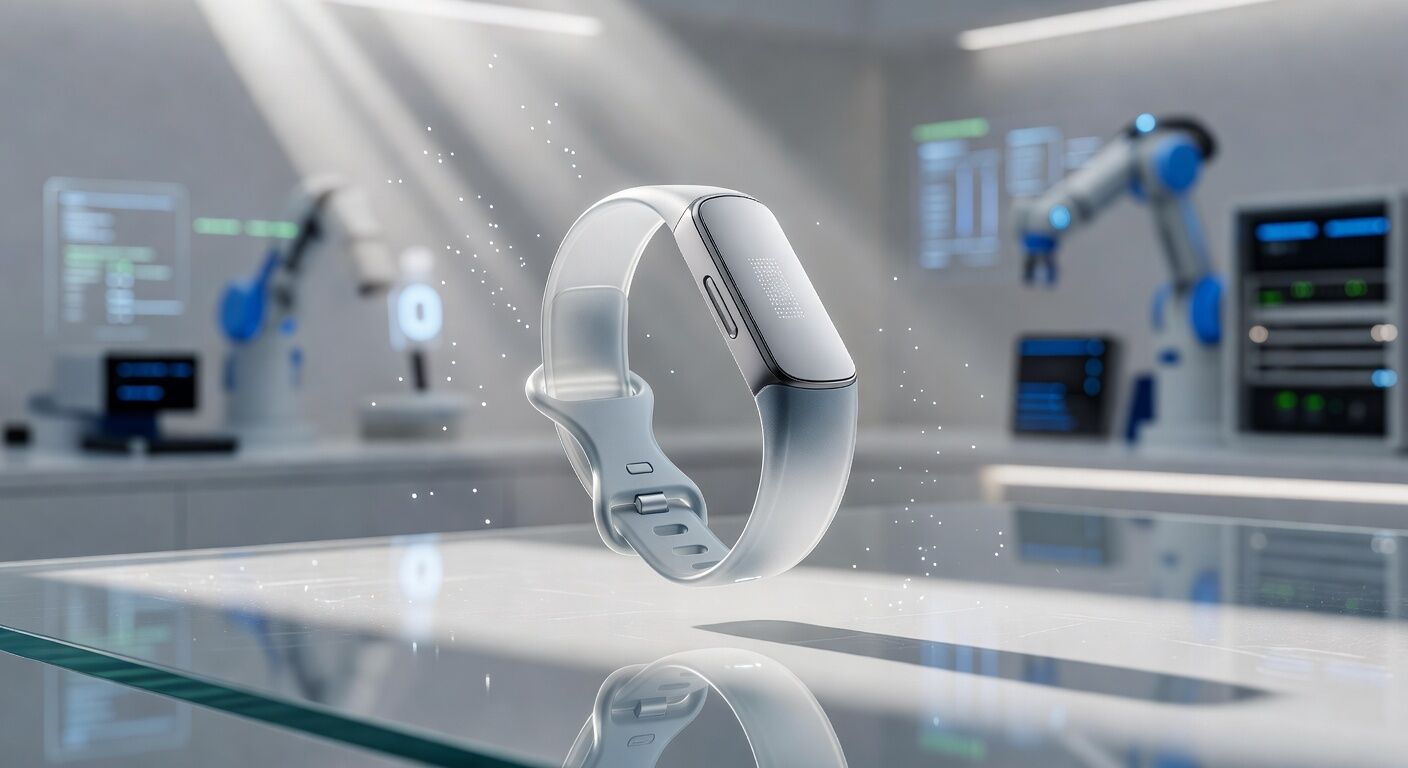
Google has just unveiled the Fitbit Air, a minimalist $99 fitness tracker that ditches the screen entirely in favor of an AI-powered coaching experience. Announced on May 9, 2026, the device marks a bold pivot for the company as it leans deeper into artificial intelligence to interpret health data rather than simply displaying it. For users tired of glancing at wrists every few minutes, this could be the future of passive, insightful tracking.
The Fitbit Air is essentially a slim band that clips onto clothing or wears around the wrist. Without any display, it focuses on continuous data collection from heart rate, movement, sleep patterns, and stress indicators. All of that raw information gets fed into Google's AI models, which then deliver personalized coaching through the companion app via notifications, voice summaries, and weekly reports. Think of it as having a quiet personal trainer who only speaks when there's something meaningful to say.
Why Go Screenless?
Traditional fitness trackers and smartwatches have grown increasingly complex, with bright AMOLED displays, app ecosystems, and constant notifications. Google appears to be betting that many users want the opposite: something unobtrusive that still provides high-value insights. At just $99, the Fitbit Air undercuts most competitors while promising to reduce notification fatigue.
Early impressions from The Verge suggest the hardware is deliberately basic. Sensors prioritize accuracy over flashy features. The real star is the AI layer, which transforms passive data streams into actionable advice like adjusting workout intensity or recommending earlier bedtimes based on recovery scores. This approach echoes broader industry trends where AI handles interpretation so humans don't have to stare at charts.
AI Coaching in Practice
The Fitbit Air's AI doesn't just track steps; it builds contextual understanding. For instance, it might notice elevated stress levels during afternoon meetings and suggest a short breathing exercise via phone alert. Over time, the model learns individual baselines, making recommendations feel increasingly tailored rather than generic.
Google has integrated its latest large language models to generate natural-language coaching. Users can ask questions like "How did my sleep compare to last week?" and receive conversational responses instead of raw numbers. This lowers the barrier for people who find traditional fitness apps overwhelming.
Privacy remains a key talking point. All data processing happens with on-device options where possible, though full AI coaching requires cloud connectivity. Google emphasizes user control over what gets shared, but the always-listening nature of health tracking will likely draw scrutiny from regulators and privacy advocates.
Asia-Pacific Perspective
From Tokyo, the Fitbit Air's launch resonates strongly with regional trends. Japan and South Korea have long embraced minimalist health technology, from pedometers in the 1960s to today's focus on preventive care amid aging populations. The screenless design aligns well with cultural preferences for subtlety—many professionals here prefer devices that don't interrupt focus or draw attention during work.
China's massive wearable market, meanwhile, could see rapid adoption if pricing stays competitive. Local players like Huawei and Xiaomi already dominate with affordable trackers, but Google's AI edge and Fitbit brand recognition may carve out space among urban professionals seeking smarter coaching without premium watch prices.
Data sovereignty concerns in Asia could influence rollout. Countries like Japan have strict health data rules, and users may demand clearer explanations of how AI models handle sensitive biometric information. Google's ability to localize AI responses and comply with regional regulations will determine success beyond initial hype.
Competitive Landscape and Implications
Apple's rumored screenless health band and Samsung's expanding Galaxy Ring lineup show that the industry is moving toward invisible computing. The Fitbit Air positions Google as an early mover in AI-first wearables rather than hardware spectacle. It also strengthens Google's health data moat, potentially feeding into broader services like Google Health or future Pixel integrations.
For consumers, the device signals a shift away from gamified step counts toward genuine behavioral change. However, the lack of a screen means it won't replace smartwatches for those who want quick glances at time or notifications. Early adopters will likely be fitness enthusiasts already comfortable with app-centric experiences.
Challenges remain. Battery life claims will need verification, and the AI coach's accuracy depends on consistent wear and quality sensor data. Over-reliance on algorithmic advice could also discourage users from developing their own health intuition.
Looking Ahead
The Fitbit Air represents more than a new gadget—it's a statement about where wearables are headed. By removing the screen and centering AI, Google is betting that the most valuable part of fitness technology is interpretation, not visualization. Whether this resonates widely will depend on how naturally the coaching feels in daily life and how well privacy expectations are met.
In the Asia-Pacific region, where health consciousness continues rising alongside digital adoption, the device could accelerate a move toward smarter, less intrusive wellness tools. As AI capabilities improve, future iterations may expand into predictive health alerts or integration with medical systems.
Google's latest move keeps the conversation about wearables focused on intelligence rather than pixels. The Fitbit Air is available now at $99, with pre-orders opening immediately following the announcement.
Source: The Verge via YouTube — 2026-05-09T15:01:39+00:00.
- Breaking News Analysis
- World Politics
- Business & Economy
- Technology & AI
- Science & Health
- Environment & Climate
- Culture & Society
- Travel & Tourism
- Sports & Entertainment
- Investigative Journalism
- Opinion & Commentary
- Media & Journalism
- Human Rights & Social Issues
- Education & Knowledge
- Citizen & Amateur Journalism
- Other News Topics

 English
 Arabic
 French
 Spanish
 Portuguese
 Turkish
 Dutch
Dutch
 Italiano
 Russian
 Romaian
 Portuguese (Brazil)
 Greek
Greek