


UNESCO: the right to development cannot be separated from investment in the infrastructures of peace
UNESCO Links Right to Development with Peacebuilding Investments at UN Forum
In an era defined by intensifying global conflicts, widening inequality, and compounding crises from climate change to post-pandemic recovery, a recent UNESCO intervention at the United Nations has reaffirmed a foundational principle: sustainable development cannot exist in isolation from deliberate investments in peace infrastructure. Delivered during the 27th session of the UN Intergovernmental Working Group on the Right to Development in May 2026, the statement arrives at a moment when multilateral institutions face mounting pressure to demonstrate relevance amid rising unilateralism and record military expenditures.
This video matters now because it explicitly connects abstract human rights norms to tangible policy trade-offs. By highlighting how resources diverted from arms could strengthen education, culture, and social cohesion—particularly in priority regions like Africa—it offers a counter-narrative to securitized approaches that dominate contemporary geopolitics. As the 2030 Agenda for Sustainable Development enters its final stretch, such interventions provide critical framing for how rights-based frameworks can guide resource allocation in fragile states.
Detailed Video Analysis
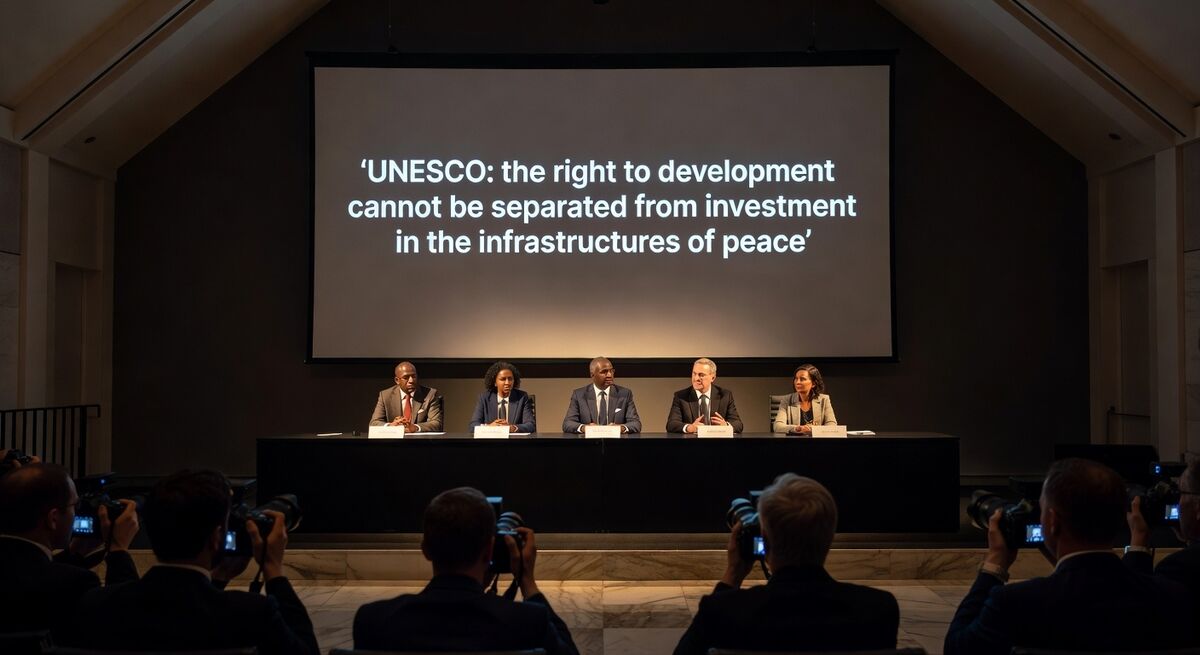
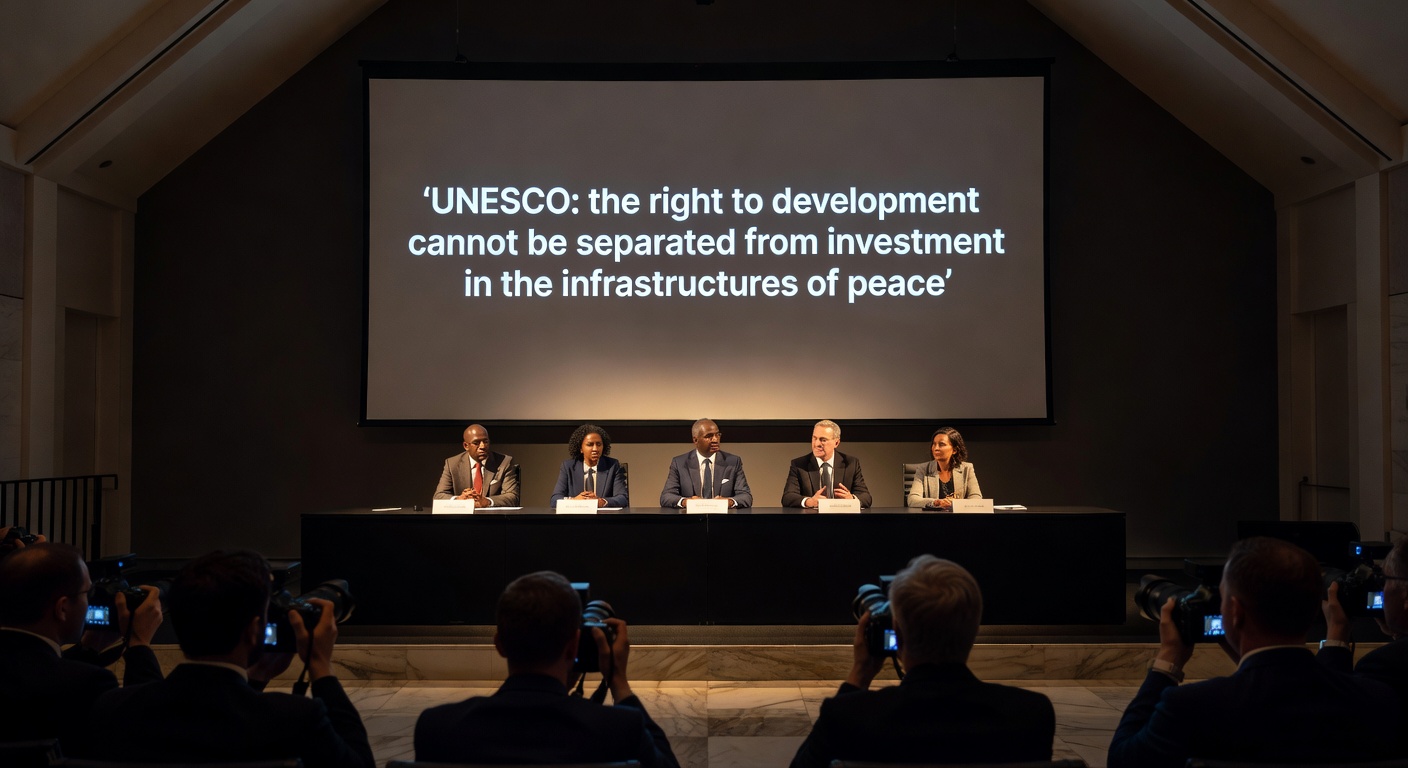
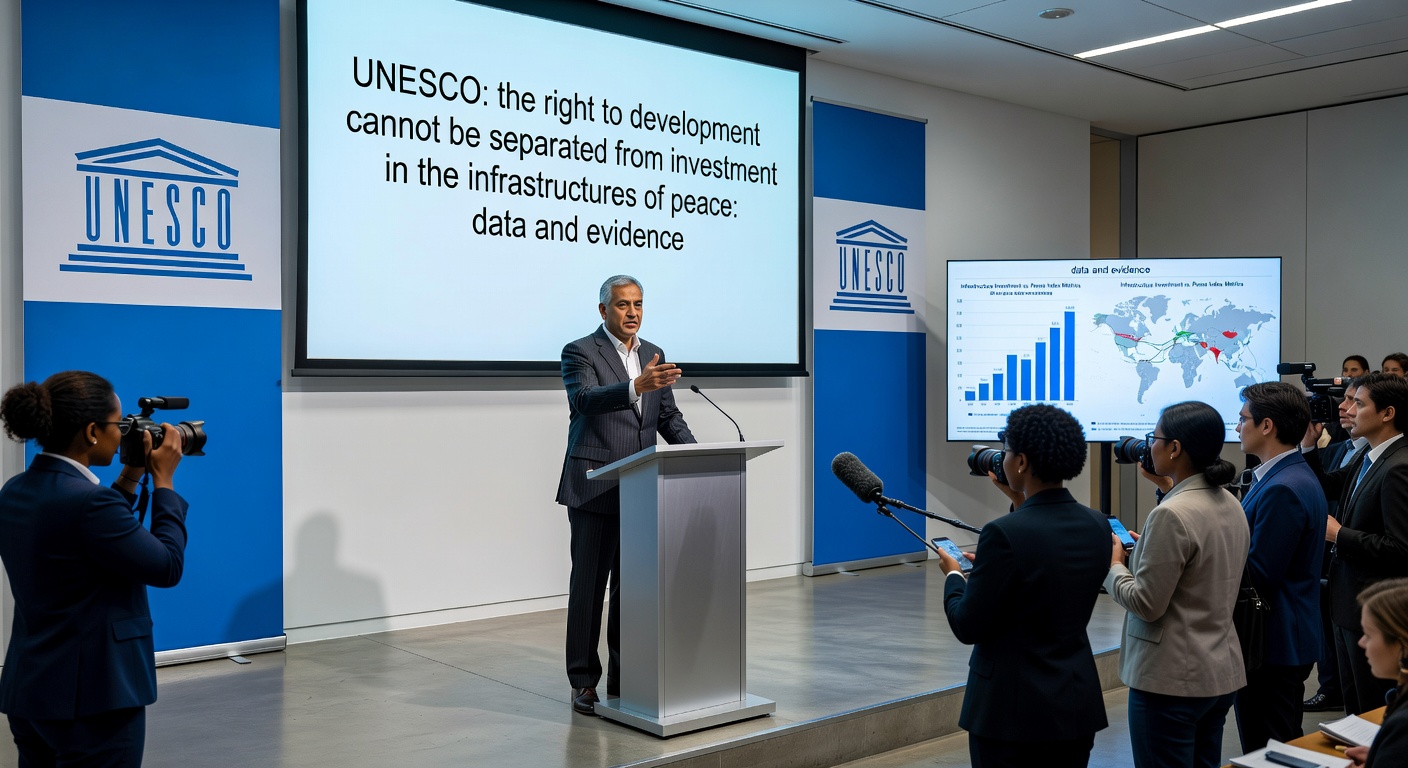
The video is a concise, under-five-minute formal address by Lidia Brito, UNESCO's Assistant Director-General for Priority Africa and External Relations. Production values reflect standard UN institutional output: even studio lighting, clear audio, and a neutral backdrop with UNESCO branding. The tone is measured and diplomatic, avoiding emotional appeals in favor of precise, reference-laden language suited for an audience of diplomats and legal experts.
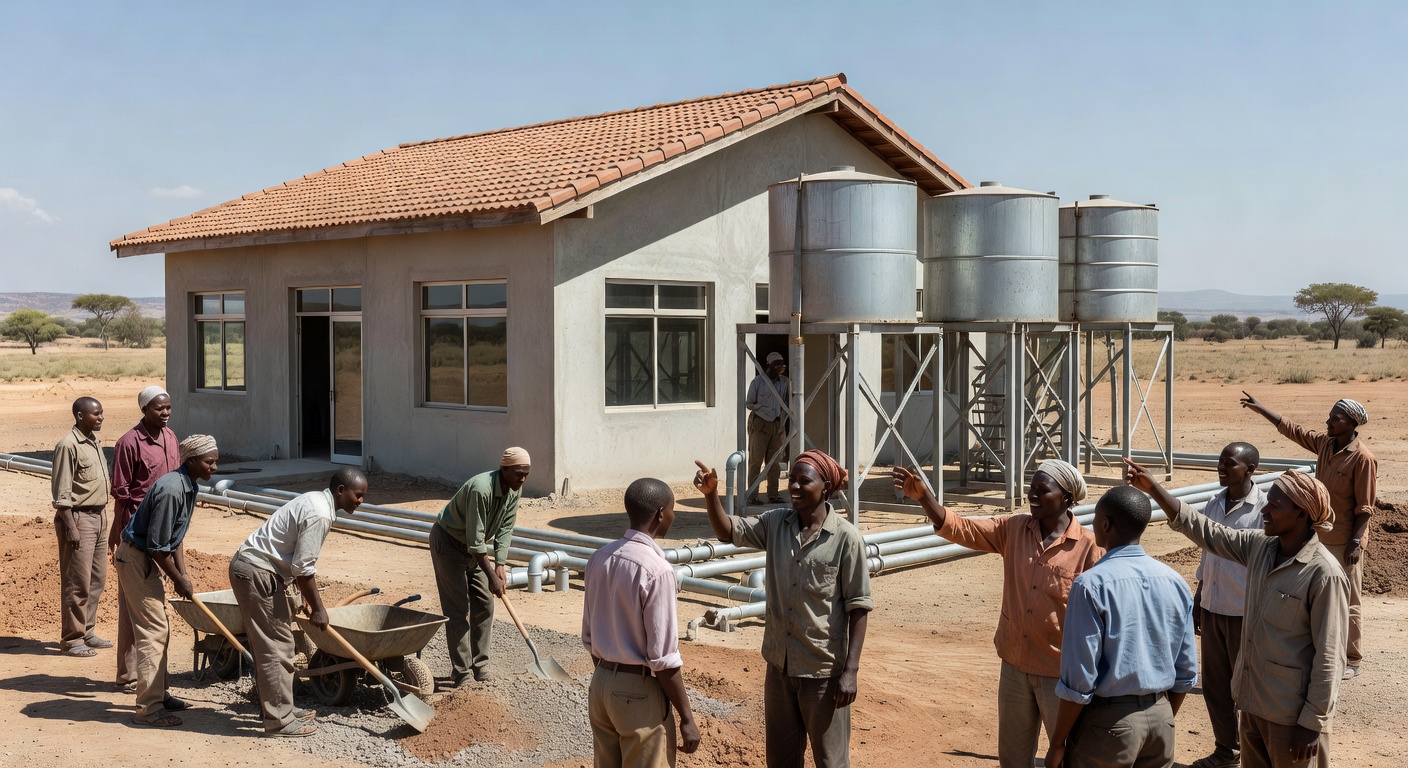
Key moments unfold methodically. At 0:22, Brito opens by underscoring the indivisibility of human rights, setting the conceptual foundation. The central claim arrives at 1:15: "the right to development cannot be separated from investment in the infrastructures of peace." She develops this at 2:40 by linking disarmament to redirected funding for educational and cultural systems in developing regions. The pacing remains deliberate throughout, with clear enunciation that aids non-native English speakers and international transcription services.
Claims rest on interdependence between peace, development, and disarmament, implicitly invoking UNESCO's core mandate in education, science, and culture. No charts or data visualizations appear; the focus stays on the spoken record, positioning the clip as an official archival document rather than a public explainer. This choice reinforces institutional gravitas but limits broader accessibility. Additional analysis reveals how Brito's phrasing echoes the 1986 Declaration while subtly critiquing current spending patterns, offering a layered diplomatic signal that rewards close listeners familiar with UN lexicon.
Broader Context
The UN Human Rights YouTube channel functions as a primary digital repository for Geneva proceedings, supporting transparency at a time when traditional media coverage of multilateral forums has declined. Brito's intervention aligns with UNESCO's strategic emphasis on Africa, where intersecting challenges of conflict, underinvestment in education, and climate vulnerability make the peace-development nexus especially acute.
The statement documents participation in the 2026 Working Group session, advancing the 1986 Declaration on the Right to Development. Global military spending exceeded $2.4 trillion in recent years, providing concrete context for Brito's disarmament references. Platform trends show UN agencies using YouTube primarily for archival purposes, which helps counter misinformation through primary sources, though algorithmic reach for policy content remains modest compared with viral topics. UNESCO's long-standing role since the 1940s in linking culture and peace further contextualizes this intervention as part of a continuum of efforts to counterbalance militarized global priorities.
Impact & Audience Reaction
Engagement for institutional videos is typically modest but highly targeted, drawing diplomats, academics, and civil society organizations. Comments, when present, frequently praise the integrated rights framing while noting the absence of specific implementation metrics or timelines. Algorithmically, placement within official UN playlists improves discoverability inside human rights research networks.
Culturally, the statement contributes to evolving discourse that redefines security beyond military metrics, influencing advocacy in sustainable development forums. Its reach extends through policy networks and academic citations, amplifying UNESCO's role in debates over resource allocation in fragile states. Over time, such content may shape hybrid policy models that incorporate digital governance and climate resilience. Real-world echoes include citations in recent African Union peace reports and think-tank papers from the Stockholm International Peace Research Institute, illustrating gradual norm diffusion.
Key Takeaways
- - The right to development is framed as inseparable from peace infrastructure, demanding coordinated international investment rather than siloed approaches. - Disarmament is positioned as a practical lever for reallocating resources toward education and cultural programs in priority regions such as Africa. - Institutional statements like this help sustain multilateral norms amid rising unilateral policy trends. - Production decisions favor archival precision over broad public engagement, revealing ongoing tensions in digital human rights communication. - The 2026 timing coincides with intensified focus on the 2030 Agenda, positioning UNESCO as a conceptual bridge between development theory and peace practice. - Longer-term implications include potential influence on Working Group recommendations and future funding priorities for conflict-affected states.
Conclusion with Forward-Looking Insight
This UNESCO statement underscores that rights-based development frameworks remain vital navigational tools for 21st-century challenges. As the UN system adapts, similar interventions may increasingly inform integrated policies linking digital infrastructure, climate adaptation, and peacebuilding. Observers should monitor follow-up actions from the Working Group, which could convert these principles into measurable commitments ahead of the 2030 deadline. Looking further ahead, the principles articulated here may intersect with emerging technologies such as AI-driven conflict early-warning systems and climate-finance mechanisms, potentially reshaping how the post-2030 development agenda operationalizes peace investments on a global scale.
[Source: United Nations Office at Geneva proceedings documentation, May 2026]
Source: UN Human Rights via YouTube — 2026-05-22T07:00:24+00:00.
- Breaking News Analysis
- World Politics
- Business & Economy
- Technology & AI
- Science & Health
- Environment & Climate
- Culture & Society
- Travel & Tourism
- Sports & Entertainment
- Investigative Journalism
- Opinion & Commentary
- Media & Journalism
- Human Rights & Social Issues
- Education & Knowledge
- Citizen & Amateur Journalism
- Other News Topics

 Arabic
 French
 Spanish
 Portuguese
 Deutsch
 Turkish
 Dutch
Dutch
 Italiano
 Russian
 Romaian
 Portuguese (Brazil)
 Greek
Greek